

























































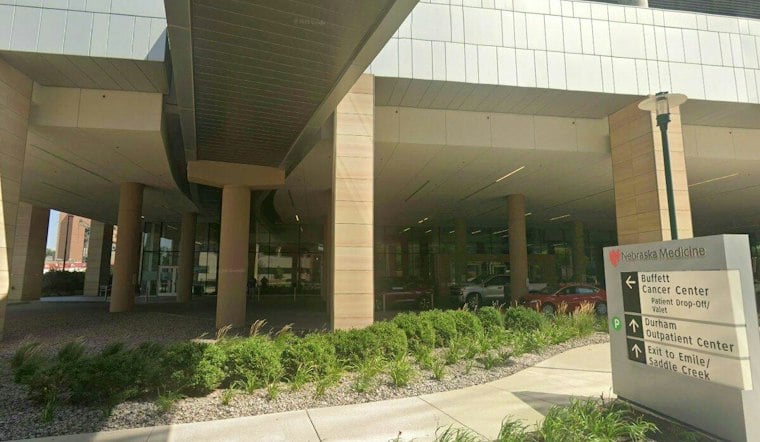
A rare cancer that starts in the eye develops metastases in about half of patients, and when it spreads, the liver is involved in more than 90% of cases. It now has a new treatment option in Omaha. Nebraska Medicine began offering a liver-directed treatment system for metastatic uveal melanoma last month, giving regional patients access to a therapy currently available at fewer than 40 hospitals nationwide.
Uveal melanoma is a rare melanoma that starts in the eye and can spread to the liver. About half of patients develop metastases, and when the cancer spreads, it reaches the liver in more than 90% of cases, as reported by the Omaha World-Herald. Dr. Alissa Marr, an oncologist and hematologist with Nebraska Medicine who specializes in melanoma, is part of the team now offering the therapy at the health system. It took Nebraska Medicine more than a year to bring the therapy to the Fred & Pamela Buffett Cancer Center, according to the World-Herald, and the goal is to make treatment more accessible for patients across the region rather than sending them elsewhere for treatment.
Before this, the nearest treatment centers were in Kansas City, Iowa City and Rochester, Minnesota, per the World-Herald's reporting. Nebraska Medicine is also seeing more uveal melanoma cases after hiring an ocular oncologist, the paper reports, adding patients to a system now equipped to treat the disease once it reaches the liver.
How the Liver-Directed Treatment Works
The therapy, known as HEPZATO KIT, combines the chemotherapy drug melphalan with a proprietary hepatic delivery system, according to PR Newswire. A treatment team blocks blood flow to the liver and isolates it, then introduces chemotherapy through an arterial catheter, per the World-Herald's description of the procedure. An interventional radiologist uses real-time medical imaging to guide catheters and other equipment through veins and arteries, while a perfusionist establishes and monitors filtration occurring outside the body.
Delcath, the therapy's manufacturer, describes a 30-minute infusion of melphalan delivered directly to the liver, after which blood is filtered through proprietary filters to remove excess chemotherapy before it returns to systemic circulation. The company's site states the filtration process removes more than 80% of the melphalan before blood is returned to the patient's body. The approach is designed to limit how much chemotherapy reaches the rest of the body, reducing potential side effects, since uveal melanoma cells are more sensitive to chemotherapy than the rest of the liver tissue.
The procedure requires a multidisciplinary team to administer, and eligible patients must have cancer in no more than half of the liver. Patients must also undergo tests, including an echocardiogram, to make sure they can tolerate the procedure, and they typically stay overnight in the hospital afterward. Those who qualify receive treatment every six to eight weeks and can receive up to six treatments total, according to the World-Herald. So far, Nebraska Medicine's treatment team has treated one patient.
A Cancer That Often Goes Unnoticed
Uveal melanoma is the most common eye cancer in adults in the United States, diagnosed in about 1,700 people each year, according to National Cancer Institute figures cited by the World-Herald. It differs from the skin-originating melanoma most people associate with the disease, and researchers do not fully understand what causes it, though light-colored eyes are considered a risk factor.
Patients typically have no symptoms, and the cancer is often found incidentally during dilated eye exams. Roughly half of patients go on to develop metastatic disease, according to the Cleveland Clinic, which also notes the cancer's incidence in the U.S. is estimated at 5.2 cases per 1 million people annually. The liver is the most common site for those metastases, and controlling the disease once it reaches the liver is key to a patient's overall prognosis, the World-Herald reports.
A Cleveland Clinic study of 73 patients with uveal melanoma metastatic to the liver found a median progression-free survival of four months and median overall survival of 15 months. The same research found patients diagnosed with liver metastases while still asymptomatic lived longer on average — 16 months compared with seven months for those diagnosed after symptoms appeared — and that patients receiving local therapy as a first-line treatment had longer progression-free and overall survival.
What the Clinical Trials Showed
HEPZATO KIT was approved by the Food and Drug Administration in 2023 and is described as the first FDA-approved liver-directed therapy for metastatic uveal melanoma, according to Delcath Systems, Inc.. Approval was based primarily on the phase 3 FOCUS study. A separate small trial included patients whose liver tumors could not be surgically removed, and the World-Herald reports more than one-third of those patients experienced a decrease in disease burden — nearly 8% saw their target tumors disappear, while disease burden remained stable in another group.
Separately, the phase 3 FOCUS trial treated 91 patients with metastatic uveal melanoma. The Delcath announcement reports an overall response rate of 36.3% and a disease-control rate of 73.6%, while HEPZATO KIT's site notes responses lasted a median of 14 months.
Researchers continue to study other treatments for uveal melanoma, including immunotherapy, since the disease tends to be very resistant to treatment and studied therapies have shown no benefit to date, per the World-Herald. A 2026 report in The ASCO Post described a Dutch phase II trial, called CHOPIN, that enrolled 76 patients with liver-only or liver-dominant metastatic disease between December 2020 and November 2024. One-year progression-free survival was 54.7% among patients who received nivolumab and ipilimumab alongside hepatic perfusion, compared with 15.8% among those who received perfusion alone, and median progression-free survival was 12.8 months versus 8.3 months, respectively. The investigators said the combination approach was promising but would need validation in larger, multicenter randomized trials.
Not a Cure, But a Step Forward
Nebraska Medicine officials are careful to note that HEPZATO KIT is not a cure — the treatment is aimed at increasing survival, not eliminating the cancer, according to the World-Herald. Dr. Marr said the treatment opens opportunities for other cancers, and the therapy could potentially be used for other cancers if further studies are conducted.
Coverage for the procedure remains unclear, though insurance coverage typically follows FDA approval of a treatment, the World-Herald reports. Delcath Systems lists a patient assistance program on its website for patients navigating the cost of care. For now, the arrival of the therapy in Omaha means patients across Nebraska and the surrounding region no longer have to travel as far for a treatment option that, while not a cure, has shown measurable results against one of medicine's more resistant cancers.





