

























































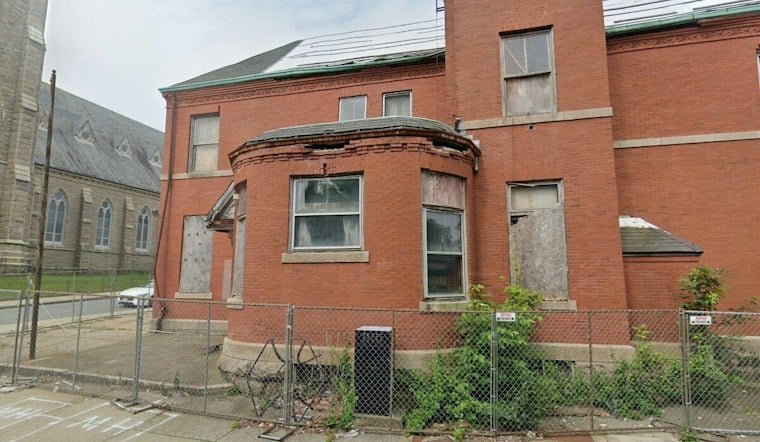
A 19th-century firehouse that New Bedford once planned to tear down is instead becoming eight apartments, the latest project from a nonprofit that has spent more than six decades turning the city's forgotten buildings into homes. The Waterfront Historic Area League, known locally as WHALE, is converting the former firehouse at County and Hillman streets into a mix of affordable and market-rate units, with executive director Erin Miranda detailing the project and several upcoming community events during a recent Townsquare Sunday segment.
From Demolition List to Apartment Building
The building had sat vacant for years and had deteriorated to the point that the city had scheduled it for demolition, according to Yahoo News. WHALE has been involved with the property since 2019, and the nonprofit officially partnered with CMK Development Partners in early 2024 to form Hillman Firehouse LLC, as reported by SouthCoast Today. The city transferred the property to Hillman Firehouse LLC in February 2025, and emergency stabilization work began immediately afterward, according to the Waterfront Historic Area League.
Accounts differ slightly on the firehouse's origins: Waterfront Historic Area League describes 109 Hillman Street as a Romanesque Revival structure built between 1892 and 1893, while SouthCoast Today's reporting notes the former Engine No. 5 House opened in 1893. Either way, the building is more than 130 years old, and historic doors and other original elements have been restored as part of the project, according to the seed reporting from 1420 WBSM.
Eight Units, Five Priced Below Market
Once finished, the building will hold four one-bedroom and four two-bedroom apartments, per SouthCoast Today's reporting. Five of those eight units will be income-restricted and three will be market-rate, with four of the restricted units capped for households earning at or below 60% of the area median income and one unit set at 50%, Yahoo News reports. The total project is expected to cost roughly $3.9 million and is scheduled for completion within 12 months, according to the same SouthCoast Today account.
Financing is stitched together from multiple public and private sources. Yahoo News reports the package includes $1 million in private financing from BayCoast Bank, $1 million in state housing-production program money, $875,000 in city HOME program funds, $550,000 in Community Preservation Act funding, and $500,000 in ARPA funds. The Waterfront Historic Area League also credits Massachusetts historic tax credits as part of the funding mix that made the rehabilitation possible.
A Six-Decade Track Record in New Bedford
WHALE has preserved and restored important historic housing properties in New Bedford for more than 60 years, a mission that began in 1962 as a response to urban-renewal threats facing the city's historic neighborhoods, according to the National Trust for Historic Preservation. The organization has since facilitated more than 72 completed projects, brought over $20 million into the New Bedford economy in 2022 alone, and received the National Trust's 2023 Trustees' Award for Organizational Excellence, per the same account. Past efforts include the Union Street Lofts, an $11 million restoration of five abandoned or underused buildings that created 35 loft apartments, eighteen of them affordable for residents earning less than 50% of the city's median income, as detailed on Waterfront Historic Area League's project archive.
WHALE's current executive director, Erin Miranda, grew up in Mattapoisett and studied preservation at Roger Williams University. She was hired by WHALE for a volunteer opportunity after graduating, and former WHALE executive director Tony Souza, who inspired her interest in preservation work, later helped her land a full-time job at a statewide preservation organization. Miranda returned to WHALE four years before this story was published and became executive director after coming back, according to the 1420 WBSM report that first gathered these details.
Workshops and a Holiday Tour Ahead
Beyond the firehouse, WHALE is running a series of public events aimed at connecting owners of old and historic homes with people who have faced similar renovation challenges. The nonprofit's Living In An Old House Dream series includes a free program on November 4 at 5:30 p.m. at the Whaling National Historical Park visitor center auditorium on William Street, and a second free forum on November 18 at 5:30 p.m. at the Whaling National Historical Park, also on William Street. Diane Henry is slated to share her historic-home restoration journey and advice at one of the sessions, while Dennis Berrios will share his own experience and advice restoring his New Bedford home.
WHALE will also hold its holiday house tour on December 13 from noon to 4 p.m., offering a self-guided walking tour of seven historic New Bedford properties decorated for the season. Tickets cost $35 and are sold through waterfrontleague.org. The events sit alongside a broader push in the city to repurpose historic buildings, including the New Bedford Pathways project, a series of app-based walking tours about the city's architecture and residents produced by Pat Daughton, administrator of the New Bedford Preservation Society.
The firehouse conversion also echoes a financing model CMK Development Partners used previously at the former Holy Family High School, a 119-year-old building redeveloped into 15 apartments, including four units capped at 60% of area median income, one at 50%, and ten market-rate units, Yahoo News reports. That pattern reflects a statewide trend: the Massachusetts Historic Rehabilitation Tax Credit, which offers up to a 20% credit for qualified rehabilitation expenses on income-producing historic properties, has created more than 18,400 housing units since its inception, including 10,880 deemed affordable, according to Historic Boston Incorporated. The 2024 Affordable Homes Act expanded that program's funding cap to $110 million through 2030, the same source notes, and projects already underway statewide are projected to add another 7,233 units, more than 3,000 of them affordable.





