

























































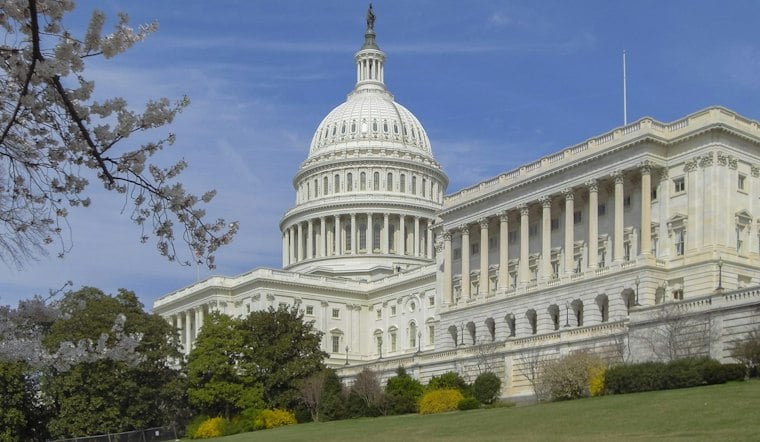
A Virginia congressman introduced legislation this week that would permanently strip any future president of the power to livestream a military execution, a direct response to a scrapped Pentagon plan to broadcast the death of Fort Hood shooter Nidal Hasan. U.S. Rep. Eugene Vindman, a Democrat representing Virginia's 7th Congressional District, filed the American Integrity Act on Thursday, just days after President Donald Trump overruled Defense Secretary Pete Hegseth's proposal to televise Hasan's upcoming execution.
Vindman introduced the bill on October 15 in the U.S. House, where it picked up three Democratic co-sponsors: Reps. Ro Khanna of California, Maggie Goodlander of New Hampshire, and George Whitesides of California, according to a press release from Vindman's office. The measure would write a statutory federal prohibition into the Uniform Code of Military Justice, closing off the option Hegseth had floated for Hasan's case. As AL.com reports, Hegseth announced on October 8 that Hasan's December 3 execution by firing squad would be livestreamed, before Trump reversed course and announced it would not be broadcast after all.
Hasan, the former Army major who killed 13 people and wounded 32 others in the 2009 shooting at Fort Hood in Killeen, Texas, is scheduled for execution on December 3. Vindman has a personal history with the case: he served as an Army Judge Advocate General officer who oversaw post-trial matters in the Hasan prosecution, per AL.com's reporting.
A Lawmaker Who Knows the Case Firsthand
Vindman did not pull punches describing the original livestreaming plan. He said Hasan should face the fullest consequences of the law, but argued that broadcasting an execution is what terrorists and authoritarian regimes do, not what the United States should become, according to AL.com. He added that his legislation would prevent future administrations from turning executions into televised spectacles.
In an interview published the day after he introduced the bill, Vindman went further, calling Hegseth's original proposal completely un-American and warning that broadcasting Hasan's death would hand the shooter a form of public martyrdom, according to Military.com. He also said Trump's decision to overrule Hegseth demonstrated that his defense secretary lacked the fitness for the job. Vindman had previously called for Hegseth's resignation amid earlier controversies, the outlet notes.
Vindman spent 25 years in the Army as an infantry paratrooper and JAG legal adviser before winning his House seat in 2024, and he previously served as a senior National Security Council ethics official during the first Trump impeachment inquiry, according to a Wikipedia entry on Vindman citing Military Times reporting.
Public Opinion Ran Overwhelmingly Against the Original Plan
The livestreaming proposal was deeply unpopular before Trump scrapped it. An ABC News poll published October 15 found that 80% of Americans opposed broadcasting Hasan's execution live on television or online, a result the network says reflected bipartisan condemnation that extended into military circles.
Legal experts had also flagged a regulatory gap underlying the whole controversy. Federal regulations under 28 C.F.R. § 26.4(f) ban photographic, video, or audio recording equipment inside execution chambers for federal civilian inmates, but a Georgetown Law analysis notes those rules do not automatically extend to military executions carried out under the Uniform Code of Military Justice. Current Army protocol, Army Regulation 190-55, requires at least two media representatives to serve as official press pool witnesses but contains no provisions permitting or regulating live public broadcasts, since the rule predates digital livestreaming technology, according to the Latin Times.
A Punishment the Military Has Rarely Carried Out
Any execution at all would be a rarity in the modern military justice system. The last one took place on April 13, 1961, when Army Private John A. Bennett was hanged at Fort Leavenworth, Kansas, after being convicted of rape and attempted murder, according to the Death Penalty Information Center, which notes Bennett remains the only U.S. serviceman executed for a peacetime crime in the modern era. If Hasan is executed by firing squad as planned, he would be the first military prisoner executed that way since Army deserter Private Eddie Slovik was shot on November 9, 1945, during World War II, the Washington Post has reported.
Under Article 71 of the Uniform Code of Military Justice, a military death sentence cannot be carried out without the president's explicit personal confirmation, and the president alone holds the authority to commute a military death sentence, per the Death Penalty Information Center. Only four condemned prisoners currently sit on military death row at the U.S. Disciplinary Barracks in Fort Leavenworth: Hasan, Ronald Gray, Hasan Akbar, and Timothy Hennis, according to Army Times.
Hoodline previously reported that Trump approved the firing squad for Hasan's execution, and separately covered the fallout from a Texas fire official who mocked the planned broadcast, as well as threats against American hostages tied to the case.





