

























































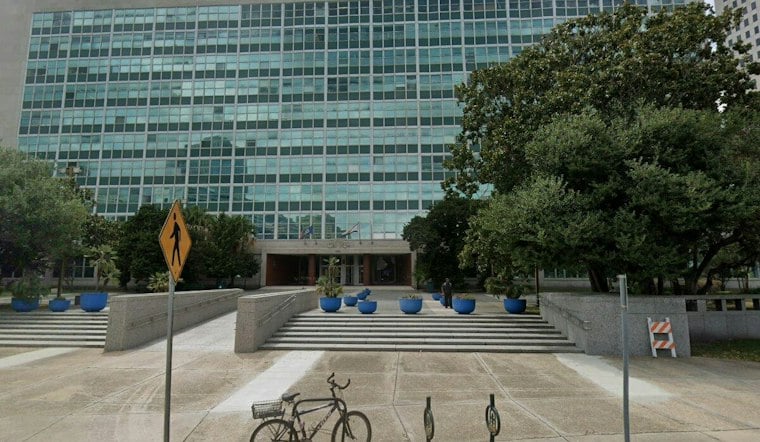
New Orleans just gutted the financial penalty developers pay to skip building affordable housing downtown, slashing the fee from $304,810 to $10,000 per unit after five years in which the mandate produced not a single affordable apartment. The City Council voted unanimously to roll back the policy, even as it kept the underlying mandatory inclusionary zoning structure on the books for potential future use.
A Mandate That Built Nothing
Adopted in 2019 and taking effect in the Central Business District and French Quarter, New Orleans' mandatory inclusionary zoning law requires developers to set aside at least 10% of units at affordable rates, according to nola.com. The policy gave developers an alternative: pay a steep per-unit fee instead of building the required units on site. But nola.com reports that the mandate has produced no affordable units at all since it was passed five years ago.
The math behind that fee made the alternative brutally expensive. A 100-unit apartment complex in the core mandatory zone would generally need to reserve 10 units as affordable housing, and under the old fee structure, a developer skipping that requirement entirely could have faced roughly $3 million in penalties, according to New Orleans CityBusiness. That framework, as the outlet detailed, is part of why so little got built under the mandate in the first place.
One Developer's Decision to Walk Away
Kirk Williamson, former CEO of JLB Construction and owner of Chester Development, had planned a larger apartment project on Martin Luther King Jr. Boulevard, per New Orleans CityBusiness. Williamson, who has roughly 15 years of experience building and renovating housing in the city, said the affordable housing requirement contributed to his decision not to move forward with that project. The outlet also reported that Williamson had avoided apartment projects with more than four units, and that other builders in New Orleans similarly cap their projects at fourplexes.
City Council member Lesli Harris said the structure is being preserved deliberately, not dismantled, so that higher fees-in-lieu and more robust requirements can be reinstated when the real estate market improves, nola.com reported. The council also directed the City Planning Commission to hold a public hearing on additional developer incentives, including reductions in required parking, the outlet noted.
Why The Numbers Stopped Working
The rollback follows a report from HR&A Advisors, which advised the City Council when the law was drafted in 2019, according to nola.com. HR&A pointed to declining population, flat rents and rising vacancy as evidence the market has weakened too much for rents to offset development costs. The firm concluded that in weaker markets where margins are already thin, requiring too high a proportion of affordable units can quickly render projects infeasible, leading to little or no new housing production — a warning that echoes advice HR&A gave the council back in 2019, when it recommended limiting the requirement to downtown to guard against volatile market swings.
Housing advocate Andreanecia Morris attributed the breakdown to soaring costs of building and insuring homes, plus a series of delays in implementing the law, telling nola.com that the numbers no longer add up. Real estate attorney Mike Sherman similarly said that rising costs for building materials, construction and insurance made renting affordable units at the required rate untenable for downtown property owners, per the same report.
Those cost pressures show up in the broader data. HR&A estimated that a typical New Orleans mid-rise apartment project containing 105 units would cost about $35 million to develop, or roughly $336,000 per unit, according to New Orleans CityBusiness. The producer price index for materials and services used in nonresidential construction rose 3.3% from December 2024 to December 2025, according to the Associated General Contractors of America. That trade group also found that the index for steel mill products jumped 17% in 2025, aluminum mill shapes soared 30.5% over the same period, and copper and brass mill shapes climbed 11.8%.
What Little Housing Did Get Built
Not all affordable housing production in New Orleans stalled. Affordable housing projects subsidized with various federal dollars produced 260 individual units since 2021, with 100%-affordable projects financed through federal subsidies accounting for 239 of those units, New Orleans CityBusiness reported. A separate voluntary affordable housing option allows developers to provide affordable units in exchange for incentives, according to the outlet.
The city's new $10,000 fee is far lower than the roughly $305,000 figure it replaces, but it still carries a purpose beyond penalizing non-compliance. Fees the city collects will be dedicated to the Housing Trust Fund, according to nola.com. For now, the mandatory inclusionary zoning structure remains law in New Orleans' downtown core, even as officials acknowledge it has yet to deliver the affordable units it was designed to produce, and a separate proposal — not yet adopted — would ask developers to voluntarily make 5% of units affordable citywide rather than impose a mandate.




