

























































A 33-year-old New York man died Monday morning after his Tesla ran off a rural Cumberland County road, struck a tree and burst into flames, with volunteer firefighters finding him dead inside the car as they battled the blaze. Meir Fischer, of Monroe, New York, was behind the wheel of a 2020 Tesla Model S when the crash happened around 7:28 a.m. on Sports Lake Road, north of Sugar Fork Road.
According to WRIC ABC 8News, Virginia State Police say the Tesla was traveling south on Sports Lake Road before it lost control, left the right side of the road and slammed into a tree. The car caught fire after impact, and troopers say Fischer was not wearing a seatbelt. A preliminary crash report shared on Virginia State Police social media channels added that the vehicle was a 2020 Model S and pinpointed the crash time at 7:28 a.m., details that filled in gaps left by initial reporting, according to a post on Facebook.
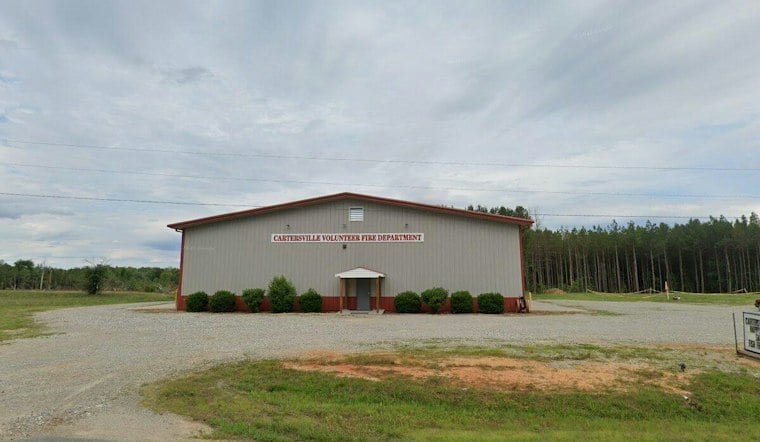
The Cumberland Volunteer Fire Department was dispatched to assist the Cartersville Volunteer Fire Department with what was described as an electric vehicle fire, per a department post relayed by the station's report. Crews arrived to find a single-vehicle crash with the car fully involved in flames, and they discovered Fischer dead inside during fire suppression efforts, the same account states. Virginia State Police is investigating the crash.
Why EV Fires Push Rural Fire Crews to Their Limits
The scene underscores a growing challenge for small-town fire departments confronting lithium-ion battery fires. Emergency response guidance from the National Fire Protection Association and the U.S. Fire Administration notes that EV battery fires undergo thermal runaway and require thousands of gallons of continuous water cooling to fully suppress and prevent reignition, according to USFA.FEMA.gov. Unlike a gasoline fire, an EV battery fire cannot simply be smothered out.
That danger does not necessarily end once the flames are out. Tactical research published by the Fire Safety Research Institute in 2026 found that EV battery packs damaged in high-impact collisions carry severe stranded-energy risks, meaning they can reignite hours or even days after initial suppression, per UL Research Institutes. Modern response protocols call for sustained thermal monitoring and isolated outdoor storage of damaged EVs during recovery, a requirement that places added strain on small volunteer departments responding to crashes like this one.
Cumberland County is a rural stretch of central Virginia, spanning roughly 300 square miles. The county relies on mutual-aid volunteer fire departments, including Cumberland VFD and Cartersville VFD, to handle complex rescues and sits west of Richmond along US Route 60.
Virginia's Seat Belt Law and What It Means for Fischer's Case
Fischer's unbelted status comes amid a broader statewide push on seat belt enforcement. Effective July 1, 2025, Virginia expanded its mandatory seat belt law under Virginia Code § 46.2-1094, known as the Christopher King Seat Belt Law, to require all vehicle occupants 18 and older to buckle up regardless of seating position, though the rule remains a secondary offense carrying a $25 fine, according to Marks & Harrison. The amendment expanded earlier rules that had applied only to front-seat passengers.
Despite that statute, Virginia law offers specific protection to crash victims and their families in civil court. Under Virginia Code § 46.2-1094(D), evidence that an injured or deceased driver failed to wear a seat belt is legally inadmissible to prove contributory negligence or reduce monetary damages in crash litigation, per Marcari, Russotto, Spencer & Balaban. That carve-out carries particular weight in Virginia, which maintains a strict contributory negligence bar in civil claims.
Unbelted deaths remain a significant factor in the state's rural traffic fatalities. Virginia Department of Motor Vehicles data for 2024 shows 322 unrestrained occupants died in traffic crashes statewide, representing 50.5% of all traffic fatalities that year, with 216 of those deaths occurring on rural roadways. Preliminary state police data released in early 2026 had pointed to a 15% drop in overall traffic fatalities from 2024 to 2025, a decline attributed in part to increased seat belt use and targeted enforcement, according to 13News Now.
A Recurring Pattern With Tesla Crashes in Virginia
Monday's crash is not the only recent high-impact Tesla incident Virginia troopers have faced. In December 2025, a Virginia State Trooper in nearby Caroline County pulled a 34-year-old driver from a burning Tesla on I-95 moments before thermal runaway fully engulfed the cabin. Federal safety regulators at NHTSA have also launched specialized field investigations into fatal Tesla crashes across the state, including a July 2023 collision in Fauquier County where investigators examined driver-assist systems and impact dynamics, according to AP News.
Whether mechanical malfunction, speed or a driver-assistance system contributed to Fischer's crash remains unknown, as Virginia State Police continues its investigation into the cause.


