

























































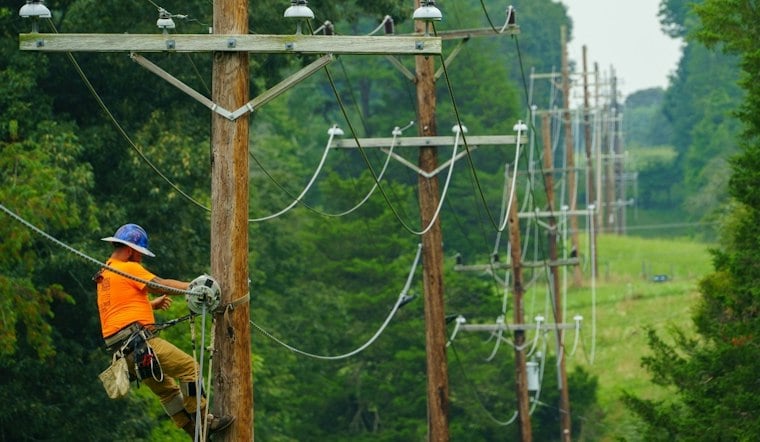
RiverStreet Networks, a broadband provider serving rural communities primarily in North Carolina and Virginia, filed for voluntary Chapter 11 bankruptcy protection Wednesday in the U.S. Bankruptcy Court for the Eastern District of Virginia. The company simultaneously announced it has entered into an asset purchase agreement with funds managed by Oaktree Capital Management, a deal it says is designed to give the business financial strength and resources to keep operating long-term.
A Sale With a Price Tag in Dispute
According to a statement reported by Telecompetitor, RiverStreet said the Chapter 11 process will allow for an efficient sale and orderly handoff of certain unfinished expansion projects to other broadband providers. The proposed transaction will be conducted under Section 363 of the U.S. Bankruptcy Code, meaning it remains subject to court approval, regulatory sign-off, customary closing conditions, and the possibility of higher or better competing offers, according to a release distributed via GlobeNewswire. Reported figures on the sale price diverge: Law360 reported RiverStreet had a $92 million offer in hand for its assets, while Bloomberg Law reported the company agreed to sell its assets to Oaktree-managed funds for $92.5 million.
To keep operations funded during the case, RiverStreet secured a commitment for approximately $20 million in new financing from CoBank, ACB, its existing lender, pending court approval. The company also asked the court for permission to continue paying employee wages and benefits, and it intends to pay vendors in full for goods and services provided on or after the filing date.
Deep Debt Load Behind the Filing
The scale of RiverStreet's financial strain is laid out in bankruptcy filings. The company reported approximately $219 million in total prepetition obligations to CoBank, including about $18 million in accrued interest and fees, per a filing summary from Bondoro. RiverStreet listed its assets and liabilities in the range of $100 million to $500 million in the same filing. The company has appointed Stuart Kaufman, a senior managing director at Areté Partners, as chief restructuring officer to oversee the court-supervised proceedings.
RiverStreet's board and management weighed several options before settling on this restructuring path, and the company says it expects to emerge from the process with new owners, substantially less debt, and greater financial flexibility. Evan Kramer identified the company's customer base, network assets, and community relationships as strengths heading into the transaction, according to the Telecompetitor report.
Construction Troubles Preceded the Filing
The bankruptcy caps a rough stretch for RiverStreet's buildout ambitions. The same Bondoro filing summary states that higher materials and labor costs, rising interest rates, and the closure of capital markets left the company with an unfunded capital need of approximately $153 million beginning in 2024. RiverStreet missed an interest payment and paused new construction in August 2025, and liquidity constraints then forced it to halt construction entirely by late 2025, the filing summary notes.
Virginia's Office of Broadband separately determined that RiverStreet, unable to acquire financing, was incapable of completing its broadband deployment work in the state, according to Cardinal News. By mid-2026, Virginia had removed RiverStreet from $229.2 million of broadband commitments across twelve counties, per the Bondoro summary. Years earlier, RiverStreet had built to just 26% of its assigned CAF II locations, well short of the 60% milestone required by the end of 2023, according to Broadband Breakfast.
What Happens to Unfinished Projects
Some of those stalled projects have already moved to other providers. Virginia's Department of Housing and Community Development replaced RiverStreet with ZiTel on a deployment project serving Franklin, Henry and Patrick counties, Cardinal News reported in a separate story. In that project, covering 14,547 potential customers, RiverStreet had completed only 40 connections — 29 in Franklin County, 11 in Henry County and none in Patrick County, the same report states. In another West Piedmont project covering 27,997 potential customers, RiverStreet had completed connections for about 35% before its removal, while a separate project in Dinwiddie County had seen no work done for 5,009 locations, per Cardinal News.
Moving forward, RiverStreet says it is implementing what it calls a Modified Build Plan that refocuses its operations on its existing customers and current footprint. The company intends to maintain its current networks and finish new builds that are nearing completion, while transitioning certain unfinished expansion projects to other qualified broadband providers. RiverStreet said it will work with federal, state, and local authorities to limit the effects of those project transfers on unserved and underserved communities, and the company said its existing customers should not expect changes to their service.
A Company With Roots Dating to 1951
RiverStreet, which traces its roots to 1951, serves customers in more than 67 counties across three states, primarily in North Carolina and Virginia, according to the GlobeNewswire release. The company had been expanding in recent years, acquiring two TDS Telecom properties and a Citizens Cablevision market area in March 2025 while pursuing a multi-phase plan to bring fiber to 14 additional counties in south-central Virginia, per the Telecompetitor report. For comparison, Broadband Breakfast noted that EMPOWER Broadband, another rural provider, had completed gigabit-tier broadband construction to all 838 of its required CAF II locations by May 2024 — a benchmark RiverStreet's own buildout fell well short of reaching.



