

























































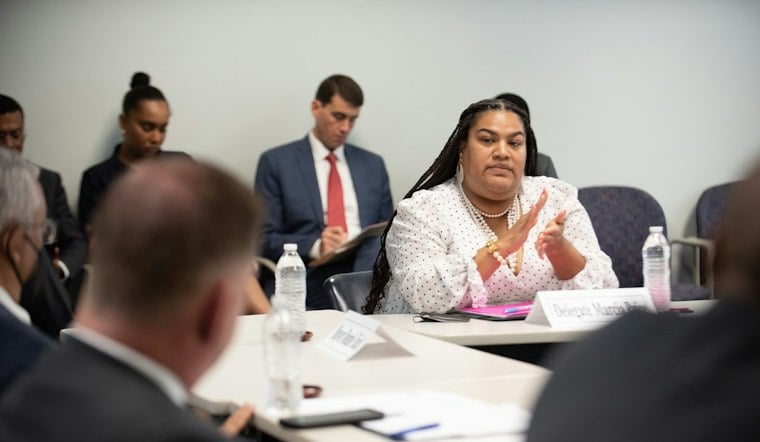
A Newport News lawmaker is rewriting a bill that would let Virginia renters sue landlords over mold exposure, after an earlier version of her proposal failed to clear the General Assembly last year. Del. Cia Price says she plans to reintroduce the measure for the 2027 legislative session, adding new guidance for landlords and tenants on mold abatement and a path for residents to recover losses if they can prove damages.
A Bill Born From a Constituent's Ruined Closet
Price first pitched the legislation in 2025 after hearing from a constituent who threw out all her clothes after discovering mold in the closet of her newly constructed apartment, according to Virginia Mercury. Price has said mold can show up in a home without anyone being at fault, but that doesn't mean the tenant living with it should bear the cost. Her bill would let residents pursue legal action over mold exposure, property damage, attorney fees, or medical bills tied to the problem, provided they can prove the damages.
The earlier version of the bill was, in Price's own words, ambitious and carried far-reaching potential legal ramifications, the outlet reported. That draft did not gather enough support to pass both chambers of the legislature, pushing Price back to the drawing board to tailor the proposal further.
Existing Law Already Sets Some Ground Rules
Virginia already requires landlords to try to prevent mold formation and to promptly remedy it once notified under the Virginia Residential Landlord and Tenant Act, as Virginia Mercury notes. Separately, the Environmental Law Institute explains that the law applies to all single-family and multifamily rental units in the state and obligates landlords to maintain premises in a way that prevents moisture buildup and mold growth. Landlords must also give tenants a move-in report within five days of occupancy disclosing any visible mold in accessible areas, and must remediate mold disclosed at move-in within five days before reinspecting the unit, per the same source.
When a mold problem materially affects a tenant's health or safety, current Virginia law requires landlords to provide tenants with a comparable unit on the property or a hotel room for up to 30 days while remediation takes place, Virginia Mercury reported. Virginia Code does not require property owners to cover other expenses that arise after that relocation window closes, a gap that can leave tenants covering additional transportation costs, lost wages, or the replacement of damaged belongings on their own. Tenants adversely affected by a violation of the law may already file a civil lawsuit for an injunction and damages, according to the Environmental Law Institute, and a landlord who violates maintenance duties can be held liable for a tenant's actual damages caused by a failure to exercise ordinary care.
A Lawyer's Warning About the Fine Print
Jonathan Halperin, a personal injury lawyer, told Virginia Mercury that the prior version of the bill may have inadvertently made it harder for tenants to prove landlord negligence. Price's current draft would base awards on gross or willful negligence, a legal standard Halperin said raises the plaintiff's burden beyond simple negligence, something he suggested Price may not have intended.
Halperin offered examples of what could count as gross or willful negligence, including a landlord who ignores repeated requests to abate mold, or one who simply paints over mold rather than having it professionally removed. He suggested a revised bill could instead apply ordinary negligence to compensatory damages and attorney fees, while reserving the gross or willful negligence standard for punitive damages.
What Comes Next
Price said further workshopping with her colleagues may help get the bill to Gov. Abigail Spanberger's desk during the 2027 session. Mold in rental housing can stem from a range of causes, including constant humidity and poor ventilation, faulty HVAC units, storm damage, or leaks seeping in from neighboring apartments, according to the outlet's reporting.
The stakes extend beyond legal paperwork. The Virginia Department of Health notes that mold affects people differently, with allergic reaction being the most commonly reported health effect of exposure. Price and advocates argue Virginia's mold remediation laws could be stronger, though any changes will depend on how the bill is shaped before it reaches lawmakers again next year.





