

























































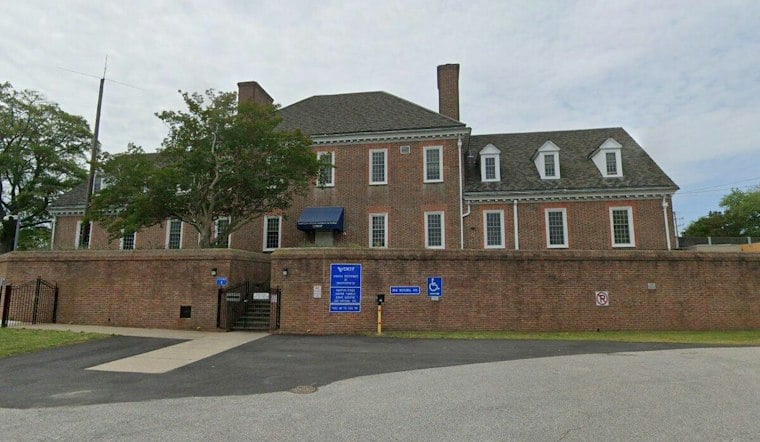
A fiber link through one Hampton Roads crossing could fail; Newport News is planning a second route so data traffic can be redirected if a cable or equipment goes down. The city’s Peninsula Digital Infrastructure Expansion Initiative would carry fiber through both the Hampton Roads Bridge-Tunnel and the Monitor-Merrimac Memorial Bridge-Tunnel, linking Peninsula networks with existing fiber in South Hampton Roads. The city says the separate crossings would provide alternate paths for data traffic.
U.S. Rep. Bobby Scott presented Newport News with $2 million in federal Community Project Funding for the initiative this month, secured through the FY2026 Consolidated Appropriations Act, according to the city. The funding is not the full cost of the crossings: The Virginian-Pilot reported that extending the network across each tunnel route is estimated at roughly $1.5 million, and that the city is assessing what other infrastructure may be needed.
A regional link is not the same as a home connection
The proposed links are meant to connect with the Southside Network Authority’s existing 119-mile open-access fiber ring, rather than directly deliver service to every household. The Pilot reported that the Newport News project is not formally part of the authority’s regional plan, though the authority is consulting with Newport News and Hampton on the funding. A separate Southside agreement illustrates one possible operating arrangement: Virginia Beach-based Global Technical Systems was brought in to operate, maintain and market 96 of the ring’s 288 fiber strands, 13News Now reported. The Peninsula project’s eventual commercial and operating structure has not been settled.
That distinction matters for households. The Pilot reported that Newport News residents without fiber access currently top out at around one-gigabit download speeds, while fiber upgrades through the initiative could reach 10 gigabits per second. Those are reported figures and potential speeds, not a guarantee that every home will receive a fiber connection or those speeds. City officials have said the project is intended to improve residential and small-business connectivity in underserved Newport News and Hampton neighborhoods, not to attract data centers; the city’s needs assessments are expected by the end of 2026, according to the Pilot and the city announcement.
Virginia examples show that open access can take different forms, but do not establish how the Peninsula network will operate. A 2016 Roanoke Valley Broadband Authority explainer described a model in which the authority owned and maintained the fiber while internet providers bought access to serve businesses. In a separate 2023 expansion, Mid-Atlantic Broadband described open-access middle-mile infrastructure as a way for local providers to connect to last-mile service for homes and businesses. These are precedents, not evidence that Newport News has chosen either arrangement.
The city says the Peninsula initiative is also intended to connect local public networks to subsea fiber cables landing in Virginia Beach, giving the regional network a route toward international connections. A separate cable-cut incident shows why network operators use backup paths, though it is not evidence about the risk to these tunnel routes: after undersea cables were severed in the Red Sea on September 11, 2025, Thailand’s Computer Emergency Response Team said Microsoft rerouted traffic through backup paths to limit disruption. The episode illustrates the general value of alternate routing, not how often a tunnel crossing might fail or what service Newport News residents will ultimately receive.
Available broadband statistics also have limits. The U.S. Census Bureau’s ACS B28002 table groups cable, fiber-optic and DSL subscriptions in one broadband category, so it cannot by itself show how many households subscribe specifically to fiber. The project’s needs assessments and eventual operating plan will be important to understanding which neighborhoods are reached and how the new regional links translate into service.





