

























































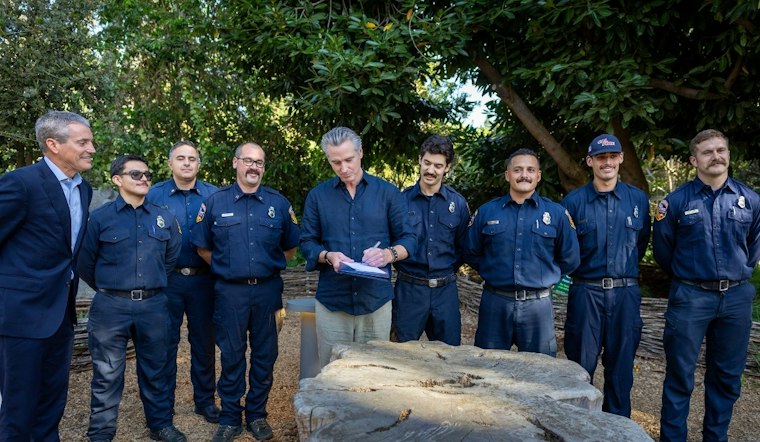
Californians looking to fireproof their homes may soon get some financial help. Gov. Gavin Newsom has signed a sweeping package of wildfire legislation designed to make communities safer while lowering some of the costs of home-hardening and defensible-space projects, according to statements tied to the signing.
The new laws include a low-interest loan program meant to help homeowners and businesses pay for fire-resistant upgrades, according to The Desert Sun. The package also expands wildfire-prevention efforts and prescribed burns while speeding up approval of fuel-reduction projects, the outlet reports. State leaders say the measures build on hundreds of wildfire-mitigation projects already underway across California, per the same account.
Word of the signing spread quickly on social media, where the California Environmental Protection Agency reposted a message from the governor's account describing the legislation. In the post, shared via CalEPA
's account, the governor said he had signed legislation building on his prior executive order to expedite and simplify the review of wildfire mitigation projects, and that he signed additional legislation expanding beneficial fire projects and training. The post added that the new laws build on his earlier executive order and that he will continue taking serious measures to keep Californians safe.
One Bill Targets Faster Reviews Of Mitigation Projects
Among the measures tied to the package is SB 1370, which according to its bill text addresses consolidated and expedited review of covered wildfire-mitigation projects, per the California Legislative Information website. The bill's language is brief on specifics beyond that consolidated-review framework, but it fits within the broader theme state officials have pushed this year: getting fire-prevention work approved and underway faster.
That theme showed up earlier in the year too. A June announcement from the governor's office described actions that had fast-tracked and simplified more than 400 wildfire-prevention projects, while a separate September announcement from the same office described actions that had fast-tracked and simplified more than 500 critical wildfire-prevention projects and expanded prescribed and cultural burning and training. The two figures come from separate state announcements, and it is not clear from either whether they measure the same set of projects or different stages of the broader effort.
Nearly Four Dozen Wildfire Bills Moved Through The Legislature
A September 2025 rundown credited to the Orange County Register and posted on the California State Assembly Speaker's office described nearly four dozen wildfire-related bills Southern California News Group monitored during the 2025 session, with roughly half having passed the Legislature and awaiting the governor's signature at the time. Several of those bills touch different corners of wildfire recovery and prevention rather than the loan program itself.
AB 253 would expedite the process for obtaining building permits for small residential projects, including wildfire rebuilding, by allowing private third-party plan checks when a local department cannot complete its review within 30 business days, the Speaker's office notes. AB 301 would accelerate the state permit review process for housing projects by requiring state agencies to follow specific timelines. AB 462 would require local agencies or the California Coastal Commission to approve or deny a coastal development permit application for an accessory dwelling unit tied to disaster recovery within 60 days of receiving a completed application.
Another bill in that same legislative roundup, AB 247, would raise the pay of incarcerated firefighters in California's Conservation Camp Program to $7.25 an hour, with annual adjustments, according to the Speaker's office account. Together, the bills reflect a legislative session that treated wildfire policy as touching housing permits, labor pay, and prevention funding all at once, rather than a single fix.
Existing Defensible-Space Rules Remain In Place
The new package arrives alongside defensible-space requirements already written into California law. Under existing statute, a person who owns, leases, controls, operates, or maintains certain buildings or structures must maintain defensible space of 100 feet from each side and from the front and rear of the structure, as specified, according to bill text on file with the California Legislature. Separate bill text addressing clearance beyond a property line states that such clearing may be required only when the applicable law, ordinance, rule, or regulation finds it necessary to significantly reduce the risk of flame or heat transmission sufficient to ignite the structure, and that no other feasible mitigation measure can reduce that risk.
State data on prevention progress offers some broader context for why officials keep emphasizing speed. A wildfire-treatment dashboard maintained by the California Wildfire & Forest Resilience effort reported treatments on 700,000 acres in 2023 and said prescribed-fire acreage more than doubled between 2021 and 2023.
For now, the details homeowners most want to know — exact loan amounts, interest rates, eligibility rules, and when applications open — have not been made public in the material tied to this week's signing. What is confirmed is the broad shape of the package: expedited project reviews, expanded prescribed and cultural burning, and a loan program aimed at helping property owners cover the cost of hardening their homes before the next fire season arrives.





