

























































California Gov. Gavin Newsom plans to sign an executive order Friday creating a new Olympic and Paralympic Games Delivery and Coordination Strike Team, putting senior adviser Jamie Callahan in charge of corralling more than a dozen state agencies ahead of the 2028 Summer Games. The move comes as officials brace for as many as 2 million visitors expected to descend on Southern California, straining a transportation network that is already short on funding for several planned upgrades.
A New Office to Cut Through the Red Tape
According to the Los Angeles Times, Callahan will coordinate state departments alongside local governments in Los Angeles and neighboring cities, as well as LA28, the private nonprofit running Olympic and Paralympic events projected to cost $7.2 billion. Newsom said coordination had already begun with Los Angeles Mayor Karen Bass and LA28 CEO Reynold Hoover, and he described California as prepared to deliver a world-class event. The strike team is intended to reduce bureaucratic delays, identify permitting streamlining opportunities, improve interagency communication and support regional workforce and economic opportunities, per the governor's announcement.
Callahan brings more than 15 years advising California governors to the role, and she previously helped prepare the state for last summer's FIFA World Cup soccer tournament. Security planning is also part of the portfolio: California's Office of Emergency Services has been named to help coordinate a massive influx of police from around California and the western United States, though the U.S. Secret Service holds ultimate authority over Games security, the newspaper reported.
Transit Systems Bracing for Double the Load
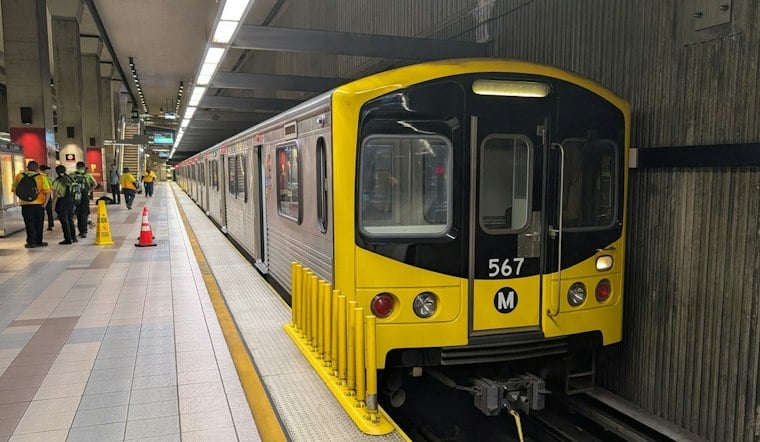
The scale of the logistical challenge is significant. Passenger loads are expected to double during the Games, and Metro estimates the event will generate an extra one million transit trips per day. A separate regional transportation plan aims to cut traffic in Southern California by 15% during the Games, according to the Los Angeles Times' earlier reporting on planned road closures. LA28 itself projects the Games will draw around 2 million visitors to Greater Los Angeles, with direct visitor spending in Los Angeles County estimated between $1.6 billion and $4.3 billion, per LA28's own newsroom release.
California has already approved more than $100 million to upgrade and modernize Exposition Park, home to the Los Angeles Memorial Coliseum. The Olympic cauldron was lit at the Coliseum on January 13, 2026, before ticket registration opened. The state also set aside $257 million last summer to create and enhance mobility hubs linking pedestrians, bicyclists, and bus and train riders — hubs that were envisioned to include seating, shade structures, Wi-Fi, restrooms, hydration stations, vending machines and concessions, the Times reported. Caltrans has agreed to improve highways and freeways and mount a public relations campaign encouraging visitors and locals to avoid driving during the Games.
Funding Gaps That Could Complicate the Timeline
Not every ask has been funded. L.A. Metro requested $379 million in the most recent legislative session but received just $20 million, the outlet's reporting shows. The Legislature also did not advance $65 million for emergency tracks that would let light rail trains divert around breakdowns, nor $138 million for a cloud-based transportation management system involving traffic cameras and video connectivity. Metro additionally did not receive $23 million earmarked for further transit-hub improvements.
The gaps come even as transit agencies point to a successful dry run during the 2026 World Cup. Rep. Laura Friedman cited about 212,000 rides on Metro's special bus service, while Metro reported roughly 500,000 total trips across trains and buses during the tournament, according to Mass Transit magazine. Metro reported no major security incidents during those World Cup games, Governing noted in its own assessment of the transit agency's Olympic readiness, which also found Metro has completed 11 of its 28 planned pre-Olympics projects. The state's Governor's Office has separately said CalSTA coordinated statewide transportation planning with transit agencies, host cities and rideshare providers to manage fan travel during the World Cup, according to a release on gov.ca.gov.
With the strike team now formally in motion, the pressure shifts to whether California can close the remaining funding gaps before the Games arrive. The structure Newsom is creating is meant to keep dozens of moving parts — from freeway lanes to police deployments to mobility hubs — pointed in the same direction as the 2028 opening ceremony approaches.





