

























































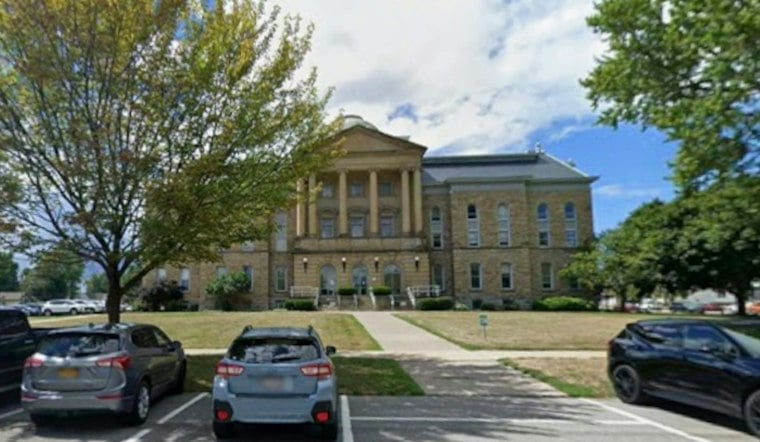
Niagara County took in $3.7 million in opioid settlement funds meant to fight addiction, and through the end of 2024 it had spent none of it, according to a state report. The county ranked second-worst in New York for its overdose death rate in 2020 and remained among the state's ten worst counties for overdose deaths in 2023, even as the money sat untouched.
A Investigative Report Lays Out The Numbers
As reported by Artvoice, the state's Office of Addiction Services and Supports sent Niagara County $1,781,642 in the 2023 budget year, $1,424,865 in 2024, and $537,289 in 2025, bringing its total to $3,743,796 in opioid settlement funds. New York's settlement money can legally be used for addiction prevention, treatment, or recovery services. Niagara County, Hamilton County, Warren County, and Washington County were the only four of New York's 62 counties that reported no opioid-settlement spending through 2024, with Hamilton, Warren, and Washington receiving a combined $1.2 million compared with Niagara's $3.7 million.
That gap stood out starkly against the county's own overdose numbers. Niagara County recorded 29 overdose deaths in 2019, a figure that nearly doubled to 60 in 2020 before climbing to 94 in 2021, according to the Niagara County Mental Health Department — 183 deaths over that three-year stretch alone. With a population of about 210,000, the county's 2020 overdose death rate of 39 per 100,000 people far outpaced the statewide average of 25 per 100,000 that year. Overdose deaths later eased to 92 in 2023 and 71 in 2024, but the county still ranked ninth-worst statewide for its overdose death rate in 2023 and sixth-worst in 2024.
Neighboring Counties Spent While Niagara Did Not
Niagara County was the only one of New York's ten highest opioid-death-rate counties in 2023 to report no settlement spending through 2024; every other county among those ten reported spending its funds in that period, the same report found. Nearby Orleans County spent $260,841 of its $516,825 allocation, and Genesee County spent $611,864 of its $809,880 allocation. Erie County, which received $16.5 million, reported spending nearly $6 million, while Dutchess County — which had New York's worst overdose death rate in 2020 — spent $2.3 million of its $4.5 million allocation by the end of 2024.
The nonprofit news outlet Investigative Post reported separately that OASAS had sent Niagara County $4.2 million since 2023 and that the county had spent just 2.5 percent of its opioid settlement funds as of May 2026. Reporter Adam Smith-Perez found that Niagara County refused to provide Investigative Post with data on how it had used the money, and Laura Kelemen, who told the Lockport Journal that the legislature makes decisions about how the funds are spent, did not respond to repeated requests for comment, per that outlet's reporting. New York State is auditing Niagara County's use of the opioid settlement funds, according to meeting minutes cited by Investigative Post.
County Points To Collapsed Proposals, Then Finally Acts
County officials have said no proposals qualified in 2023 and that a hospital program fell through, according to a county statement cited by Investigative Post. On September 22, the Niagara County Legislature passed a resolution approving $2.43 million to execute multi-year contracts with Peaceprints, Community Missions Inc., and a county jail-reentry housing and substance use treatment program, according to county meeting records. The move came roughly nine months after Becky Wydysh stepped down as legislature chair, a role she held from 2020 through 2025 — the county's highest elected office.
State law, under New York Mental Hygiene Law § 25.18, created an Opioid Settlement Fund Advisory Board within OASAS to make recommendations about allocating state Opioid Settlement Fund money and eligible expenditure categories, according to a legal analysis of the statute. The law requires relevant agency commissioners, in consultation with the advisory board, to provide an annual report on state Opioid Settlement Fund funding. But that oversight has limits. At a Cheektowaga town hall in July, OASAS Commissioner Chinazo Cunningham said the agency lacks statutory authority to order local governments how to spend their direct share of settlement dollars, a structural gap that left county-level delays largely beyond the state's reach.
Where The Settlement Money Comes From
New York's Opioid Settlement Sharing Agreement splits settlement money three ways: 46.11% goes directly to local governments, 36.39% goes to the state-level Opioid Settlement Fund, and 17.5% goes toward state general abatement, according to a fact sheet from Vital Strategies. Legislative findings tied to New York State Assembly Bill A06554 reported in March 2025 that the state had secured more than $2.6 billion in total opioid settlement agreements. Meanwhile, unspent settlement money sitting in the state's central OASAS-administered account had generated roughly $35 million in accumulated interest by February, according to Radio Catskill, prompting addiction advocates to question state budget provisions around those earnings.
Candidates For The 145th Assembly Seat Clash Over The Issue
The delayed spending has become a flashpoint in the race to replace retiring Assemblyman Angelo Morinello in the 145th District. Wydysh, the Republican candidate, has chaired Niagara County's OASIS opioid task force — the Overdose/Addiction Strategy Implementation Standing committee — since 2017, and in 2023 state Senator Rob Ortt named her a Woman of Distinction, describing her as particularly passionate about battling opioid addiction issues that have devastated Niagara County families. Wydysh spent more than 20 years at the Niagara County Courthouse and was elected to the county legislature in 2015, according to Niagara Frontier Publications.
Her Democratic opponent, Nate McMurray, reserved Beaver Island State Park for an October 29 debate after Wydysh declined multiple public forum invitations, citing decorum concerns and prioritizing door-to-door campaigning, according to CNHI. McMurray's campaign purchased advertising in the Niagara Falls Reporter, though advertisers opposing McMurray bought substantially more ad space in that same publication. Voters in the district head to the polls on November 3.
On The Ground, The Delay Has A Human Cost
For people living with addiction in Niagara County, the slow pace of spending is not abstract. Joseph Gardner, 53, lives in a homeless encampment in Lockport and said opioid settlement money could provide six months of housing. Deanna Gibson, 37, who lives in the same encampment, said she has seen many overdoses and is struggling immensely.
David DiTullio, who runs operations at the Niagara Gospel Rescue Mission, said there was no excuse for not using the available funds. Niagara County had previously backed addiction treatment infrastructure before the settlement money arrived — in 2019, the county supported an expansion of the Northpointe Council clinic at the Trott Access Center in Niagara Falls from 3,800 to 9,000 square feet, growing outpatient capacity from 120 to 250 treatment slots, according to Niagara Frontier Publications. Wydysh has credited her task force with helping reduce overdose deaths that year, even though county overdose deaths tripled by 2021 compared with 2019, while Republicans held the county legislature majority throughout that period.





