

























































Georgia Curry cannot speak a single word out loud, but her iPad gave her the voice she needed to help save a woman hundreds of miles away in Mississippi. Curry, a nonverbal patient at a rehabilitation campus in Northwest Omaha, used a speech-generating app to call and check on a woman named Marie after sensing something was wrong — a call that ended with emergency medication reaching Marie just in time.
A Daily Routine Becomes a Lifeline
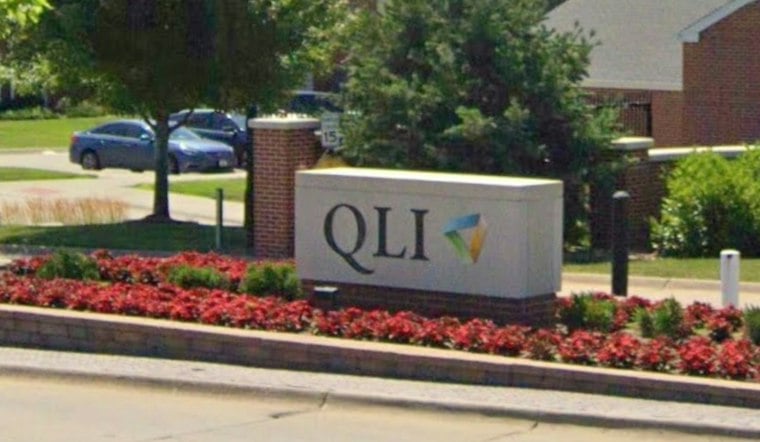
Curry spends her days at the campus run by Quality Living, Inc., commonly known as QLI, where she is well known among staff and fellow patients, according to KETV. One of her regular rituals is greeting Queenie Seals-Moore, a supervisor at QLI, who says Curry is more than just a familiar face around campus — she is a leader. Curry's outreach to Marie, the aunt of her late friend Lajuana, started as one of those ordinary check-ins and quickly became something much more serious.
When Marie did not sound like herself, Curry sensed trouble. Marie, who lives in Mississippi, was unable to make outgoing phone calls herself and needed her daily medication, the station's report states. Because Curry reached out when she did, the problem was caught before it became a crisis.
Staff Step In After Curry Raises the Alarm
Once Curry alerted staff to the situation, Seals-Moore contacted Marie's brother, who delivered the needed medication to her. Marie later said she might not have survived the night without that help, per the same account. It was Curry's long-distance relationship with QLI staff, built through years of small daily interactions, that Seals-Moore credits with making the rescue possible.
Marie described Curry in simple terms: a blessing who helps her in many ways. The two are connected through Lajuana, Curry's late friend, whose name Curry has tattooed on her body. Phelisa, who is related to Curry, told the outlet that nothing stops Georgia Curry — a sentiment echoed by Seals-Moore, who said QLI staff love Curry for exactly that kind of determination.
A Bond Forged Through Shared Experience
According to Phelisa, both Curry and Lajuana lived with cerebral palsy, the same diagnosis that shaped their friendship before Lajuana died a few years ago. Curry promised to watch after Lajuana's aunt, a pledge she continues to carry out through calls made possible by her iPad, which she also used to communicate directly with KETV for its report. Cerebral palsy is the most common childhood motor disability in the country, affecting roughly 1 in 345 children, or about 2.4 per 1,000 8-year-olds, according to the CDC. The condition varies widely in severity, and the CDC has also found that about 40% of children with cerebral palsy have co-occurring intellectual or communication disabilities, with 30% to 40% experiencing limited or no walking ability.
Tools like the one Curry relies on have become central to how nonspeaking individuals maintain independence. The American Speech-Language-Hearing Association notes that augmentative and alternative communication devices, including iPads equipped with speech apps, give nonspeaking individuals a functional voice without impairing natural speech development, according to ASHA. That kind of technology is what allowed Curry to place a cross-state call that staff say directly led to Marie getting help.
The Campus Built Around Independence
QLI operates a 60-acre campus in Northwest Omaha as a specialized post-hospital rehabilitation facility for brain injuries, spinal cord injuries, and complex physical conditions, according to the Better Business Bureau. State records show the campus, located at 6404 North 70th Plaza, is licensed for 133 Medicaid nursing facility beds and provides physical, occupational, and speech therapy services, per the Nebraska Department of Health and Human Services' 2026 facility directory. The nonprofit employs roughly 599 staff members and reported nearly $45 million in annual revenue in 2025, according to Cause IQ.
Much of that institutional culture centers on building real-world independence rather than purely clinical treatment. QLI uses what it calls a Tri-Dimensional Rehabilitation model, addressing body, mind, and spirit through a combination of medical treatment, psychological support, and functional skill-building, according to Team QLI. The organization has also expanded that philosophy beyond its Omaha campus through Kintinu Telerehab, a virtual initiative that delivers occupational, physical, and speech therapy across state lines.
For Curry, that environment of encouraged independence appears to have translated directly into the kind of vigilance that reached Marie in Mississippi. Her story also reflects a broader shift in how children with cerebral palsy are identified and supported. A 2026 multi-state study published in Pediatrics: Open Science found children are being diagnosed earlier, with four-year-olds now reaching a prevalence rate of 2.2 per 1,000, allowing earlier introduction of speech and mobility devices, according to Disability Scoop. In Nebraska, organizations such as the Brain Injury Alliance of Nebraska work alongside state agencies to coordinate advocacy, Medicaid funding, and care standards for long-term rehabilitation facilities like QLI, according to the University of Nebraska Medical Center.



