

























































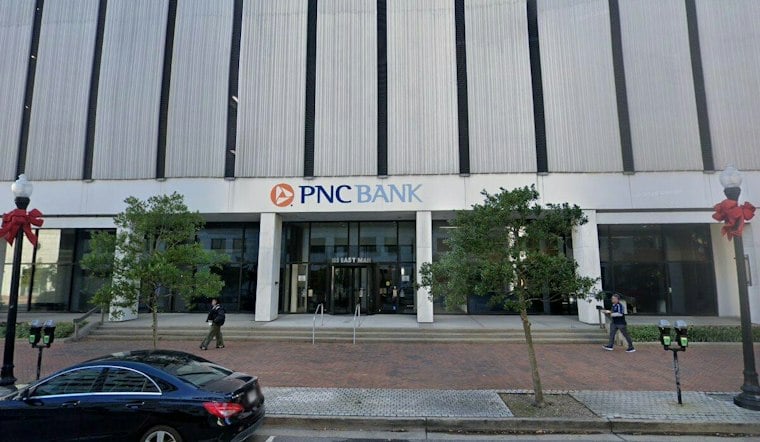
Norfolk City Council members are again pressing Hampton Roads Ventures, the for-profit investment arm of the city housing authority, to do more in its home city. The firm’s latest annual report, filed September 30, lists no Norfolk project since 2008, while describing recent support for a $12 million grocery store in rural Marion, a $10 million farm equipment distribution center in Martinsville and a $3 million supermarket in Louisiana.
The pattern is nearly two decades old at this point. As Virginia Mercury reported, Hampton Roads Ventures has backed investments in 17 states and the District of Columbia using New Markets Tax Credits, a federal program that lets community development entities apply to the U.S. Treasury Department for allocations meant to spur investment in distressed areas. Norfolk itself has 16 severely distressed census tracts prioritized for that kind of funding, with poverty rates ranging from 31 percent to 80 percent and unemployment reaching as high as 40 percent in some of them.
Grocery Stores and Warehouses, Just Not Here
Food City opened a 56,700-square-foot store in Marion in September, creating 50 new area jobs, while Rural King is investing $42 million, including Hampton Roads Ventures tax credits, in a distribution facility in Martinsville projected to create 150 jobs. The company is also backing a 47,694-square-foot Rouses facility in Chalmette, Louisiana, expected to open in 2027. None of that activity is in Norfolk, where the firm's parent organization, the Norfolk Redevelopment and Housing Authority, is based.
Created in 2003, Hampton Roads Ventures is wholly owned by the Norfolk Redevelopment and Housing Authority, but Norfolk City Council does not directly control the company. The council appoints the housing authority’s commissioners, some of whom sit on Hampton Roads Ventures’ board, and a 2003 council resolution specified that the firm would be managed by those commissioners. In 2022, the council passed a resolution requiring the subsidiary to seek projects in Norfolk; the latest filing shows no local investment has followed.
Housing Commission Leaders Push for a New Role
Carlos Clanton and Jeremy McGee, co-chairs of the mayor’s housing commission, want Hampton Roads Ventures to contribute to Norfolk’s affordable housing response. The commission’s interim report called for more pathways to homeownership. Clanton said the tax-credit financing mechanism has been used in other communities for homeownership, vacant-property rehabilitation and mixed-use development. The firm has not backed a for-sale affordable home project and has not contacted a St. Louis firm specializing in that work, according to the report’s findings.
McGee proposed redirecting Hampton Roads Ventures’ annual profits, which typically top $1 million, toward housing needs, including workforce housing. Clanton and McGee said they would push for the firm to support the city’s affordable housing program. Council member Courtney Doyle said she remains disappointed that the company has not invested in Norfolk or shown interest in doing so.
Norfolk’s leverage and housing constraints
The council’s role is indirect: it appoints the housing authority commissioners, some of whom serve on Hampton Roads Ventures’ board, and its 2022 resolution called for the subsidiary to seek Norfolk projects. In a separate 2023 effort, Virginia Mercury, in a report republished by WHRO, reported that the firm discussed but did not complete a proposal to fund a Norfolk shopping-center project. The City of Norfolk’s draft FY2027-2032 Consolidated Plan says affordable housing production is constrained by rising development costs and limited affordable-housing developer capacity. That documented constraint provides context for the commission’s proposals to use Hampton Roads Ventures’ profits to support housing, though the plan finding cited here does not specify a production target.
Where the Money Has Gone Instead
By the end of 2019, Hampton Roads Ventures had invested $250 million nationwide, with only $35.2 million of that in Norfolk, according to The Virginian-Pilot. That same reporting found the last project the firm funded elsewhere in Virginia began in 2011, three years after its last Norfolk investment. Since then, the company's tax-credit allocations have grown to $470 million, funding projects like grocery stores in Decatur, Illinois; Columbus, Ohio; Tulsa, Oklahoma; and a retail complex in Grambling, Louisiana, along with a historic market renovation in Roanoke and a peanut processing plant in Kennett, Missouri, according to the Pilot's earlier coverage.
A 2021 Virginia Mercury investigation revealed the firm had allocated only a fraction of a $360 million tax-credit pool to Norfolk's distressed areas at the time. In 2023, the company allocated credits to an $8 million grocery store in Picayune, Mississippi, and a $7 million cancer health care center in Lillington, North Carolina, per a newsbreak.com report. For comparison, Indy CDE in Indianapolis has secured $177 million in tax credits since 2010 for local projects including a YMCA, a high school modernization and a recycling facility, according to Virginia Mercury's earlier reporting.
Finances, Staffing and an Unanswered Question
The firm's latest annual report shows net income of $1.77 million from January through September, with three staff members on payroll. Spending during that period included $406,000 on payroll, $216,000 on accounting and $152,000 on consulting. Hampton Roads Ventures transferred $850,000 to the housing authority for workforce development, broadband improvements and intergenerational programming, and has sent more than $5.2 million to the authority in the nearly five years since the Mercury's original series, compared with $1.3 million over the 18 years before that.
The company also donated $300,000 in 2025 to support Norfolk State University's athletic department, a payment John Paige supported because Michael Vick's hiring as head football coach brought attention to the city. Paige said Norfolk needs more grocery stores and is in a housing crisis. Clanton raised a separate concern, saying there is a legitimate question about the scope of reporting requirements and the firm's financial disclosures, particularly since a Norfolk resolution requires the housing authority to provide an accounting of how distributed earnings are used each fiscal year. An attorney for Hampton Roads Ventures said an advisory board leads the firm's investment decisions, and the company has denied public records requests seeking more detail. Jennifer Donohue, the firm's chief executive officer, did not respond to an email seeking comment.
Hampton Roads Ventures last won a tax-credit allocation in 2023 and did not receive one in the most recent round, the first time in several years it had gone without. Community development entities nationwide compete for the credits, which let investors earn a 39 percent tax break over seven years, and the Treasury Department says the program generates $8 in private investment for every dollar invested. The next allocation round is not expected until late 2027, leaving Norfolk officials to keep pressing a company they do not control to look closer to home.





