

























































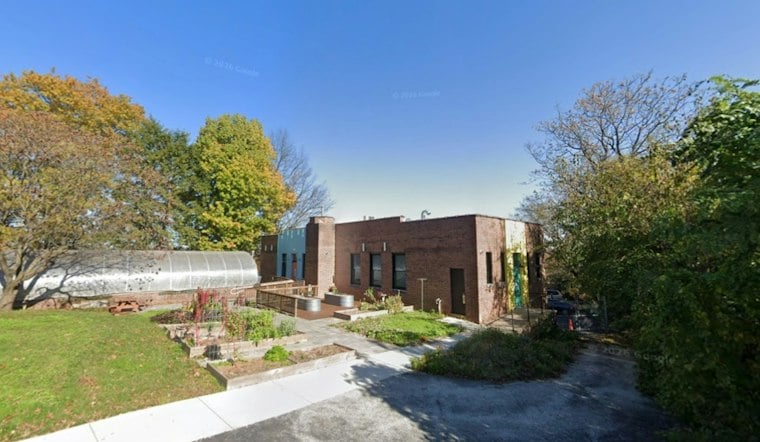
An eight-acre campus that spent more than a century serving orphans, students, and nuns has reopened in North Baltimore as Clare Court II, an 83-unit affordable housing development straddling the Waverly and Ednor Gardens-Lakeside neighborhoods. The $31 million project renovated 30 original apartments, converted the former convent space into 12 more, and added 41 new apartments through a newly constructed three-story building, according to Homes for America.
The address, 3725 Ellerslie Avenue, sits on the former site of St. Elizabeth's Home for Female Colored Orphans, which was first developed in 1917 and later operated as a convent and a school for children with special needs, as reported by WBAL-TV. Homes for America partnered with the Sisters of St. Francis of Assisi on the redevelopment. The nonprofit developer originally acquired part of the former convent building in 2004 to build 30 affordable apartments, then purchased the remaining convent, surrounding land, and the historic Stone House after the order moved to Milwaukee in 2019, according to Affordable Housing Finance.
A Century of Reuse, One Restored Stone House
That 1800s Stone House, which predated the 1917 convent building, has now been fully restored as an active community center and event space for residents, the same outlet notes. The restoration threads a rare bit of historic preservation through what is otherwise a modern residential campus, giving Clare Court II a gathering space tied directly to the site's original architecture.
U.S. Senator Chris Van Hollen said Clare Court II received $3 million in federal funding secured through the American Rescue Plan. He said the opening of Clare Court II will expand housing options in Baltimore and that the development will ensure dozens of families have an affordable place to live.
Funding Stack Draws on City, State and Philanthropic Sources
The $31 million total came together from Baltimore City's Housing Accelerator Fund, federal HOME-ARP funds, low-income housing tax credits, Maryland Department of Housing and Community Development loans, Maryland state bond funds, Cinnaire, and the Harry and Jeanette Weinberg Foundation, according to Connect CRE. The project was among the first in Baltimore backed by the city's newly established Housing Accelerator Fund, the outlet reports. Design and construction were led by Baltimore architecture firm Hord Coplan Macht, general contractor Southway Builders, and property management firm Habitat America, which now handles on-site management and resident services.
At least 15 apartments at Clare Court II carry dedicated Section 8 rental assistance subsidies to help maintain affordability for extremely low-income households, according to a Maryland General Assembly bond initiative document, which notes the developer applied for additional subsidies to support the permanent supportive housing units. Rents are structured for households earning between 30% and 60% of the Area Median Income, with rates starting around $1,160 per month for one-bedroom units and rising to $1,603 for three-bedroom apartments, per listing details cited by Apartments.com.
Five Units Set Aside for Formerly Homeless Residents
Among the 83 apartments are five dedicated Permanent Supportive Housing units reserved for individuals transitioning out of homelessness in the Waverly and Ednor Gardens-Lakeside communities, according to Baltimore Fishbowl. Clare Court II has a full-time resident service coordinator on site along with a case manager, resources meant to support residents in those units alongside the broader tenant population.
Homes for America, founded in 1994 and headquartered in Annapolis, has developed or preserved more than 80 affordable rental communities totaling over 6,500 units across the Mid-Atlantic, according to the Maryland General Assembly bond document. The nonprofit specializes in pairing affordable housing development with on-site resident services, a model reflected in Clare Court II's staffing.
83 Units Against a 33,000-Unit Citywide Gap
Even with the new apartments filled, Baltimore City faces an estimated deficit of roughly 33,000 affordable housing units, even as high vacancy rates persist in select areas, Baltimore Fishbowl reports. City initiatives aim to reduce vacant properties while expanding subsidized housing inventory, the outlet notes, underscoring that Clare Court II's 83 homes represent a meaningful but modest dent in a much larger local shortage.




