

























































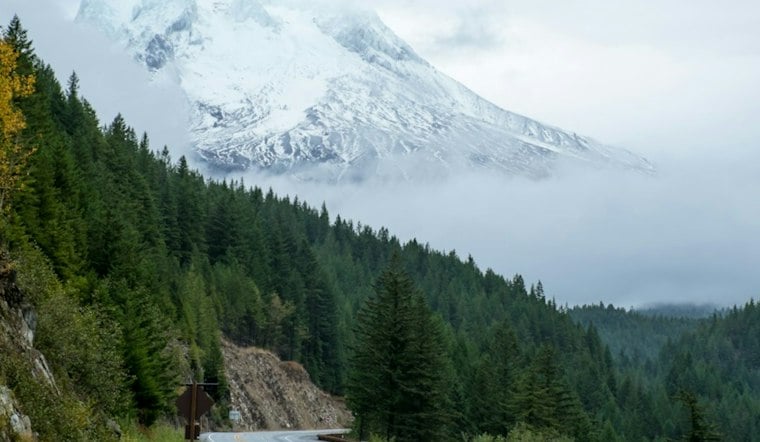
Golden larch trees are pulling thousands of hikers into Washington's North Cascades this October, and the crush of visitors has turned stretches of Highway 20 into a parking nightmare. Cars are lining the shoulder before sunrise, trailhead lots are filling before 8 a.m., and state officials have started handing out fines and threatening tows just to keep the road passable.
The seasonal spectacle known as Larch Madness happens every fall when larch needles turn a brief, brilliant gold, drawing hikers from around the world, according to FOX 13 Seattle. That beauty window is narrow and unforgiving: the broader larch season lasts roughly two to three weeks before the color fades and the crowds thin out, the station reports. This year, the surge has been severe enough to create what the outlet describes as severe parking shortages along Highway 20.
In response, the Washington State Department of Transportation lowered the speed limit to 45 mph and installed no-parking signs near side-road intersections in the affected stretch, per the station's report. Officials are warning that improperly parked vehicles can draw approximately $50 in fines, with the possibility of being towed at the owner's expense. Drivers are being told to park parallel to the roadway only where parking is explicitly permitted, the same account notes.
Troopers Pulled Off Their Normal Beat
The parking crunch has gotten bad enough that the Washington State Patrol is pulling troopers from Omak to the mountain pass just to manage the overflow, according to the station's reporting. That kind of staffing shift underscores how quickly a scenic weekend drive has turned into a traffic management headache for a stretch of highway that normally sees far lighter patrol presence.
Crowd estimates from the ground paint a vivid picture of just how many people are funneling into a handful of trailheads. A backcountry wilderness ranger estimated that 6,000 people visited the area's most heavily promoted larch-viewing trails on a recent Sunday, according to Cascadia Daily News. Three days later, cars were already parked on the highway shoulder by 7 a.m. for hikers headed to the Maple Pass and Blue Lake trails, the outlet reported, while Forest Protection officers worked the scene handling enforcement and writing parking tickets. The Washington State Department of Transportation posted a traffic advisory on social media on Oct. 8 in direct response to the congestion, per the same account.
Numbers Climbing Toward Peak Weekends
Visitor counts at specific trailheads have been climbing steadily. The Methow Valley Ranger District reported that more than 1,000 people visited the Heather/Maple Pass Trail on Sept. 28, with numbers expected to rise to nearly 2,000 visitors per day over the following weekends, FOX 13 Seattle reported in a separate story. Washington Trails Association volunteers are being stationed at the Heather/Maple Pass Trailhead on peak weekends to help manage the flow, and parking lots along the North Cascades Highway often fill up most mornings by 8 a.m., according to that report.
Hikers headed into the area are also being reminded that there is no cell service along the North Cascades Highway, with visitors encouraged to carry satellite communication devices in case of an emergency, the station notes. That isolation adds another layer of risk when trailheads and shoulders are already jammed with cars and pedestrians navigating a 45 mph roadway.
A Tourism Lifeline for Methow Valley
For all the headaches, the influx has been an economic boost for a region that badly needed one. Larch tourism has helped Methow Valley hotels and restaurants rebound after a rough ski season and a summer marked by wildfires, with hotels booked in advance and restaurants seeing midweek waiting lines, according to Cascadia Daily News. The timing lines up with how fleeting the spectacle actually is: larch needles typically turn golden from late September into early October and stay that color for only a few weeks, according to the Washington Trails Association.
The congestion isn't unique to one trailhead. At Lake Ingalls and Moonlight Basin in the North Fork Teanaway, the trailhead fills up first thing in the morning even on weekdays during larch season, according to The Spokesman-Review. Nearby, the Stafford Creek Trailhead for Navaho Peak can only accommodate roughly a dozen vehicles, leaving little room for overflow once the small lot is full, the newspaper reported.
Crowding along Highway 20 itself is not new. Cars have lined the North Cascades Scenic Highway shoulder for more than a mile near the Maple Pass Loop trailhead during past larch seasons, according to Earth Trekkers, and even the Rainy Pass lot has a history of filling by 8 a.m. on busy summer weekends, per the same source. Forest Service staff had already estimated crowds of 2,000 people per weekend day at several North Cascades trailheads back in 2024, Cascadia Daily News reported at the time, suggesting this year's numbers are an extension of a trend rather than an isolated spike.
Access constraints elsewhere in the Methow Valley compound the squeeze. The Okanogan-Wenatchee National Forest has announced temporary trailhead closures near Washington and Rainy Passes along State Route 20 between mileposts 157 and 162, according to the Methow Conservancy. Alternative parking near those closed trailheads is limited or nonexistent, and restrooms will also be closed during the construction work, the conservancy notes — one more factor funneling already overwhelming crowds toward the trails that remain open.





