

























































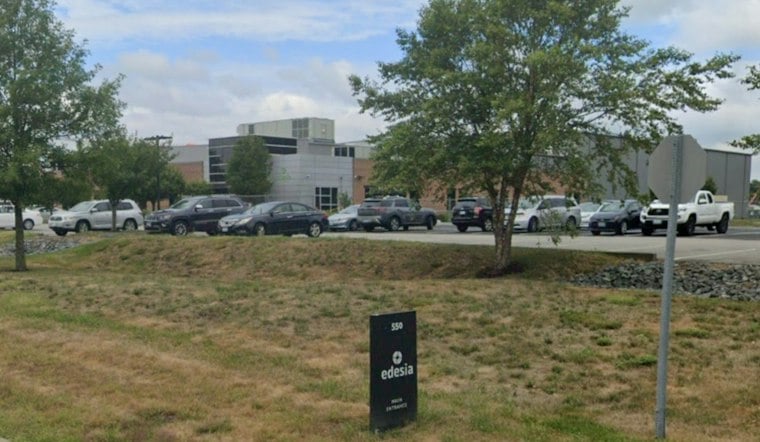
A Rhode Island factory that makes life-saving peanut paste for malnourished children just completed a massive expansion, more than doubling its production capacity at a moment when the global food-aid system it depends on has been anything but stable. Edesia Nutrition's plant at Quonset Business Park in North Kingstown finished a 200,000-square-foot addition, a milestone the company says will eventually let it reach an additional 10 million children a year.
The completion was celebrated as a sign of what sustained investment can do for a struggling supply chain, according to Rhode Island Current, which reported the expansion would more than double Edesia's operational capacity. The outlet described the added 10 million children a year as a direct result of the newly finished buildout at the Quonset site.
That growth traces back to a 2023 lifeline. The family of Jeff Bezos's late mother and adoptive father, Jacklyn and Miguel “Mike” Bezos, gave Edesia up to $137 million to help provide food to malnourished children caught in humanitarian crises, according to Edesia Nutrition. At the time, the company said the gift would double its production capacity, add at least 50 jobs, and ultimately let it reach 10 million children every year — the same target now tied to the completed expansion.
A Near-Collapse Before the Comeback
The expansion follows a period when Edesia's survival was in real doubt. USAID accounted for 85 percent of the company's business in the year examined by The Public's Radio, and when the Trump administration moved to dismantle the federal aid agency, the fallout hit Quonset hard. The station reported that Edesia laid off 10 percent of its staff and launched an emergency $3.5 million fundraising campaign over six weeks just to stay afloat.
Edesia's leadership said at the time that the company could survive roughly three or four months without clarity on its funding situation before needing real answers, per the same account from The Public's Radio. Even while laying off workers, the company stockpiled enough product to feed 230,000 starving children in Somalia and Sudan, as funding for transportation shifted from USAID to the State Department.
Eventually, new orders arrived. Edesia received fresh orders from the U.S. State Department for its flagship Plumpy'Nut product, and some laid-off workers were expected to be rehired, according to Turn to 10. That outlet reported the order was expected to help more than 800,000 children across 11 countries. A separate report from WPRI described the State Department request differently, putting it at 11,285 metric tons of therapeutic food meant to reach 818,000 children in 11 countries — a discrepancy neither outlet reconciled. WPRI also reported that Edesia had 185,535 boxes of peanut paste sitting in its Quonset warehouse earmarked for Nigeria and the Central African Republic, with the company capable of producing roughly 800 metric tons of peanut paste and other nutritional foods per week.
A System Still Finding Its Footing
The disruption at Edesia reflects a broader shakeup in how the U.S. delivers emergency nutrition abroad. Before the Trump administration dismantled USAID, the agency had been responsible for more than half of all annual orders for ready-to-use therapeutic food, or RUTF; afterward, those orders slowed to a trickle, according to WETS. The station reported that producers like Edesia have had to look for ways to move their product with or without the U.S. government, and that the State Department's Bureau of Disaster and Human Response now operates with only about an eighth of USAID's former funding.
The State Department has since committed $100 million over two years toward ready-to-use therapeutic food, per GPB, which also reported that a nonprofit effort called Operation End Starvation had raised about $33 million on its own and planned to place its first RUTF orders by October. Therapeutic food of this kind is made at just two U.S. factories — Edesia in Rhode Island and Mana Nutrition in Fitzgerald, Georgia, which GPB reported had as many as 600,000 cases sitting unshipped in its warehouse at the height of the funding chaos.
The Global Stakes Behind the Expansion
The need for that capacity remains enormous. More than 12 million children worldwide were suffering from severe wasting as of May 2026, according to UNICEF, which has said local manufacturing capable of supplying other countries is essential for responding quickly to malnutrition crises and supply-chain shocks. UNICEF procures its therapeutic food from 21 suppliers globally.
Separately, the World Health Organization has found the world is not on track to meet the 2030 Sustainable Development Goal targets for child malnutrition. At the current rate of progress, the global target of reducing stunted children to 90 million will be missed by 46 million children, according to the WHO's analysis.
Edesia makes Plumpy'Nut, a fortified peanut-based paste for treating severe acute malnutrition that the company says has a 92 percent success rate in curing the condition in as little as eight weeks, according to Edesia Nutrition. The company operates in partnership with humanitarian organizations including USAID, UNICEF, and the World Food Programme, and says it serves children in more than 60 countries.


