

























































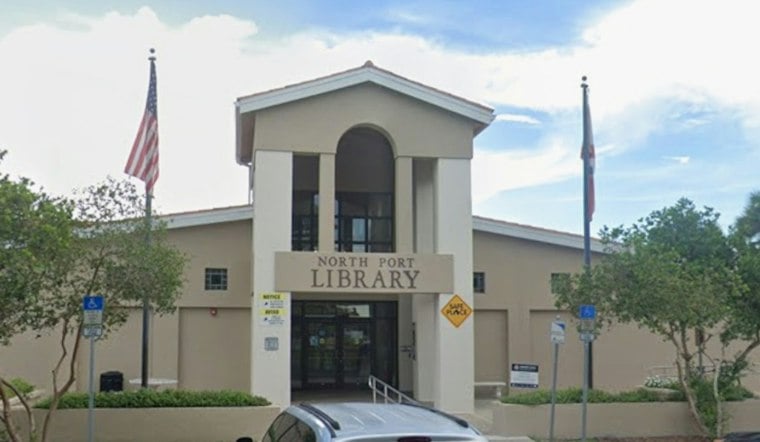
State Rep. Danny Nix stood before a room of North Port residents on Sept. 30 and told them plainly: if Florida voters approve Amendment 3 next month, there is no guarantee local services will stay the same. “Keep your eyes wide opened and be prepared,” Nix told the crowd, according to his own remarks at the information session. The event, held in North Port, brought together a state lawmaker, a county commissioner, a former lieutenant governor and city finance staff to walk residents through a constitutional amendment that could reshape how Florida pays for police, fire and other local services.
The session was organized by the Friends of the North Port Library and the North Port Area Chamber of Commerce Foundation, and moderated by Sean Burroughs, a member of the North Port Area Chamber of Commerce. Amendment 3, headed to Florida's Nov. 3 ballot, would raise the state's homestead property-tax exemption for non-school taxes to $150,000 in 2027 and to $250,000 in 2028, according to Sarasota County. The measure also includes inflation adjustments for potential future increases to that exemption and would need approval from at least 60% of voters statewide to take effect.
Nix, the Republican representative for District 75 who is running for reelection against Democratic challenger Cynthia Butler, said he felt obligated as a legislator to put the amendment on the ballot but would not tell voters how to vote on it. “Florida needs to be more affordable and people need relief,” he said, while also warning that the amendment “lacks guard rails.” District 75 covers parts of Charlotte and Sarasota counties, including Port Charlotte, North Port, Englewood and South Venice.
A Tax Shift, Not a Tax Cut, Officials Say
Nix described the proposal as a tax shift rather than a tax cut, warning that local governments could respond by charging fees for services that are currently free or subsidized. Jeff Kottkamp, the former Florida lieutenant governor who now serves as president and CEO of Florida TaxWatch, echoed the concern about missing guardrails and worried the amendment could make housing less affordable if communities grow wary of approving new, cheaper housing construction. The Florida League of Cities has taken a similar position, stating flatly that Amendment 3 is not a tax cut, it's a tax shift, and that reduced property-tax revenue could shift costs onto renters, businesses and other homeowners who don't qualify for the expanded exemption.
Sarasota County Commissioner Ron Cutsinger, who also spoke at the event, said raising taxes “is not in Sarasota County's DNA,” and warned that services will be cut if the county cannot pay for them. He raised the possibility of county offices or facilities closing, people being laid off, and new fees appearing at places such as beach parking lots. Cutsinger said he is not a fan of the reform's uncertain nature.
Sarasota County's Own Numbers
Those worries are backed by the county's own fiscal estimates. Sarasota County projects Amendment 3 could reduce funding for county services by about $87 million in fiscal year 2029, with more than $11 million of that hitting emergency medical services specifically, per the county's published analysis. The amendment would not touch school property taxes or assessments for solid waste and stormwater services, the county notes, but it would reduce the annual cap on assessed-value growth for non-homestead properties from 10% to 5%, a change that could shift more of the tax burden onto rental properties, businesses and second homes.
North Port's exposure could be especially steep because the city is only about 8% commercial, leaving it reliant on residential property taxes, according to a report from WWSB ABC 7. The station reported that North Port Fire Chief Scott Titus has warned the amendment could eliminate more than half the money the city uses to run police and fire services, even as the city's population has grown 35% since 2021 and call volumes have climbed with it. North Port is also one of only five dependent fire districts in Florida, meaning it cannot fund EMS through special assessments the way many other Florida fire districts can, the same report noted.
Statewide Estimates Vary, Business Groups Weigh In
Statewide, estimates of the amendment's eventual cost to local governments differ depending on who is counting and over what time frame. A separate report from the same station projected Florida's cities and counties could lose roughly $12 billion a year in property-tax revenue after 2028, while state economists cited by Florida Politics put the eventual annual hit to local budgets at $11.86 billion. A Florida House fiscal analysis offered lower near-term figures, estimating losses of $4.95 billion in fiscal year 2027-28 and $8.78 billion the following year. North Port, a largely residential community, stands to lose a larger share of its annual budget than Sarasota, which has a bigger commercial tax base to lean on, the station's report found.
The disparity shows up elsewhere in the state too. Miami-Dade County could see a $445 million revenue decrease as soon as fiscal year 2028-29, while Hillsborough County could lose $353 million, according to Florida Politics. St. Lucie County could be hit hardest of all, facing an estimated 35% revenue loss. Business groups including the Tampa Bay Chamber, the Jacksonville Civic Council, the Orlando Economic Partnership and the Sarasota Chamber of Commerce have raised similar concerns about the amendment's downstream effects, per the same outlet.
What Happens If Voters Say No
Panelists at other recent forums on the Suncoast have painted a stark picture of the alternative if local governments lose the revenue: potentially fewer firefighters and police officers, less money for parks and libraries, and higher fees and assessments to make up the difference. A lower credit rating tied to reduced property-tax revenue could also raise borrowing costs for infrastructure projects, Sarasota County has cautioned.
Nix told the North Port audience that nothing changes if voters reject the amendment on Nov. 3 — the current exemption structure simply stays in place. If it passes, he said, voters who approve it will have to have faith that the tradeoffs work out. Attendees at the Sept. 30 session, which also drew North Port Finance Director Irina Kukharenko and residents including Bill Prummell, Jonathan Lewis, Jerome Fletcher and Chris Morales, heard questions from the floor, including one posed by resident Kathy Garrity, as officials tried to lay out both the promise and the uncertainty built into the measure.



