

























































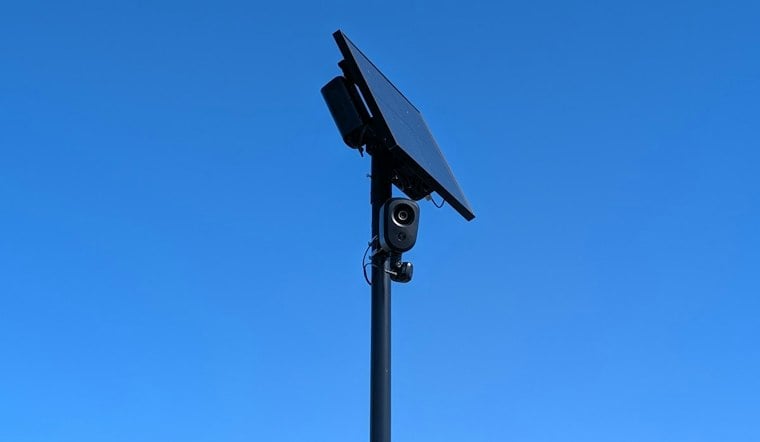
North Royalton is keeping its 10 Flock license-plate-reading cameras, at least for now. The City Council Safety Committee concluded on Oct. 20 that ditching the contract early would be too legally risky and potentially costly, and the deal runs through December 2028 anyway.
According to Cleveland.com, the committee will wait until 2028 to decide whether to renew. The newsroom's account says the committee judged that prematurely ending the contract was “too legally risky and potentially costly for the city.” Council President Mary Gorjanc said the committee will hold off on any renewal decision until then.
The Law Department's advice was blunt: don't touch the contract until it comes up for renewal. Assistant Law Director James Budzik said the city would likely pay costly penalties to buy out the contract, “if it were even possible to do so.” Any litigation could also land in Ohio or Georgia, and the report notes city attorneys could not represent North Royalton in Georgia because they aren't licensed there.
How North Royalton Got Here
The cameras have a short but bumpy history in town. Council records show the city council voted against installing 15 Flock cameras in April 2022, then voted in favor of leasing 10 of them that December. The initial deal cost $25,000 a year plus a $350 installation fee per camera, for a first-year total of $28,500.
The city then extended the contract for another five years in November 2023. Councilman Matt Coleman said he did not know a prior council had extended it by five years, a detail that helps explain why some residents and officials are now surprised by how locked in the city is.
The Police Case for Keeping the Cameras
Police Chief Keith Tarase urged council members to support responsible use of the technology. He said LPR cameras help police find missing and endangered people, recover stolen vehicles, develop investigatory leads and identify suspects. Tarase also said the International Association of the Chiefs of Police and the National Organization of Black Law Enforcement Executives support responsible use, and that the Ohio Attorney General's Office recognizes both the value of the cameras and the need for accountability when they are misused.
On safeguards, Tarase said North Royalton police have written policies, trained and authorized users, documented search reasons, access controls and regular audits. Officers must verify a Flock alert by running the plate through a separate system, and Tarase said they cannot arrest anyone based solely on information from the Flock system. Officers are required to enter a reason for viewing Flock video, though the report notes police reports often leave that field blank, and Tarase has reminded officers they must give a clear reason.
Residents Push Back on Privacy and Retention
Not everyone in the room was convinced. Councilwoman Kaylee Green said residents question privacy, potential police retaliation and who can access the camera videos, and Gorjanc said residents worry police might abuse the system. Some residents have complained that the 30-day video retention period is too long.
Tarase said the city can ask Flock to shorten that window but opposed doing so, arguing that people sometimes don't report crimes for weeks after they occur. Elsewhere, ABC News reports that Flock announced a seven-day retention default instead of its past 30-day default, though it's not established whether that applies to North Royalton's existing contract.
Mixed Feelings Inside Council Chambers
Councilman David Quolke said the city's Flock portal shows the cameras have recorded 200,000 vehicle license plates and 420 “hot hits.” That figure comes from his statement and isn't independently verified. He said he has mixed feelings because the system can help but may target people who have done nothing wrong, and that residents want officials to do what they can to protect privacy.
Councilman Gary Petrusky took a different view, saying technology has eliminated privacy and that other communities will still have Flock cameras if North Royalton removes its own. Tarase said he will invite all council members to the police station to see the technology and how it operates. The committee heard from residents just a day after Ed Cyngier resigned as Ward 6 councilman.
A Statewide Patchwork, and Neighbors Heading for the Exits
North Royalton is operating in a regulatory vacuum. A Cleveland.com review of Ohio law found no statewide provision specific to ALPR systems on how long police may keep data, what officers must establish before searching, who may receive it or how use must be audited. State Sen. Al Cutrona has announced plans for legislation that would generally require government-held Flock data to be deleted within 10 days.
Other places are making different calls. The Drive reports Dayton voted in August to cancel its Flock contract, and Plymouth, Minnesota, followed on Sept. 22. Closer to home, Cleveland 19 reports the Cleveland Metropolitan School District will not extend its Flock Safety contract, while Hoodline has noted Brooklyn considering public disclosure of how its 17 cameras are used.





