

























































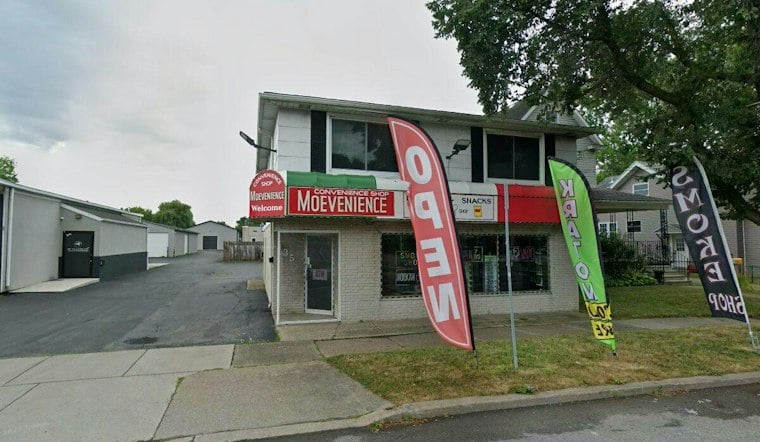
A North Tonawanda convenience store owner is facing a child endangerment charge after investigators say he sold a potent, opioid-like substance known as 7-OH to a juvenile — the latest fallout from a monthslong crackdown on the drug across Niagara County. Fatehi Al-Rubaidi, 37, of Niagara Falls, was arrested Tuesday and charged with one count of endangering the welfare of a child.
According to Newport Dispatch, Al-Rubaidi allegedly sold a quantity of 7-hydroxymitragynine, better known as 7-OH, to a minor at Moevenience, his store at 135 Division Street. The arrest comes more than a month after the Niagara County Drug Task Force first zeroed in on the shop.
A Search Warrant That Didn't Stop the Complaints
The task force executed a search warrant at Moevenience on September 10, seizing a large quantity of 7-OH along with other items as part of an ongoing investigation, the outlet reported. Police said they continued to receive complaints that the store was selling 7-OH to juveniles even after that search warrant was carried out, suggesting the raid alone didn't end the problem.
Al-Rubaidi was released on an appearance ticket, in keeping with New York State bail reform laws, the same report notes. No additional details about the alleged transaction, the identity of the juvenile involved, or an exact court date were included in the available reporting.
What Exactly Is 7-OH?
7-OH is a compound derived from kratom that has drawn increasing alarm from medical professionals. The American College of Medical Toxicology states that it is “associated with opioid-like effects, including intoxication, respiratory depression, dependence, and withdrawal,” and warns that commercially available products containing concentrated 7-OH have been linked to overdose and death.
Those products have circulated in gas stations, convenience stores, and smoke shops since becoming commercially available in the late 2010s, per the same medical group. The organization also projects that U.S. poison-center exposures tied to kratom and 7-OH will jump nearly 68% in 2026 compared with the year before, and that roughly one in four patients exposed to kratom or 7-OH alone ended up hospitalized.
A Pattern Playing Out Beyond North Tonawanda
North Tonawanda isn't the only community grappling with the drug. Police in Hornell issued a public warning earlier this month, cautioning parents and youth about 7-OH being sold in local smoke shops, gas stations, and convenience stores, the same outlet reported. Hornell Police Chief Ted Murray said the substance was turning up as tablets, gummies, energy drinks, and even candy flavoring, and officers there had already begun visiting stores that carried it.
Not every retailer has cooperated. As My Twin Tiers reported, some Hornell-area stores pulled 7-OH products from their shelves after police requests, but the police chief acknowledged not all of them complied.
Niagara County's Overdose Numbers
The arrest also lands against a backdrop of persistent overdose concerns in Niagara County. Local overdose deaths fell from 92 in 2023 to 71 in 2024, yet the county's death rate still climbed to sixth highest in the state that year, according to Investigative Post.
Federal regulators have also moved against the substance. The Drug Enforcement Administration announced a temporary scheduling action aimed at highly concentrated, synthetic 7-OH products, and a Federal Register notice published in July detailed the temporary placement of 7-hydroxymitragynine above a specified threshold into Schedule I. The Department of Justice separately announced updated emergency scheduling actions targeting 7-OH alongside three related opioid substances — mitragynine pseudoindoxyl, MGM-15, and MGM-16.





