

























































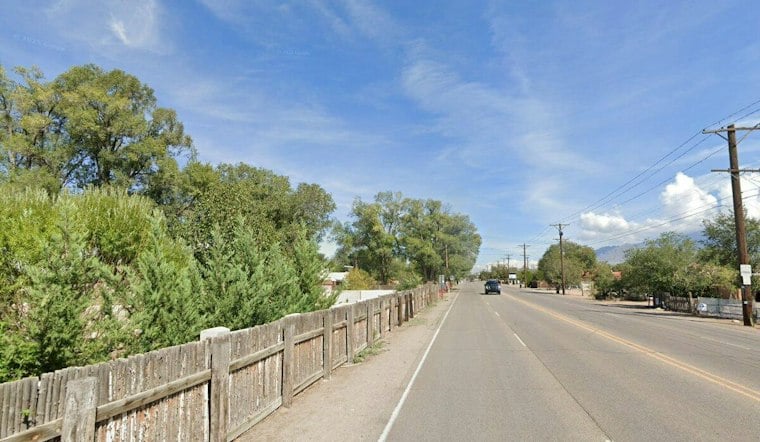
Bernalillo County commissioners were set to vote this week on a plan to reduce 4th Street in Albuquerque's North Valley from four lanes to three, reshaping a stretch of old Route 66 between Alameda Boulevard and Ortega Road. The proposal, placed on the agenda for Tuesday's Bernalillo County Commission meeting, would swap one of the four travel lanes for a center turn lane while adding pedestrian safety improvements and a new drainage system.
According to KOB 4, the plan calls for one travel lane in each direction plus a shared center turn lane, and county commissioners could approve the item and allow the county to award contracts for the work. The redesign is part of a broader road-diet effort that KRQE reports received more than $6 million in county funding to begin construction along 4th Street between Ortega Road and Alameda.
Reports differ on exactly how the lane count will shake out. KRQE has described the change as going from four lanes to three, with one lane in each direction and a turn lane serving both directions. But the station's report on the broader project area also notes a separate city-run project further south, on 4th Street between Menaul Boulevard and Candelaria Road, that would cut the road from four lanes to two while adding street parking — a different stretch with a different outcome. Meanwhile, the Albuquerque Journal has described the Ortega-to-Alameda segment itself as going from four lanes down to two, with a center turn lane and bicycle lanes added in. The two outlets' characterizations of the same corridor don't fully match, and the dossier record does not resolve which final configuration will be built.
Drainage and Pedestrian Upgrades Round Out the Plan
Beyond the lane changes, the project includes new bike lanes, ADA accessibility improvements, sidewalks, curb and gutter work, and a storm drainage system with new inlets, per the same KRQE account. KOAT reports that the drainage component is specifically designed to reduce flooding along the corridor, a persistent concern in low-lying parts of the North Valley. The Albuquerque Journal has also reported that a HAWK, or high-intensity activated crosswalk, signal is planned for the intersection of Ortega Road and 4th Street to give pedestrians a dedicated way to cross.
Bernalillo County previously held a public information meeting on the project on June 30, from 5:30 to 7 p.m. at the Raymond G. Sanchez Community Center on 4th Street, according to KRQE's coverage of that outreach effort. The meeting gave North Valley residents a chance to review the design before commissioners took up the funding and contracting decisions now before them.
Who's Building It, and What It Costs
KOB 4 has reported that the county awarded the project to Compass Engineering as the lowest bidder, with the firm's bid coming in at $6.3 million, and that funding would come from the county's biennial budget along with road bonds. That figure does not match every account, however: Yahoo News has reported a total project cost of about $7.8 million, meaning published estimates for the job have ranged from roughly $6 million to $6.3 million to $7.8 million depending on the source.
The construction timeline carries a similar spread. Yahoo News has reported that work could begin as early as winter 2026 and wrap up in fall 2028, a longer window than some earlier reporting suggested. Neither the exact final lane configuration nor the definitive project cost and schedule have been pinned down across all available reporting, and county records would be needed to settle the discrepancies.
What a Road Diet Is Supposed to Do
The redesign fits a pattern the New Mexico Department of Transportation has documented in its own road-diet guidance, which describes restriping an undivided four-lane road into a three-lane configuration with two through lanes and a two-way left-turn lane as the most common approach. Freed-up roadway width can go toward bike lanes, wider sidewalks, parking, or pedestrian refuge medians. The agency's guidance also cites a national crash modification factor of 0.71 tied to adding a continuous left-turn lane, which researchers associated with a 29 percent reduction in crashes, though NMDOT recommends traffic, crash, and multimodal analysis before any site is chosen.
The city of Albuquerque's separate project on 4th Street between Menaul Boulevard and Candelaria Road illustrates how these road diets can vary even along the same corridor. That city-led plan would widen lanes, add a center turn lane and street parking, but skip bicycle lanes entirely — KRQE reported that officials determined bike lanes couldn't be safely fit alongside parking, a turn lane, and regular travel lanes. The city said its goal was to reduce crashes and make it easier for drivers to reach local businesses, and officials had hoped to start that work in summer with construction lasting only a few weeks.





