

























































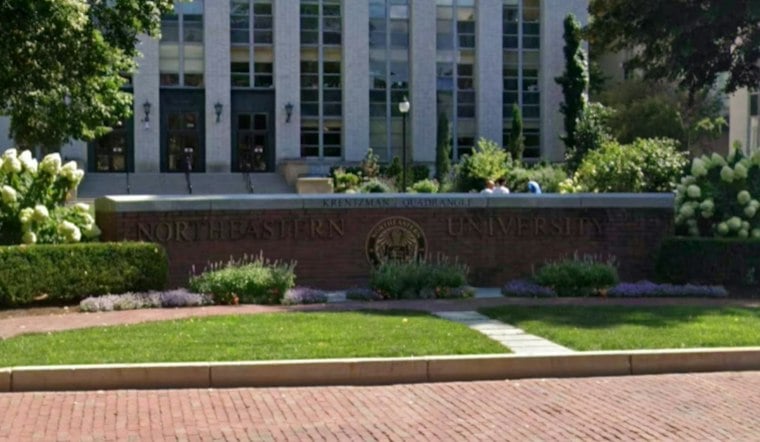
Northeastern University says it is investing a record $525 million in financial aid for the 2026-2027 academic year, funding that officials describe as grants rather than loans, as the Boston campus absorbs its share of a record-breaking applicant pool. The university welcomed 2,820 first-year undergraduate students to Boston this fall, part of an incoming class spread across its global network of campuses.
Record Aid Pool Built on Grants, Not Loans
According to Northeastern Global News, the university is committed to meeting the full demonstrated financial need of every undergraduate student, and the aid package consists of grants, not loans. Roughly 60% of undergraduate students at the university receive financial aid, the report states, including both merit scholarships and need-based grants. Need-based grant funds increase every year by the same percentage rate as tuition increases, per the same report.
The $525 million figure marks a jump from the record $511 million Northeastern reported investing in financial aid for the 2025-2026 academic year, according to an earlier Northeastern Global News report. That steady year-over-year growth in aid spending has tracked a parallel climb in applications, which Northeastern's student newspaper, The Huntington News, reports has now risen for seven consecutive years.
Applications Surge, Yield Rate Slips
Northeastern received a record 106,300 freshman applications this cycle, with the applicant pool topping 100,000 for the second consecutive year, per the university's own report. The Huntington News, citing separate figures, notes the number of applications rose by 98 from 105,092 recorded for the 2025-26 academic year, and that early decision applicants have grown 600% since 2015. The student paper also reports Northeastern's acceptance rate rose for the first time since fall 2020, to 5.6%, up from 5.2% the previous year.
Even as more students applied, fewer accepted offers actually enrolled. The Huntington News reports the university's yield rate fell seven percentage points, from 54% in fall 2024 to 47% in fall 2025 — a figure the paper describes university officials calling “tremendous” despite the drop.
New Students Spread Across Five Campuses
Beyond Boston's 2,820 newcomers, Northeastern's Oakland campus welcomed 920 students, its largest class ever, Northeastern Global News reports. The London campus enrolled 980 students, including 790 London Scholars who spend their first year in London before transitioning to the Boston campus. The New York City campus welcomed 485 students, including 330 New York City Scholars who follow a similar first-year-away model before moving to Boston.
An additional 1,130 undergraduate students began their Northeastern experience through the N.U.in Program, which the university's report says sends participants to study their first semesters in the Czech Republic, Germany, Greece, Ireland, Italy, Northern Ireland, Scotland or Spain. Altogether, the incoming class includes students from 68 countries and 47 U.S. states, and Northeastern expects more than 7,000 professional learners or graduate students to start this year across its global campus network.
Co-ops and Combined Majors Drive the Pitch
Satyajit Dattagupta, Northeastern's chief enrollment management officer, executive vice chancellor and head of global expansion, said students and families have a major emphasis on return on investment. “Northeastern answers that need better than anybody else through opportunities to learn, do research and gain leadership experience across the globe,” Dattagupta said, according to the university's report. He added that “the journey that students have here at Northeastern is unparalleled.”
The university's co-op program draws 12,000 students annually, with placements typically lasting six months at a time and students able to graduate with up to 18 months of work experience. Northeastern reports its students pursue co-op and experiential learning in 156 countries and all continents, including Antarctica — a figure that differs slightly from the 158 countries cited in last year's report, though the university has not explained the change. Northeastern says it maintains more than 4,000 employer partners, and that 58% of graduates are offered a job by a previous co-op employer, with starting salaries reported as 33% higher than the national average.
Mixed Outcome Figures and the Cost of Admission
Northeastern's 2026-27 report states that 97% of undergraduate students are employed full time or enrolled in graduate school within nine months of graduation, and that 92% of employed graduates work in jobs related to their majors. Those figures differ from the university's own 2025-26 report, which cited 96% employed or in graduate school and 93% in major-related jobs; the university has not reconciled the discrepancy between the two reports.
Thirty percent of incoming first-year students applied to a combined major, and the university now offers more than 230 such programs, Northeastern Global News reports. For families weighing the investment, Northeastern's admissions office lists estimated annual direct and indirect costs of $98,322 for first-year students at its Boston, New York City and Oakland campuses for 2026-2027, according to Northeastern's Cost & Financial Aid page. That same page notes that the N.U.in, London Scholars and New York City Scholars programs are not eligible for federal financial aid, though institutional aid and private financing options remain available.
Northeastern's financial aid catalog, maintained separately by the university, spells out additional eligibility rules: undergraduates generally must be enrolled in at least six credits per term to receive federal aid, must maintain satisfactory academic progress to stay eligible for both federal and institutional aid, and international students are not eligible for U.S. federal aid at all. Students seeking aid must file the FAFSA, while Northeastern uses the CSS Profile to determine eligibility for institutional awards, according to the university's financial aid guidelines.





