

























































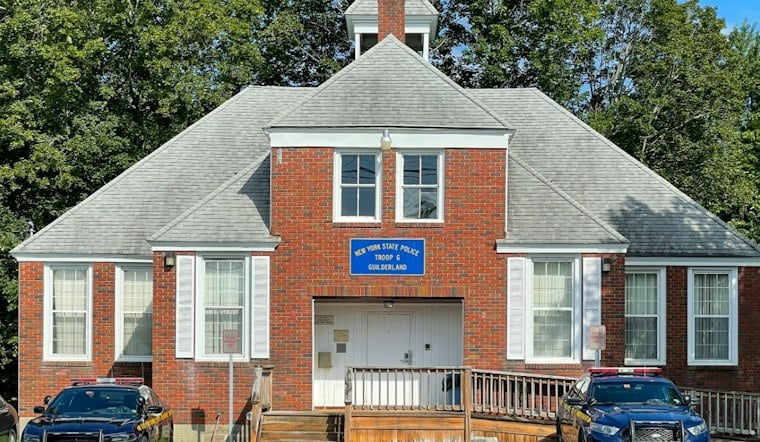
Eighteen New York State Police employees were investigated and found to have committed substantiated domestic abuse against partners or family members over the past several decades, according to disciplinary records obtained through a three-year public records effort — and only one of them was ever fired. The cases, most occurring between 2014 and 2024, ranged from a trooper who stuffed a sock in a woman's mouth to one who kept a loaded AR-15 and a loaded Glock .45 handgun inside a home where a domestic dispute had just unfolded.
The records were collected by New York Focus and MuckRock and detailed in reporting published by New York Focus, which examined internal files covering substantiated domestic-abuse complaints against State Police employees. The reporting was also picked up by Syracuse.com. Most of the alleged incidents took place between 2014 and 2024, according to the outlet's review of the files.
The punishments doled out were overwhelmingly light. Eight of the 18 employees received only censure plus five days or less of suspension or lost vacation time, the outlet's analysis found. Another five employees faced 10 to 30 days of suspension or lost vacation, while three faced only censure or no consequences at all. Just one employee was fired — and that happened only after an out-of-state domestic incident arrest led investigators to uncover a separate pattern of misconduct.
A Trooper's Loaded Guns and a Promotion
Among the more alarming cases detailed in the records: trooper Thomas Khork told investigators in 2013 that he had punched out a window on his own SUV and trashed his house during a domestic incident. Investigators who responded found both an AR-15 and a Glock .45 handgun in the home — and both guns were loaded, per the documents reviewed by New York Focus. Khork was placed on leave pending the investigation.
The State Police ultimately punished Khork with a 14-day suspension and a year of probation. Around three years later, in 2016, he was promoted to investigator, the records show. Federal law generally prohibits people convicted of a misdemeanor crime of domestic violence from possessing firearms under the U.S. Department of Justice's Gun Control Act of 1968, though the records reviewed do not establish whether Khork faced a criminal conviction in connection with the incident.
Decades of Similar Patterns
Khork's case was far from isolated. Back in 1998, trooper John Phelps got into a fight with his wife that led to her breaking a finger; the State Police response was six months of work probation. In 2003, trooper Rosnel Dorsainvil admitted to stuffing a sock in a woman's mouth during a domestic incident, and the department found that he had committed assault — punishing him by ordering him to get counseling.
In 2007, trooper Luis Badillo kicked in a door while trying to remove his child from the home and physically confronted his wife on the lawn, according to the records. The State Police suspended Badillo for 15 days and placed him on six months of work probation. The consistency of these outcomes — modest suspensions, probation, sometimes just counseling — runs through case after case in the files New York Focus reviewed.
A System Without Formal Rules
The lenient and uneven discipline isn't new to outside scrutiny. Separate reporting from The New York Times found that the State Police, New York's second-biggest law enforcement agency, has no formal disciplinary guidelines at all, leaving misconduct investigations and punishment largely to agency discretion. An examination of agency files from 2014 to 2024 revealed what the Times described as a far weaker disciplinary system than those used by other large New York departments, one that remained largely unchanged for decades despite repeated calls for reform.
The State Police told the Times it began developing a formal disciplinary model in 2025, though that model was not yet complete as of the paper's reporting. A related investigation covered by North Country Public Radio found that troopers found responsible for similar misconduct have received wildly different punishments — in one example involving sex while on duty, one trooper was suspended for eight days while another got 90 days. That outlet also reported that the disciplinary process is capped at no more than a week of suspension or vacation loss, with no appeal opportunity built in.
How New York Compares to the NYPD
New York's State Police aren't the only large department whose domestic-violence discipline has drawn scrutiny. The NYPD released more than 2,000 pages of disciplinary records involving over 130 officers following a lawsuit, according to the Reporters Committee for Freedom of the Press. Twenty of those disclosed cases involved allegations of domestic violence against NYPD officers, and most of the accused officers were allowed to remain on the force, typically receiving a year's probation, counseling, and docked vacation days. Those NYPD cases, drawn from the first six months of 2022, were mostly resolved through private settlements between officers and the department rather than public disciplinary hearings.
The pattern across departments raises questions that outside law enforcement observers have flagged for years about how agencies police their own when accusations involve family members rather than strangers. The gap between formal policy, which in many departments calls for zero-tolerance treatment of violent misconduct, and what actually happens inside disciplinary proceedings is where much of the scrutiny has concentrated.





