

























































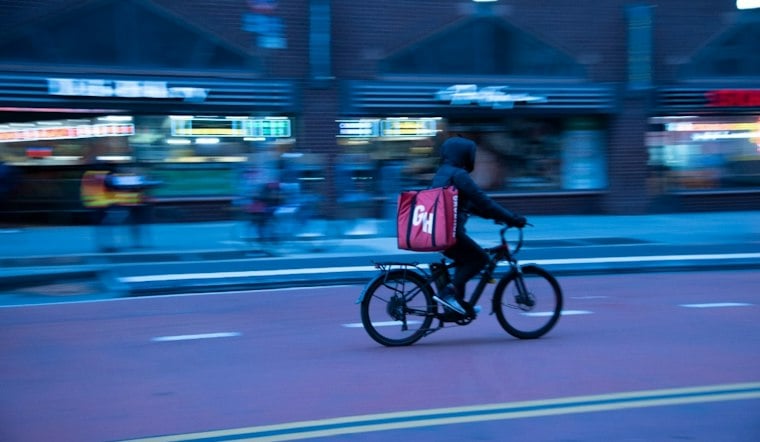
New York City's $22.13 minimum pay standard for app-based delivery workers has been in place since the law took effect in 2023, but a new survey shows it hasn't fixed the dangers and instability that define the job. More than half of the 561 workers surveyed in 2026 reported a work-related injury, and 40% met the criteria for severe psychological distress, according to a report examining conditions across the city's delivery workforce.
The survey, titled Driven by Algorithms: Unsafe Work in NYC Food Delivery, found that 53% of respondents reported a work-related injury, equal to 48 injuries per 100 full-time equivalent workers and more than five times the national rate for delivery messengers. More than 80% of respondents said delivery apps mostly or entirely determine how quickly orders must be completed, which routes workers take, and how many hours they work. The survey's findings describe the workers who took part and should not be interpreted as statistically representative of the entire citywide workforce, per the same report.
The mental health toll measured in the survey was stark: 40% of respondents met the criteria for severe psychological distress, a rate five times higher than among adult New Yorkers generally and 10 times higher than among working-age adults nationally. Thirty-six percent said they had been physically assaulted while working, and 86% reported theft of equipment or belongings, with losses averaging about $2,100, the report found. Ninety-six percent said app delivery was their only job in the previous month, and 53% said it was their family's only source of income.
Wages Up, But Workers Still Below the Poverty Line
Delivery workers surveyed earned an average of $23 an hour including tips, yet more than two-thirds lived in households earning under the federal poverty level, as reported by The City Reporter. The outlet's report also found that delivery platforms pressure workers to move quickly, which researchers said can push workers toward unsafe driving and raise injury risks.
New York City's minimum pay law for delivery workers first went into effect in 2023, requiring app companies — including Uber Eats, DoorDash, Grubhub, Instacart, Hungry Panda, Fantuan and other platforms that use contracted delivery workers — to pay $22.13 per hour for delivery time and some time signed into the app, according to Streetsblog New York City. The city's Department of Consumer and Worker Protection reported that the pay standard raised wages, but workers still lack safety standards, secure employment and regular schedules, Streetsblog reported. In response to the new pay floor, delivery apps began scheduling workers' shifts in ways that changed the nature of the job, per the outlet's reporting.
Fear of Deactivation Shapes Daily Work
Two-thirds of surveyed workers said they rush to deliver on time to maintain high ratings, while 56% said they work in bad weather and 30% said they work even when they feel very sick, according to the CUNY survey. Fifty-two percent worried about being deactivated if they didn't deliver fast enough. Seventy percent had contacted an app about a deactivation issue in the previous month, but only 37% of those workers said the issue was resolved satisfactorily, the survey found. Fifty-six percent of respondents named deactivation protections as the change they most wanted to see, according to the CUNY Urban Food Policy Institute.
Streetsblog reported that delivery workers face either permanent platform bans or temporary scheduling lockouts, and that deactivation threats, per the report, cause workers to rush deliveries and take safety risks. The report calls deactivation protections essential for public and street safety. Sam Levine, a former director of the Federal Trade Commission's Bureau of Consumer Protection, said the minimum pay rate addressed subpoverty wages, but delivery jobs remain dangerous, unpredictable and precarious. “The goal is making sure workers don’t need to choose between their safety and their livelihood,” Levine said, as reported by Streetsblog.
City Council Passed Deactivation Protections in 2025
The New York City Council passed a delivery worker deactivation-protection bill in 2025 that requires app companies to give a reason and notice before permanent platform bans and to create an appeal process, according to Streetsblog's reporting. The bill still allows companies to impose opaque temporary lockouts, the outlet noted. The deactivation-protection law was scheduled to take effect in January 2027, and the Department of Consumer and Worker Protection says it is ready to enforce it.
Levine said he expects tech companies to keep fighting or finding ways around the new regulations, adding that companies may seek new ways around deactivation protections and that the city is prepared to respond, per Streetsblog's report. The outlet detailed specific cases cited in the report: a delivery worker was deactivated on Relay after being hit by a car and sent to the hospital, according to a DCWP complaint; DoorDash deactivated a car-delivery worker after telling him he was not driving fast enough, per the report; and Uber Eats deactivated a worker without giving him a real reason, according to the same report. Relay was absorbed into the Wonder/Grubhub conglomerate and shut down as a standalone product in 2026, Streetsblog reported.
Comparable cases elsewhere illustrate what deactivation can mean for a worker's income. The New York Times reported that Steve McDougall earned about $900 a week delivering for Uber Eats and DoorDash before Uber deactivated his account in November 2023; his income then dropped to $500 on a good week from DoorDash deliveries alone. The Times also reported that the way companies decide to suspend a worker is largely unregulated.
Delivery App Companies Paid Roughly $2 Million More in Wages
Delivery app companies have paid around $2 million more in wages to workers since the pay law took effect, according to Streetsblog. The outlet reported that Uber spent $143,129 on incoming Council Speaker Julie Menin's reelection campaign, a detail cited amid debate over how aggressively the city will enforce the new worker protections.
The 2026 DCWP report included Instacart and other grocery delivery apps for the first time, per Streetsblog, and found that grocery delivery workers' take-home pay increased under the pay standard, with earnings rising 17% year over year. At the same time, Instacart increased consumer service fees by 63%, and consumer tips declined 39% as those fees rose, the outlet reported. The DCWP report, which compared second-quarter results from the prior year and current year, found that grocery delivery workers performing trips decreased by around 14%, even as the minimum pay law covers around 12,000 grocery delivery workers. Levine said the smaller active grocery delivery workforce reflects apps limiting access and paying only workers who are signed in, according to Streetsblog's reporting.
New York City has roughly 80,000 delivery workers overall, according to Streetsblog. New York's just-cause law for delivery workers is scheduled to take effect on January 17, 2027, The City Reporter reported, a timeline that will determine how much further the city's deactivation protections extend before the next round of enforcement begins.



