

























































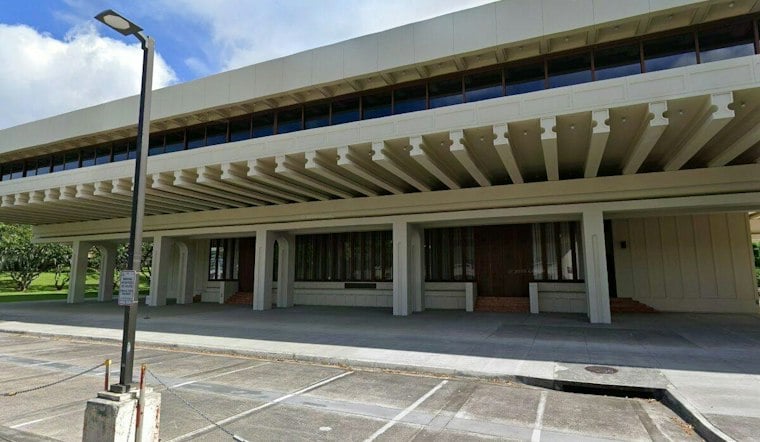
A runway show unfolding this afternoon at the Imin International Conference Center on Oahu is turning a Manoa auditorium into something closer to a ceremony than a fashion event, marking 120 years since the first Filipino plantation laborers arrived in Hawaii. DARAT: A Dance Runway in Five Movements brings together live kulintang music, Indigenous rock music, and more than 30 dancers, models, and culture bearers for a production organizers describe as a bridge between ancestral memory and contemporary movement.
The show, staged by the House of Gongs team, was created for Filipino American History Month and centers on the 120th anniversary of the sakadas, the Filipino plantation laborers whose arrival reshaped Hawaii's workforce, according to Hawaii News Now. The title itself carries meaning: DARAT means flowing sand or land in Ilocano, and the production uses that image to frame a five-part elemental narrative that transforms the runway into what organizers called a walking prayer of collective reclamation.
From Sugar Fields to Sacred Staging
The anniversary being marked traces back to December 20, 1906, when the first group of 15 Filipino contract workers, known as sakadas, arrived in Honolulu aboard the SS Doric and were sent to work at the Olaʻa Plantation on the Big Island, according to the Center for Philippine Studies at the University of Hawaii. That first wave grew into a massive, decades-long migration: between 1906 and 1946, the Hawaiian Sugar Planters' Association recruited more than 125,000 Filipino contract laborers, mostly from the Ilocos and Visayas regions, the Hawaiʻi State Teachers Association notes, establishing Filipinos as the backbone of the sugar and pineapple plantation workforce.
That labor history was not without violence. During a territory-wide strike demanding higher wages and shorter workdays in September 1924, 16 Filipino plantation workers were killed by police in the Hanapepe Massacre on Kauai, per the same account from the teachers association. DARAT's organizers have described their staging as a barbell-style runway featuring plantation textures and traditional kapasiti altars, a design choice that folds those hard histories directly into the performance space.
Designer, Director, and Descendant
Lydia Querian conceived, directed, and choreographed the production, and she is herself a sakada descendant working as an interdisciplinary artist, per Hawaii News Now's reporting. Her fashion label featured in the show, Elle Karayan, takes its name from the Ilocano word for river, a choice meant to represent cultural continuity and her partnership with Indigenous weaving communities across the Philippines, according to Elle Karayan. DARAT includes four of her collections alongside live kulintang and Indigenous rock music, with Kevin Calamayan directing the production's music.
Querian and her husband Ron co-founded House of Gongs as a grassroots organization dedicated to preserving and innovating traditional Filipino gong music, an effort that also produces Gongsters Paradise, billed as North America's only dedicated kulintang music festival, according to House of Gongs. DARAT came together as a 2026 Visual Art Grant project through Hoʻākea Source, with co-production from House of Gongs and additional support from New Music USA and the East-West Center, per Hoʻākea Source.
The production features special guests including cultural commentator Jon Luigi, Native Hawaiian researcher Adam Keawe, Jae Tioseco, and Sama culture bearer Al-Raffy Harun. Doors for DARAT open at 2:30 p.m. with the show starting at 3 p.m. at Keoni Auditorium inside the Imin International Conference Center's Jefferson Hall.
A Statewide Season of Recognition
DARAT lands squarely within October, which Hawaii law has designated Filipino-American History Month since a 2008 bill established the recognition, according to Justia Law. The state also separately marks December 20 each year as Sakada Day, a designation Governor David Ige signed into law in 2015 to commemorate the original arrival date, per INQUIRER.net.
In October, U.S. Senator Mazie Hirono and Representative Ed Case introduced a bipartisan congressional resolution recognizing October 2026 as national Filipino American History Month. Statements by the lawmakers cited Hawaii's pioneer contract laborers and roughly 4.6 million Filipino Americans nationwide, according to the Office of U.S. Senator Mazie Hirono.





