

























































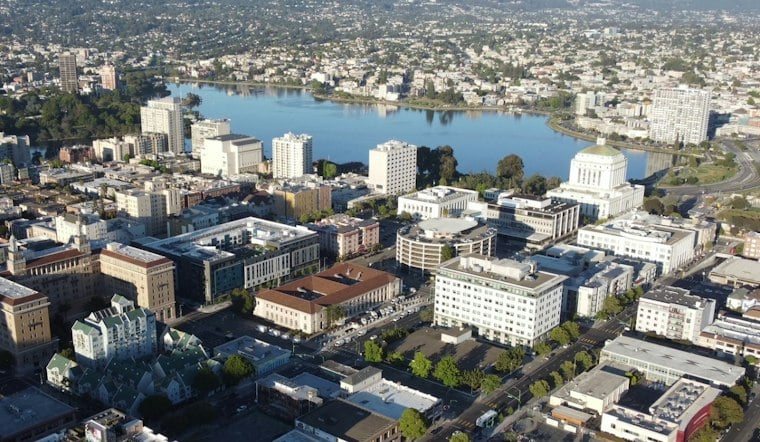
Oakland's storm drainage system needs $3.6 billion in repairs, and city officials say as much as 30% to 40% of the network — some pipes, pumps and equipment as old as 85 years — requires rehabilitation or replacement. With forecasters warning the 2026-2027 El Niño season could bring larger and more frequent storms, the city is racing to patch a system built for a different era while a long-term funding fix remains years away.
A System Stretched Thin Across Four Hundred Miles
The scale of the problem is daunting on paper alone. Oakland's storm drainage network spans 400 miles of pipes, four pump stations and 80 miles of creeks and waterways, according to The Mercury News. Replacing even a single stretch of pipe is not a quick job — it requires inspection, design, permitting, excavation, installation and restoration, a process that can take a year or longer per project, the outlet reports. At that pace, full citywide rehabilitation would take at least 70 to 80 years.
Beyond one-time capital repairs, the city says it needs a minimum of $24 million annually just for regulatory water-quality compliance testing, plus an estimated $16.3 million a year for preventative operations and maintenance, per the same report. West Oakland and East Oakland face heightened risks of flooding, sinkholes and landslides, and low-lying areas including West Oakland and downtown Oakland depend on pump stations and tide gates to push stormwater out during heavy rain.
Why El Niño Raises The Stakes
Terri Fashing said El Niño years magnify Oakland's storm-drainage vulnerabilities, and the Mercury News reports she warned the 2026-2027 El Niño season is expected to bring larger and more frequent storms. She also said low-lying Oakland neighborhoods are particularly sensitive to heavy rainfall. NOAA has reported a 75% chance the coming El Niño event will reach historic intensity, which would exceed every El Niño on record dating to 1950, according to the outlet's reporting.
Sedimentation, clogging, trash accumulation, high tides and rising groundwater all reduce the system's ability to keep pace with storm intensity, the Mercury News notes. Climate change is also generating higher winter and early spring runoff and making future warm atmospheric rivers more likely to trigger floods, increasing the odds of what would once have been considered a 100-year or 500-year storm. FEMA flood maps identify West Oakland, Jack London Square and East Oakland as areas threatened by major storms — a once-in-100-year precipitation event would threaten more than 500 structures citywide, while a once-in-500-year storm would threaten more than 6,000, per the same reporting.
The Zoo Sinkhole And A Century Of Flood History
The risk is not hypothetical. During severe flash flooding on December 31, 2022, water and debris overloaded a critical culvert pipe near the Oakland Zoo entrance, leaving a 10-foot-deep sinkhole and forcing the zoo to close, according to the Mercury News. A separate engineering account from ENGEO describes the failed culvert as a 72-inch pipe managing flow for Arroyo Viejo Creek, where the collapse washed away a 25-foot-wide section of entrance road; the road was completed approximately 3.5 weeks after the collapse, and the zoo reopened after 35 days in February, with the facility estimating lost revenue of $500,000 a week. That same winter, atmospheric river storms between December 31, 2022 and January 20, 2023 caused $7.085 million in damage to city infrastructure, including nearly $2 million to water control facilities alone, according to an Oakland Public Works report submitted to the City of Oakland, which documented damage after the city declared a local state of emergency on January 4, 2023.
Flooding has tested Oakland's infrastructure for a century. The Oakland Tribune reported that a major storm caused flooding damage on February 12, 1925, with authorities rescuing more than 30 families from floodwaters, per the Mercury News account. The region's modern flood-control framework traces to 1949, when the Alameda County Flood Control & Water Conservation District was formed; the district raised nearly $7 million through a special bond election in 1953 to begin building out the infrastructure Oakland still leans on today.
Aging Regional Infrastructure Adds Pressure
Oakland's system doesn't operate in isolation. Regional trunk lines and pump stations in Alameda County Flood Control District's Zone 12 include the 1954-built Ettie Street Pump Station in West Oakland. Electrical improvement work is planned at the station, according to the Alameda County Public Works Agency.
Climate research adds another layer of concern for the flatlands. Work from UC Berkeley climate scientists, cited by KVPR, raised concerns that rising groundwater could mobilize underground industrial contaminants in West Oakland — a particular concern in West Oakland, home to more than 130 legacy industrial contamination sites.
A Master Plan Years In The Making, Still Unfinished
Oakland launched its Storm Drainage Master Plan in 2020 to map and prioritize these vulnerabilities, and the plan is now 75% complete, the Mercury News reports. It has already identified 15 high-priority and 24 medium-priority pipe capacity improvement projects, together requiring an estimated $1.26 billion. The city continues work on the plan.
A broader audit published by the Oakland City Auditor's Office in August found that even though Oakland spent roughly $330 million on capital projects between fiscal years 2022-23 and 2024-25, the city still lacks the financial management systems and oversight policies needed to deliver major infrastructure repairs on time and on budget. The audit examined Measure KK bond proceeds and capital project delivery across public works and transportation departments.
Why A Dedicated Fee Isn't Simple
The city also faces ongoing operations and maintenance costs.
Oakland is now considering a Proposition 218 property-related storm-drainage fee, which the Mercury News reports could generate up to $15 million annually for pipe repair and flood abatement, with the funding effort drafted for 2029. Unlike water or sewer fees, stormwater fees are not exempt from property owner balloting under state law. Under Proposition 218, Oakland's proposed fee would require majority approval from property owners, according to the Mercury News. Neighboring cities already charge comparable fees — Alameda collects $78 a year through its property-tax-modeled mechanism, while Berkeley charges $42 a year, the Mercury News reports. If Oakland's effort fails, the city faces additional liability and rising repair costs, and officials say they will also seek additional funding through bonds and grants.
Other Storm-Preparation Efforts
Oakland has an Adopt-a-Drain program. Hoodline covered Oakland's winter-weather preparation efforts in 2023.
Oakland also has obligations under California's Municipal Regional Stormwater Permit. But public works officials have acknowledged the city still lacks dedicated funding to maintain and expand those green facilities — leaving Oakland's flood defenses, for now, a patchwork of emergency repairs, volunteer labor and planning documents racing against a winter that forecasters say could test them harder than almost any in recent memory.



