

























































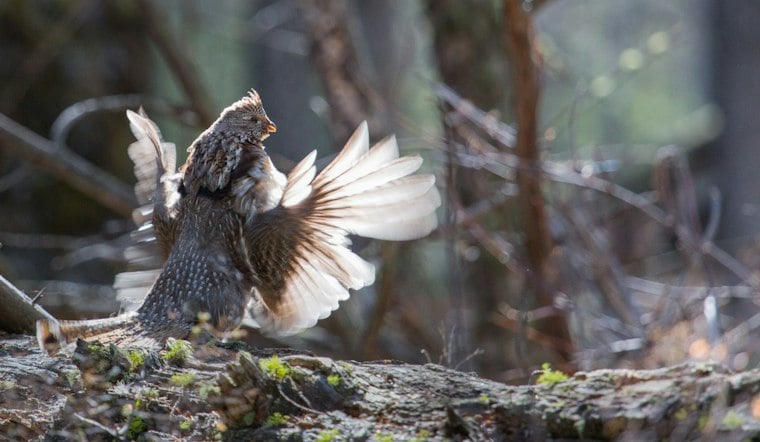
Ohio hunters heading into the woods this fall will not find a general ruffed grouse season anywhere in the state for the first time since 1937. The Ohio Wildlife Council voted in May to restrict grouse hunting to permit-only controlled hunts on four designated public areas, ending nearly nine decades of open-season hunting for a bird that once thrived across the state's forests.
The closure, first reported by the Springfield News-Sun, means there is no general ruffed grouse season on public or private land in Ohio for 2026-27. The council is established under Ohio Revised Code § 1531.03, according to the Ohio Department of Natural Resources. Hunters who still want a shot at a grouse this year had to apply for one of the limited controlled permits through a state access lottery held in July, per MyWild.
The Habitat Ohio's Grouse Need
The scale of the decline is stark. Ohio had an estimated 3.8 million acres of good grouse habitat in the 1940s, and today that figure sits around 800,000 acres, a loss of roughly 3 million acres, according to the Springfield News-Sun's reporting. Mark Wiley, a forest gamebird biologist with the Ohio Division of Wildlife, told the paper that the state had abundant, ideal grouse habitat through the 1960s and into the 1970s.
Ohio's grouse hunting history has swung before. The current closure is the first general-season shutdown since 1937.
Habitat Loss Meets a Deadly Virus
Two compounding forces explain the collapse, according to the dossier of research behind this story. Mid-20th-century farm abandonment created a temporary boom in young, early-successional forest, the exact habitat type grouse need, since that new-growth cover only lasts 10 to 15 years before it matures past its usefulness to the birds. Long-term survey data in the Ruffed Grouse Conservation Plan found that male grouse spring drumming counts in Ohio dropped 68% between 1972 and 2005 as that abandoned farmland matured into older, closed-canopy forest, according to the North Carolina Wildlife Resources Commission. The loss of aspen and oak trees has also hit the grouse food chain, per the Springfield News-Sun.
What Ohio's Forest Plan Says About Young Habitat
Ohio's 2021-2031 state forest management plan says timber harvesting can provide young forest, which it describes as in short supply, and lists increasing early-successional forest habitat among strategies for conserving rare species. The Ohio Department of Natural Resources Division of Forestry plan does not identify that strategy as grouse-specific; the cited passages also do not give a grouse-targeted acreage figure or name project locations.
Disease compounds the habitat challenge. Ruffed grouse are vulnerable to West Nile virus; experimental trials cited by the Pennsylvania Game Commission found that infection caused up to an 80% mortality or severe-lesion rate, making the virus a significant constraint on recovery across the region. Mosquitoes can transmit West Nile virus. Outdoor News reported that hunter flush rates in nearby states fell to five-year lows of 0.82 flushes per hour in 2025.
Tracking a Bird Hunters Rarely See Anymore
Male grouse make a drumming sound by flapping their wings to establish territory and attract mates. Flush reporting continued through post-hunt surveys for hunters with controlled-hunt permits.
Ruffed grouse populations have declined elsewhere too: a multi-state assessment by the Eastern Grouse Working Group found ruffed grouse population indices fell an average of 84% in the Mid-Atlantic region between 1989 and 2020, according to a Ruffed Grouse Society report filed with regulators.
Hunting Was Never the Main Threat
The closure alone may not solve the problem; habitat restoration and disease pressure also affect whether Ohio's grouse recover.
The decline also has consequences beyond grouse themselves. Loss of young forest habitat affects other species that depend on it. The Ruffed Grouse Society and American Woodcock Society are involved in Ohio conservation efforts.





