

























































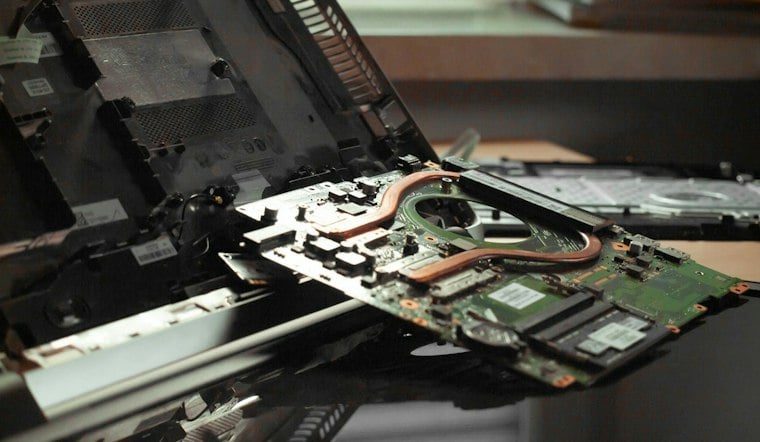
Defense tech company Anduril and chipmaker Qualcomm Technologies have unveiled a project called BlueChip aimed at manufacturing laptops and computer hardware inside the United States, starting with a rugged device built around Qualcomm's Snapdragon X Series platform. Prototype laptops are already up and running, with more than 90 percent of their component procurement costs sourced from U.S. and allied-country suppliers, and the circuit boards will be assembled at a familiar Ohio address: Anduril's Arsenal-1 facility in Pickaway County.
The announcement, first reported by ABC 6 On Your Side, lays out a plan in which Anduril leads the engineering work — designing enclosures that can be made domestically, developing battery systems built on existing American technology, and selecting materials U.S. industry can already produce at scale. Qualcomm, based in San Diego, is supplying the laptop's core processing and on-device AI capabilities. The station's report frames the long-term goal plainly: building a fully American supply chain for computing hardware, something the industry has largely walked away from over the past few decades, according to a separate account from Scioto Post.
A Hardened Machine Built for Government and First Responders
The first BlueChip product will be a hardened laptop designed for harsh environments and for security-conscious users tied to government work, according to TechCrunch. Per the seed station's reporting, the broader BlueChip effort is focused on delivering American-built technology for government, defense, first responders and public safety agencies — a customer base where supply-chain provenance tends to matter as much as performance.
Anduril plans to begin taking orders in 2027, and the company says it is actively qualifying new domestic suppliers while working to rebuild the expertise needed for large-scale computer manufacturing, the same report notes. The designs and manufacturing processes developed for this first laptop are expected to carry over into future BlueChip products, with the stated aim of building up the broader U.S. industrial base for computing hardware.
Not Fully American-Made — Yet
Anduril founder Palmer Luckey has acknowledged that the first machines will not be 100 percent American-made, Scioto Post reports. TechCrunch's reporting puts a number on that gap: for the first generation, about 90 percent of components will be made in the U.S. or allied countries, and the company has not finished contracting with all of its component suppliers. Defense-industry outlet DefenseScoop similarly reports that the laptop's bill of materials currently sits around 90 percent from the U.S. and allies, with Luckey saying the aim is to eventually push that figure to 100 percent.
That remaining 10 percent is the harder problem. Computer manufacturing in the U.S. has largely disappeared over recent decades, per Scioto Post's account, a hollowing-out that touches everything from circuit boards to the raw materials that go into them. A federal assessment from the Commerce Department has noted that clustering of input materials, printed circuit board manufacturing and assembly in East Asia reduces production costs and transportation time — though that same assessment also found China less competitive in leading-edge PCB technologies, an area where the U.S. supply chain carries its own risks.
Paying a Premium for Domestic Assembly
Building outside that established East Asian cluster isn't expected to come cheap. TechCrunch reports Luckey's estimate that BlueChip will cost roughly 20 percent more than typical high-end PCs, a premium Scioto Post likewise attributes to the cost of assembling domestically rather than relying on laptops built in China. Neither outlet has reported a final retail price for the device.
The effort echoes a wider federal push to rebuild domestic chip and electronics capacity. A Government Accountability Office report found that Commerce Department-backed projects are expected to bring the U.S. share of global leading-edge logic chip manufacturing from 0 percent in 2022 up to 20 percent by 2030 — a separate federal initiative, but one aimed at the same underlying goal of reducing American dependence on overseas electronics production.
For now, BlueChip remains a prototype-stage effort with its Ohio assembly line still ahead of it and some supplier contracts unfinished. Organizations interested in the project can register interest through Anduril's website, according to the original ABC 6 report, as the company works toward opening orders in 2027.





