

























































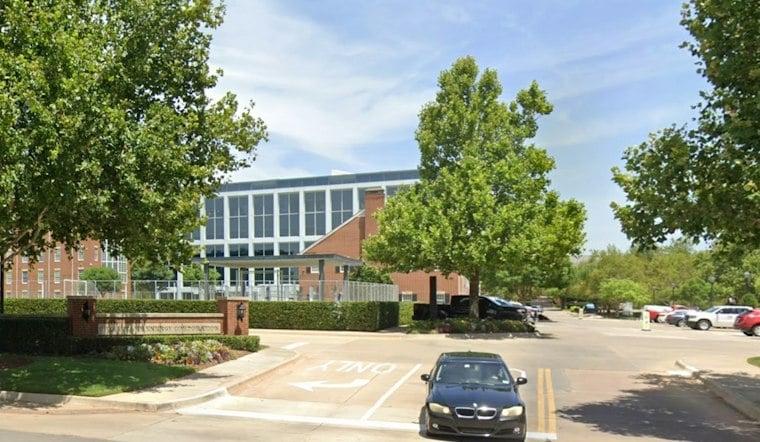
A data center operating out of Oklahoma City's former Chesapeake Energy campus is pursuing something most of its competitors in the state have avoided: its own power plant. Scale Datacenters has filed air quality permit applications for a 100-megawatt behind-the-meter facility in the heart of Oklahoma City that would let it generate electricity for its operations rather than draw from the grid, and the company says it plans to use generators imported from decommissioned power plants in Bulgaria to get there.
The filings, submitted to the Oklahoma Department of Environmental Quality in September, are now under technical review, according to KGOU. Behind-the-meter facilities are data centers that unplug from the electric grid and rely on power they generate themselves for their own operations, the station reports. Scale Datacenters, which launched roughly two years ago, has been reusing buildings on the old Chesapeake Energy campus in Oklahoma City and currently employs 450 people. The company is also building a separate facility in southeast Oklahoma, and it plans to use new natural gas units to power its operations going forward.
Trevor Francis addressed Oklahoma lawmakers at an interim study in late September, where he was identified as Scale Datacenters' CEO, per KGOU's reporting. Elsewhere, however, Trevor Francis has been identified differently: a report from KOSU describes him as the CEO of 46 Labs when he spoke during the Oklahoma City Council’s April 2026 moratorium discussion; his later appearance before state lawmakers was a separate event. The discrepancy in Francis's title underscores how fluid — and fast-moving — Oklahoma's data center landscape has become this year.
Why Companies Are Looking Past the Grid
Scale Datacenters' push for its own generation comes as natural gas infrastructure faces delivery delays stretching years, driven by manufacturing constraints and rising electricity demand nationwide, according to KGOU's reporting. Rep. Brad Boles, a Republican from Marlow, has said it may take three to five years just to get the power infrastructure built for a behind-the-meter facility, as reported by Public Radio Tulsa. One researcher put it more bluntly, according to Public Radio Tulsa: if a data center is not already in line for a natural gas plant, it is probably not getting one until the 2030s.
Still, most data centers with plans in Oklahoma are opting to plug into the grid rather than build their own generation, the Oklahoman's reporting notes. Experts cited by the outlet say the state's grid system is likely more reliable than depending on behind-the-meter power, and building a power plant is costly and can take years to complete. Large proposed projects including the Luther Horizon Technology Park, Project Mustang in Claremore, and IREN's Kiowa Data Center — which plans to secure power through Public Service Company of Oklahoma — are all working with local utilities instead, per the same report.
The Legal Path That Made It Possible
Scale Datacenters' approach is possible because of legislation Oklahoma passed in 2025 that opened the door to behind-the-meter generation projects. Senate Bill 480 authorizes companies to build their own power plants while bypassing utilities altogether, according to Oklahoma Voice. The bill was authored by Sen. Grant Green, a Republican from Wellston, and Boles, who has said large-load users coming to Oklahoma can simply provide their own power generation rather than straining the existing system.
Oklahoma's behind-the-meter law requires natural gas to be part of any such power plant, though solar and wind can be layered in alongside it, Public Radio Tulsa reports. A second law, House Bill 2992, took a different tack: it requires large-load customers adding at least 75 megawatts of demand to sign long-term agreements covering infrastructure costs, and it added new transparency and disclosure requirements for land acquisition tied to these projects when it took effect July 1, according to Data Center Knowledge.
Lawmakers Weigh Costs Against Jobs
The scrutiny extends beyond the Statehouse. Oklahoma City's city council unanimously approved a moratorium on the construction and expansion of data centers in April, a measure set to last through the end of 2026 that specifically blocks rezoning requests intended for data centers, KOSU reported. The moratorium includes an appeals process for projects that believe they should be exempt.
At the legislative interim study where Francis spoke, lawmakers also heard from the Department of Environmental Quality, the Water Resources Board, Google, utilities, elected officials, and an independent researcher, as the study aimed to help legislators figure out how to regulate the fast-growing industry, per KGOU. Oklahomans have raised concerns about water use, noise, construction traffic, contaminated natural resources, and rising energy bills tied to data center growth, Oklahoma Voice reports. Pryor Mayor Zac Doyle offered a counterpoint, telling lawmakers his community has benefited from Google's data center there through reduced utility bills, jobs, partnerships with local businesses, and increased funding and grants — even though that facility uses an estimated 2.8 million to 3.76 million gallons of water per day, according to the same outlet.




