

























































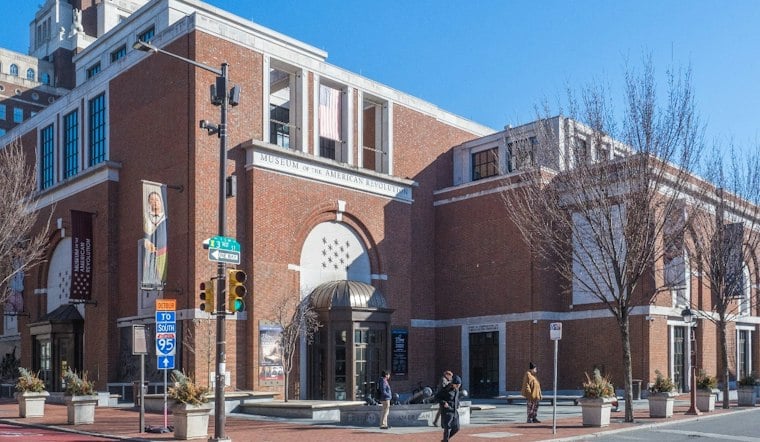
Philadelphia in the fall of 1776 was a city bracing for collapse. Businesses shuttered as British troops advanced to within 30 miles, smallpox tore through crowded streets, and the Continental Congress packed up and fled town. This weekend, the Museum of the American Revolution is recreating that desperate season in Revolutionary Philadelphia: 1776, a two-day living-history festival unfolding Saturday and Sunday across the museum's galleries, plaza and the sidewalks of Old City.
Described as the museum's largest-ever living-history festival, the event features colonial markets, military campgrounds, reenactors, walking tours, book signings, dramatic vignettes, street theater and even a children's Halloween costume contest, according to The Philadelphia Inquirer, in an article written by Mike Newall. The programming builds on the Museum of the American Revolution's own description of the festival, which runs on the museum plaza and extends across outdoor sidewalks at Third and Chestnut Streets, offering free public access to 18th-century artisan crafts, military encampment demonstrations and historical walking tours, per the Old City District.
A Republic on the Brink
Tyler Putman, senior manager of gallery interpretation at the museum, described signs from New York in October, November and December 1776 that suggested independence might fail and the republic might not survive the year. Putman noted the Revolutionary War ultimately lasted eight years and was closely contested throughout. The festival, per the museum, aims to make history feel real and deepen understanding of a time when independence was new and uncertain.
That uncertainty traced directly back to the battlefield. At the November 16, 1776 Battle of Fort Washington in Manhattan, 2,800 American defenders surrendered to British forces, according to the American Battlefield Trust.
Fear, Disease and an Empty City
As rumors of invasion spread through Philadelphia that fall, officials rallied volunteers and militias trained for the city's defense, while newspapers urged subscribers to raise $50,000 for the city's defenders by going door to door, the Inquirer reports. The city was also suffering a smallpox outbreak alongside growing hunger and fear, with the dead buried in shallow trenches near the Walnut Street prison. Disease was also a major enemy throughout the war, with Continental soldiers dying from smallpox, typhus and dysentery. Philadelphia's Washington Square, then a public potter's field, became a mass burial ground where more than 2,000 Continental soldiers and disease victims were interred in shallow trenches that same winter, as recorded in a letter by John Adams held in the Massachusetts Historical Society collection; Adams later recorded visiting the overcrowded site in April 1777.
By December, businesses had closed for safety and Philadelphians abandoned the city for the rural hinterlands as British forces drew near, per the Inquirer. The Continental Congress itself fled Philadelphia that month, and financier Robert Morris described the city shortly before Christmas as a scene of great distress and melancholy. The fleeing delegates reconvened in Baltimore on December 20, 1776, at the Henry Fite House, a three-story brick tavern that served as the temporary capital of the United States until February 1777 and became known locally as Congress Hall, according to the Office of the Historian.
Paine's Words and Washington's Gamble
Thomas Paine, 39 years old in 1776, had already turned independence into a public demand with Common Sense, a 47-page attack on monarchy. Paine traveled with the Continental Army that fall. In American Crisis, No. 1, he urged American resilience with the now-famous line, “these are the times that try men's souls.” The first pamphlet was published on December 19, 1776, according to the Museum of the American Revolution.
Washington ordered the essay to be read aloud to the troops on Christmas Eve before they crossed the ice-choked Delaware River to strike the garrison there, according to the Inquirer, as his forces advanced on Trenton. The Declaration of Independence that the Revolution was fighting to preserve had been issued just months earlier, in July 1776 — 250 years before this weekend's festival, which the museum said is focused on the hardships Philadelphians endured in the aftermath of that declaration.
Where the Museum Fits In
The festival takes place inside and around the Museum of the American Revolution, which opened in Old City Philadelphia on April 19, 2017, according to WHYY. The living-history weekend also folds into Philadelphia's broader array of autumn programming marking the 250th anniversary of the United States, or Semiquincentennial, as detailed by Visit Philadelphia's citywide guide to fall and winter commemorations.




