

























































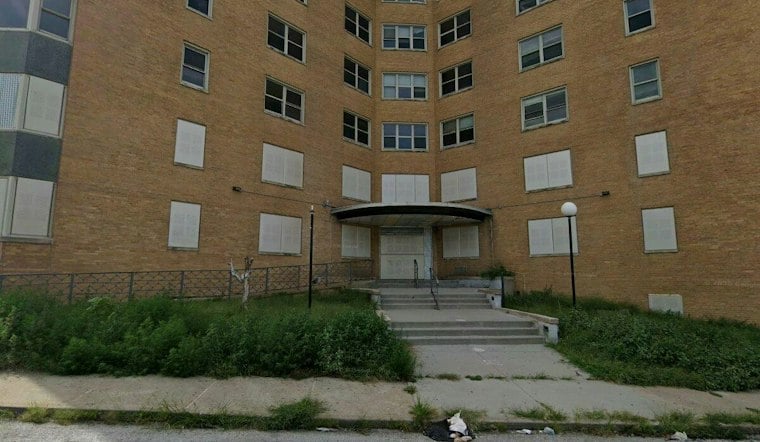
The shuttered City View Apartments at 604 S. 22nd St. are headed for a years-long transformation, with new owners planning to reopen all 225 units as affordable housing reserved for lower-income renters. The Florida-based developer behind the project doesn't expect construction to start before 2027, but the building has already landed a key piece of its financing puzzle.
New Owner, New Mission for a Shuttered Building
Smith & Henzy Affordable Group took ownership of the property in late June, according to KETV. The building had closed the previous summer following several health and safety concerns, as reported by Nebraska Public Media. Once renovations are complete, every one of the 225 units will be reserved for an individual earning 60% of the area median income or below, KETV reports.
Front Porch Investments announced $3 million from Omaha's Urban Core Housing Fund to help cover the updates, per the station's report. Planned work includes a full replacement of the cast-iron piping throughout the building, roof repairs and exterior-window repairs, according to the same account. Smith & Henzy is also seeking additional state-level financing, including bonds and 4% tax credits, to round out the project's funding.
City View Anchors a Larger $40 Million Push
City View is one of four initial projects backed by Omaha's Urban Core Housing Fund, a $40 million initiative created through bonds the city committed to improving housing, as Nebraska Public Media reports. At 225 units, it's the largest of the four projects to receive funding, and the city chose nonprofit Front Porch Investments to disperse the money. Together, the first four projects will use a total of $5,939,084 in loans from the fund and are expected to result in the creation or updating of 466 homes.
City leaders hope the broader fund will ultimately help create nearly 1,900 affordable and workforce housing units across Omaha's urban core, a goal echoed in reporting from both Nebraska Examiner and Nebraska Public Media. The Examiner notes the $40 million in bonds is tied to property-tax growth expected from Omaha's streetcar project and would be repaid through tax-increment financing revenue tied to that development. As of July, the city's earlier ARPA housing fund, matched by $20 million in philanthropic dollars, had already produced 2,359 new or rehabilitated units, nearly 1,700 of them described as affordable.
A Long Runway Before Anyone Moves Back In
Construction at City View won't start before 2027 at the earliest, according to KETV. Once underway, renovations are expected to take 18 to 20 months, and the developer hopes pre-leasing could open in mid-to-late 2028, the station reports. That timeline puts City View on a similar track to another Urban Core Housing Fund project, GreenSlate Development Partners' planned 186-unit building at the former Lutheran Family Services site at 24th and Dodge streets, which Grow Omaha reports could break ground in early 2027 and welcome residents by mid-2028.
Most Urban Core Housing Fund projects will target households earning 80% or less of the area median income, though some may serve households earning up to 100% or 120%, per Grow Omaha's reporting. Front Porch Investments has said affordability protections on funded units will generally last 10 to 20 years, while the Nebraska Examiner notes that projects the nonprofit selects for funding are typically restricted for 20 years. The need is steep: Grow Omaha reports the Omaha metro is short an estimated 85,000 affordable housing units.
Other Projects Sharing the Fund's First Round
Two smaller developments rounded out the fund's first wave of investments. Foundations Development received a $1.5 million loan for a 50-unit senior housing development at 1053 Park Ave., while Gold Coast Partners received $475,000 for the purchase and construction of a five-unit housing project at 111 N. 38th St., according to Nebraska Public Media. As originally reported by the Omaha World-Herald, City View remains the flagship of the four, a long-vacant building now at the center of the city's broader bet on rebuilding its affordable housing stock from the inside out.




