

























































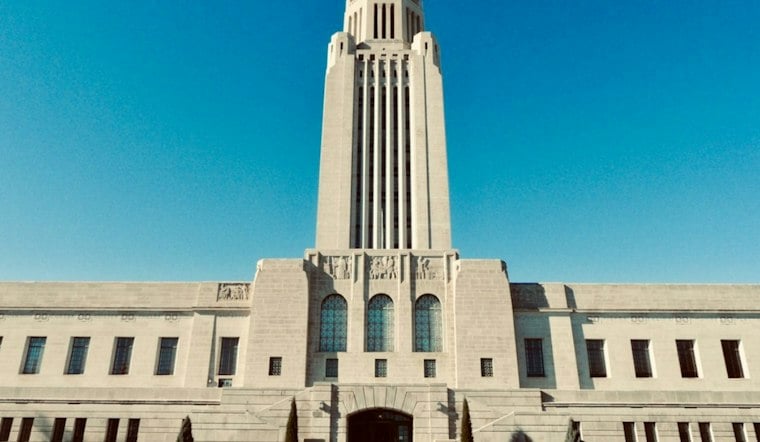
Four years after narrowly losing to Brad von Gillern, Omaha small-business owner Cindy Maxwell-Ostdiek is back on the ballot for Legislative District 4 — and this time she enters the November 3 general election having outpolled the incumbent in the spring primary. The rematch covers west-central Douglas County, including parts of Omaha, and centers on a familiar set of frustrations: property taxes, state budget shortfalls and who voters trust to manage both.
Von Gillern, 65, a contractor from the Elkhorn area, has represented the district since 2023 and chairs the Legislature's Revenue Committee, according to a Nebraska Examiner voter guide. He is a registered Republican. Maxwell-Ostdiek, 58, runs an insurance and financial-services business in Omaha and is registered nonpartisan, the same voter guide notes. The two first faced off in 2022, when von Gillern won by 802 votes, taking 52.4% to Maxwell-Ostdiek's share in Douglas County returns.
The dynamic looks different heading into this fall. Maxwell-Ostdiek led the May 2026 primary with 53.4% of the vote and a 664-vote margin, according to the Flatwater Free Press voter guide, which also found that von Gillern said the top issue facing the district is affordability — a concern both campaigns say is driving voters to the polls.
Two Different Fixes for the Same Tax Headache
Both candidates agree property taxes and the cost of living top the list of constituent complaints, but their prescriptions diverge sharply. Von Gillern told the Examiner that tax policy has been his focus for his first four years in office and would remain so if reelected, and per the Flatwater guide, he argues that raising taxes to solve budget problems is not the answer. Maxwell-Ostdiek, in contrast, says the state should look at reinstating some eliminated sales-tax exemptions and growing the tax base rather than pursuing sweeping tax shifts, per the same voter guide, adding that targeted sales-tax exemptions make sense when the goal is broadening revenue without hitting working families harder.
Von Gillern has gone further than most incumbents in laying out specifics. He has proposed reversing selected sales-tax exemptions — covering things like chartered aircraft, limousine rentals, lawn services and pool cleaning — and restoring a statewide 5.5-cent sales tax to raise additional revenue. He has also said he wants lawmakers to try again on increasing tobacco taxes, estimating that sales and tobacco tax changes together could cover roughly half to two-thirds of the deficit Nebraska faces by mid-2027. He opposes reversing the income-tax cuts the Legislature passed in 2023, even as he has said a fellow lawmaker will likely push to roll back at least some of those cuts in 2027.
Maxwell-Ostdiek has taken a more cautious posture on specifics, saying the state should first be evaluated before she commits to a particular fix for the deficit, and that she would work with any senators willing to collaborate. She has argued that the tax and spending plans implemented over the prior four years have left Nebraska with a $1 billion shortfall, and that any changes to sales-tax exemptions should keep working families as the central focus.
Budget Math Looms Over the Race
The backdrop to both campaigns includes a March revenue shortfall, after some tax categories had struggled. Nebraska's ending balance stood at roughly $72 million in the red after March tax receipts missed projections, with individual income-tax receipts that month landing 56.8% below forecast — a $121 million gap — according to reporting from the Nebraska Examiner. The projected shortfall for the next two-year budget cycle was estimated at $631 million as of that report.
Nebraska's income-tax rate, which topped out at 6.64% in 2023, is scheduled to drop to 3.99% starting January 1, 2027, applying to people earning $24,760 or more. Gov. Jim Pillen has floated a broader sales-tax base as one potential answer to rising property taxes.
A Family's DHHS Fight Shapes the Local Debate
Health-care costs are another concern in the race. Von Gillern pointed to a specific case: he met with a District 4 family whose 19-year-old daughter has severe disabilities after a revised DHHS Medicaid assessment process left the family with less funding. The family brought an inch-and-a-half-thick folder of correspondence with the department to their meeting, von Gillern said.
The candidates have also differed over property-tax policy.
Voter-Approved Measures and Legislative Experience
Medical cannabis is among Nebraska's voter-approved measures.
Von Gillern, who served as vice chair of the Revenue Committee for his first two years in office before becoming chair, says he has passed more than half of the bills he has introduced. He has been asked to consider the Legislature's speakership. Von Gillern has also said he believes he can be more effective for constituents than his opponent. Early voting for the November 3 general election began October 5.




