

























































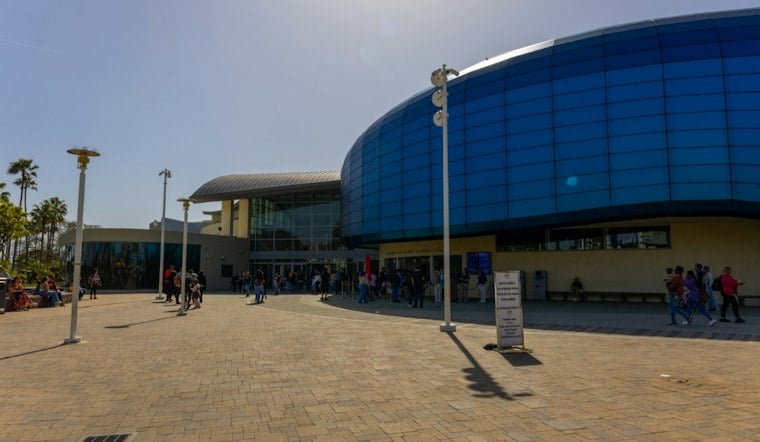
More than 200 olive ridley sea turtle eggs pulled from two Orange County beaches just ahead of a tropical storm are now incubating inside a secure Long Beach facility, with wildlife officials expecting the first hatchlings to emerge in early November. Teams moved the eggs from nests in Seal Beach and Huntington Beach to the Aquarium of the Pacific on Sept. 25, racing hazardous surf, erosion and flooding that threatened to wipe the nests out entirely.
The rescue, which the Los Angeles Times covered in detail on Sept. 25 before MyNewsLA reported on it Oct. 23, came together fast. Seal Beach and Huntington Beach experienced high surf and standing water near the nests after Tropical Storm Rachel, which followed Hurricane Polo, according to a U.S. Fish and Wildlife Service representative, and the storms caused severe damage to homes on the Long Beach Peninsula. A representative for the agency said the nests might have been inundated and destroyed by storm surge had crews not acted when they did.
Teams began excavating the nests around dawn on Sept. 25, according to the same agency account. A Seal Beach team removed 104 eggs while a Huntington Beach team recovered 100, and the Orange County Register reported that two teams headed out at 6 a.m. to excavate a total of 204 eggs. Officials determined the eggs came from two different turtles, based on differences in body shapes and shell patterns, as scientists later told KTLA.
Two Nests, Days Apart
Officials discovered the first nest near the Seal Beach National Wildlife Refuge on Sept. 16, and an olive ridley turtle laid a second clutch near the Huntington Beach Pier three days later, on Sept. 19. An interagency team identified the nests as the first confirmed natural sea turtle nests on the U.S. West Coast, though outlets have described the milestone with slightly different geographic framing — the Los Angeles Times called them the first known naturally occurring nests on the U.S. West Coast, while the Orange County Register called the find the first confirmed recording of natural sea turtle nests on the mainland West Coast of the United States.
Jeffrey Flocken, president and CEO of the Aquarium of the Pacific, said the decision to move the eggs was made jointly by federal and state wildlife officials. The National Oceanic and Atmospheric Administration, the U.S. Fish and Wildlife Service and California Fish and Wildlife all took part in the call to excavate, per the agency accounts cited by MyNewsLA. The Aquarium's own account notes that biologists carefully collected approximately 200 eggs and transferred them to the facility ahead of the storm.
Incubating Under Careful Watch
The eggs are now kept in closed incubators under sand inside a secure, temperature-controlled room in the Aquarium's animal hospital, according to the Aquarium of the Pacific. Dr. Lance Adams, a veterinarian at the Aquarium, said the facility is providing temporary incubation for the eggs while staff monitor them in Long Beach. The eggs are expected to remain under that care for a 45- to 60-day incubation period, with the U.S. Fish and Wildlife Service estimating eggs may emerge during the first two weeks of November.
Not everyone agrees that the move necessarily helps the eggs' odds. A U.S. Fish and Wildlife Service representative said moving sea turtle eggs to an incubator does not necessarily improve their chances of hatching, and the agency treats nest relocation as a measure used only as a last resort. Nesting turtles typically lay multiple nests over a season specifically to increase the odds that some eggs survive, the agency noted — a built-in redundancy that relocation efforts try not to undercut. In the wild, under optimal conditions, olive ridley nests can see hatch rates of up to 90%, per the Los Angeles Times.
What Happens If They Hatch
If the eggs are viable, any hatchlings will be released on the beaches where the eggs were originally laid, and the Aquarium says it will release them as soon as possible the night they emerge. Hatchlings will be placed just landward of the surf zone depending on water temperatures and beach conditions, and crews will not use artificial lights during the releases — a precaution that aligns with broader conservation efforts the U.S. Fish and Wildlife Service says focus on reducing disturbance at nest sites, including shielding artificial lights.
Even a successful hatch is only the first hurdle. NOAA Fisheries' Southwest Fisheries Science Center estimates that only about 1 in 1,000 sea turtle hatchlings survives to adulthood. Olive ridleys are the smallest sea turtles, according to NOAA, growing between 2 and 3 feet long and weighing up to 100 pounds as adults.
A Warming Ocean, An Open Question
Why olive ridleys nested in Orange County at all remains unsettled. The Aquarium of the Pacific says the nesting may signal an important historical change with long-term implications for the species and for local sea turtle management, while KTLA reported that experts believe unusually warm ocean conditions may have contributed to the turtles venturing farther north — though temperature alone may not fully explain the unprecedented activity. Ocean temperatures off Southern California are declining as is typical for fall, but a NOAA Fisheries statement indicates they will likely remain roughly 3 to 4 degrees Celsius above normal into early 2027.
The find builds on the Aquarium's expanded sea turtle operation, which opened a dedicated rehabilitation area in January 2026 that doubled its capacity to care for stranded, sick or injured sea turtles. Anyone who spots a stranded turtle along the coast can call the NOAA Fisheries West Coast stranding hotline at 562-506-4315, and sightings can also be reported through the NOAA Fisheries West Coast Facebook account.


