

























































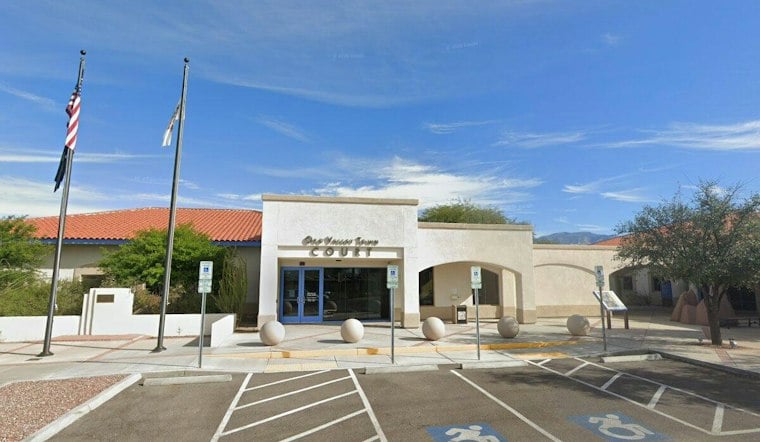
Oro Valley is on the verge of becoming the only town in a 13-jurisdiction Arizona survey to flatly prohibit large-scale data centers, with a Town Council public hearing set for tonight at 6 p.m. The proposed zoning-code amendments would block facilities using 20 megawatts or more of electric power while still allowing smaller, ancillary server rooms tucked inside existing buildings in specified zones.
The Oro Valley Planning and Zoning Commission was scheduled to consider the draft language Tuesday, a day ahead of the council's special meeting and public hearing, according to Tucson Local Media. That hearing is set for the town council chambers at 11000 N. La Canada, where the proposal would make Oro Valley the only one of 13 researched Arizona jurisdictions to prohibit large-scale data centers outright, per a staff report cited in the same account.
A Vice Mayor's Push for Speed
The push for tighter rules traces back to Oro Valley's Oct. 7 council meeting, where Vice Mayor and Mayor-elect Melanie Barrett first raised the issue. She said she wanted to act as expeditiously as possible to close potential zoning-code loopholes, and she specifically requested a code amendment making clear that data centers are not allowed by right in any Oro Valley zoning district, the outlet's reporting shows.
Barrett also asked that any new code address noise, water, energy and other data-center concerns, and she requested a moratorium on data centers to the degree possible while the new rules are being considered. Those requests set the pace for the rapid-fire sequence of meetings culminating in tonight's hearing.
Where Data Centers Are Currently Allowed
Under existing rules, Oro Valley permits potential data-center development on properties zoned commercial or technical park, the same article notes. That includes the Oro Valley Innovation Park, which sits within technical park zoning, along with lands on both sides of the Honeywell complex east of Oracle Road. Affected commercial zones are primarily located along Oracle Road near Tangerine and Rancho Vistoso, and along La Cholla and La Canada south of Naranja.
The town's zoning code currently classifies data centers as a technical services use. Town Planner Bayer Vella wrote that large-scale data centers requiring significant power and water for modern technologies and AI were not the intended use under that category, according to the reporting. The draft code would still allow limited ancillary data centers in specified zones, defined as server rooms commonly used by major employers or the town itself, with Roche Tissue Diagnostics cited as an example of such an employer. Those ancillary facilities would have to be housed within an existing building on the site.
Importantly, the outlet reports that Oro Valley has received no request to build a large-scale data center, even as potential sites that could accommodate one exist within town limits, per the staff report.
How the Threshold Was Set
To shape the proposal, Oro Valley staff reviewed zoning codes from 13 Arizona jurisdictions to identify review tools, ultimately identifying energy and water use as the critical areas to regulate. The draft code would require a council-approved conditional use permit for any proposed data center.
One wrinkle in the numbers: the same article states that large-scale data centers require a minimum of 40 megawatts of electric power, even though the proposed Oro Valley ban targets facilities using 20 megawatts or more — the same 20-megawatt threshold used by Tucson and Pima County to classify large-scale data centers. The dossier does not resolve that discrepancy. For scale, staff noted that one megawatt-hour of energy can power approximately 1,000 average homes or one grocery store, per the staff report.
Data-center applicants would have to report estimated energy needs when applying, and then continue reporting those figures annually for five years after the town issues a certificate of occupancy, according to the reporting.
Water Use and Who Else Would Be Regulated
Nailing down water consumption has proven harder. Staff found that data center water use is difficult to ascertain because data centers and water providers do not disclose the information, even as some media reports suggest consumption in the millions of gallons per day. To address the gap, Oro Valley would require data-center applicants to submit a water-use and conservation plan disclosing how much water is needed and which cooling system would be used.
Oro Valley Water Utility Director Peter Abraham recommended going further, proposing a code amendment that would regulate large water users broadly — not just data centers, but also manufacturers of microchips, solar panels and batteries. The proposed amendment also includes parameters addressing data-center noise, location, design and parking. Vella said the town should reevaluate and update those parameters as needed, or at least every five years.
A Statewide Reckoning Over Power and Water
Oro Valley's debate lands amid a broader Arizona reckoning with data centers' appetite for electricity and water. Nearly 100 existing data centers in the state are already driving a short-term power crunch on utility systems, according to KJZZ. Arizona Public Service said data-center customers made up about 5% of its peak load last year and are expected to reach 7% this year, and the utility has sought bids for 8 gigawatts of additional capacity since 2023, with roughly 4.5 gigawatts of that potentially dedicated purely to data centers.```Cleanview estimates that 95 data-center projects are planned statewide, enough to triple current data-center energy use, though that count includes the since-rejected La Osa project that Pinal County supervisors turned down outside Eloy, KJZZ reported.
Water figures tell a similarly stark story. A large-scale data center using evaporative cooling can use as much as 4 million gallons of water a day, and an analyst estimated Arizona data centers drew about 10,200 acre-feet from local water systems in 2025, according to The Arizona Republic. The same analysis found 71 data-center campuses planned or operating in Maricopa County, with operating facilities already carrying a combined capacity of at least 2.3 gigawatts and planned projects potentially adding another 8.5 gigawatts of demand.
Tucson Already Set the Regional Bar
Oro Valley isn't acting in a vacuum. Tucson adopted its own strict data-center regulations on Aug. 5 in a 6-1 council vote, and the city's rules require any data center exceeding 25,000 square feet or 20 megawatts of power use to secure a Planned Area Development or Planned Community Development approval, according to DMNews. Tucson's ordinance does not permit qualifying data centers by right anywhere in the city, and it requires them to sit at least a half-mile from residential areas and 1,000 feet from neighboring commercial and office buildings.
Tucson also requires developers planning to use more than 7 million gallons of water per month to disclose long-term water-use plans and work with the city on conservation measures, and developers must demonstrate adequate energy supply along with projected renewable-energy use. Separately, Pima County supervisors were scheduled to consider their own 120-day moratorium on data centers in unincorporated areas in August.
The regional stakes extend beyond zoning codes. Tucson Electric Power has said a proposed data-center project southeast of Tucson could receive up to 286 megawatts in its first phase alone, which would make it TEP's largest customer. And at the state level, the Arizona Attorney General's Office has called for a statewide pause on data centers and announced a town hall concerning a separate Ahwatukee data-center project, underscoring how contentious the issue has become well beyond Oro Valley's town limits.





