

























































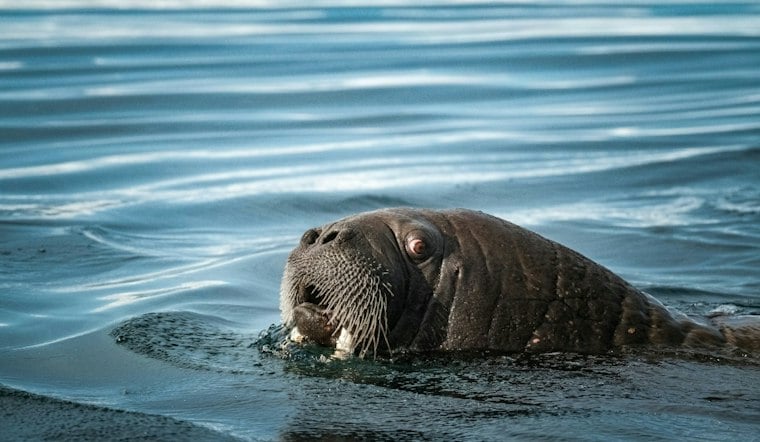
A five-month-old Pacific walrus calf found alone and hiding between the remains of two adult walruses on a remote Alaska beach now has a new home nearly 4,000 miles away at SeaWorld Orlando. The park announced the arrival of the calf, named Annautaq, who weighs approximately 220 pounds and is currently settling into a 30-day quarantine under round-the-clock veterinary watch.
Annautaq was discovered on a remote beach near Point Lay in northern Alaska by U.S. Geological Survey research walrus biologist Tony Fischbach and Ilisaġvik student Violet Anniskett, according to ClickOrlando. The Alaska SeaLife Center says the pair were surprised to find the orphaned calf hidden between the older remains of two adult walrus carcasses after a herd had moved on from the area during heavy surf from a storm. Fischbach and Anniskett stayed with the calf for nearly four days while waiting for transportation out of the remote location, and the calf was reportedly targeted by scavenging birds during that stretch, per the news release cited by ClickOrlando.
A Perilous Start and a Long Flight South
The calf arrived at the Alaska SeaLife Center in Seward on September 14, weighing about 200 pounds at the time. He was alert, responsive, and in good body condition despite being dehydrated, the center's account notes. After several days of on-site care, SeaWorld Orlando dispatched its own animal care and veterinary staff to Alaska to assist and help prepare the calf for the 4,000-mile journey to Florida, where he now receives around-the-clock care from the park's animal care and veterinary team.
Pacific walrus calves depend almost entirely on their mothers during their first year of life, typically staying together with near-constant physical contact for one to two years, according to Alaska's News Source. Stranded walrus calves are generally classified as non-releasable after individual evaluation. The name Annautaq, chosen by Violet Anniskett, means axe in Iñupiaq, ClickOrlando reports.
Joining an Experienced Herd
Annautaq is now in a 30-day quarantine, receiving up to six bottle feedings daily of a specialized high-fat milk formula developed by SeaWorld's veterinary team. Public viewing and any introductions to the park's existing walrus herd will be determined by his animal care team, and no timeline has been set.
That herd includes Garfield, 44, who was himself rescued as an orphaned calf and hand-raised at the park; Kaboodle, 23, an experienced surrogate mother; and Uki, a 2-year-old rescued Pacific walrus calf who arrived from the Alaska SeaLife Center two years earlier. SeaWorld Orlando is one of only four U.S. institutions currently capable of housing walruses, a rarity underscored by the Alaska SeaLife Center's history of caring for orphaned calves. The Alaska SeaLife Center had admitted twelve Pacific walrus calves to its Wildlife Response Program since opening in 1998, according to pdza.org. The center remains the only organization permitted to rehabilitate live-stranded marine mammals in Alaska, per dvm360.
Guests can currently visit SeaWorld Orlando's resident walrus herd at the Expedition Odyssey habitat, though Annautaq himself remains behind the scenes while he completes quarantine and continues his recovery under close medical supervision.


