

























































A driver had to be cut out of a mangled Toyota Camry and flown by helicopter to a Mason City hospital after the car slammed into the back of a semi-truck trailer at a rural Mitchell County intersection Saturday night. The crash happened around 8 p.m. at the junction of Iowa Highway 9 and U.S. Highway 218 near Osage, snarling one of north-central Iowa's busier rural crossroads with a scene that drew in half a dozen emergency agencies.
According to a crash report cited by NorthIowaNow.com, the semi-truck, a 2027 Freightliner Cascadia, was turning west onto Highway 9 from Highway 218 when the Camry struck the rear of its trailer. The semi was being driven by a 50-year-old resident of Indianapolis, Indiana, the outlet reported, citing the Iowa State Patrol crash report. WHO13 reported that authorities have not released the identity or condition of the Camry's driver.
Osage Fire Department personnel extricated the trapped driver from the wreckage, and Osage Ambulance crews treated the patient at the scene before MercyOne Air Med arrived to fly the driver to a hospital, the same report notes. In all, six local and regional agencies responded, including Osage Fire, Osage Ambulance, MercyOne Air Med, the Osage Police Department, the Mitchell County Sheriff's Office, and Chatfields Towing — a response that underscores how much manpower a single rural highway crash can demand.
Hospital Treating the Injured Driver Has Deep Trauma Credentials
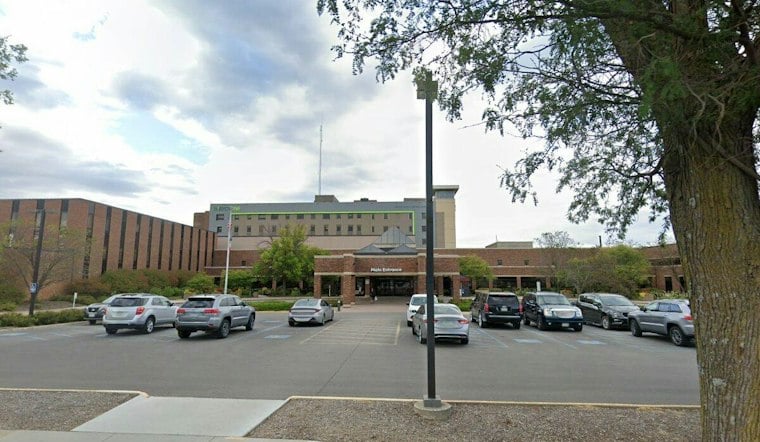
The injured driver was taken to MercyOne North Iowa Medical Center in Mason City, a 346-bed facility that holds a state designation as a Level III Trauma Center. The Iowa Department of Health and Human Services named MercyOne North Iowa its Level III Trauma Facility of the Year this month, according to the agency.
The crash report WHO13 cited does not indicate that the semi driver was injured. The Iowa State Patrol said the crash remains under investigation, and officials have not said whether the Camry driver's identity, injuries, or any potential citations will be released once that investigation wraps up.
A Highway Corridor That Just Finished Construction
The stretch of Iowa Highway 9 running from U.S. 218 to Riceville in Mitchell County had just come off an extended resurfacing project, with the Iowa Department of Transportation running work from late April through early October of this year. The agency used flaggers and pilot cars to manage traffic during active construction periods, though the project had wrapped before Saturday's crash.
Researchers at the Institute for Transportation at Iowa State University have pointed to unsignalized rural expressway junctions, like the one at Highway 9 and 218, as significant collision hazards specifically when heavy trucks turn across or enter high-speed traffic lanes — the exact maneuver the crash report describes the semi executing when the Camry struck it.
Rural Roads Carry an Outsized Share of Iowa Crash Deaths
Statewide, roughly two-thirds of Iowa's traffic fatalities happen on rural roadways, according to Iowa Department of Transportation safety statistics. The state recorded 357 traffic deaths in 2024, with preliminary 2025 figures showing 258 deaths, and rural highway intersections remain a focus area for the agency's safety programs. Closer to home, a 2018 Region 2 Planning Alliance report drawing on a 2016 benchmark year logged 88 total traffic crashes across Mitchell County, resulting in 39 injuries and one fatality.
Iowa's hands-free driving law, which took effect in July 2025, bars drivers from holding, viewing, or manipulating electronic devices while behind the wheel unless the vehicle is fully stopped off the traveled lanes, per the Iowa Department of Public Safety. Whether distraction, visibility, or another factor played a role in Saturday's crash has not been disclosed, and investigators have not said what caused the Camry to strike the trailer.
Federal vehicle safety standards also govern crashes like this one. Under FMVSS 223 and 224, heavy commercial trailers are required to carry rear impact guards engineered to keep trailing passenger cars from sliding underneath the trailer frame in rear-end collisions up to 35 mph, according to the National Highway Traffic Safety Administration, which strengthened those requirements following the 2021 Bipartisan Infrastructure Law. Separately, the Federal Motor Carrier Safety Administration in February scrapped a requirement for permanent certification labeling on those rear guards, though the underlying structural standards remain in place; federal officials said the physical tags often wore off during normal use.





