

























































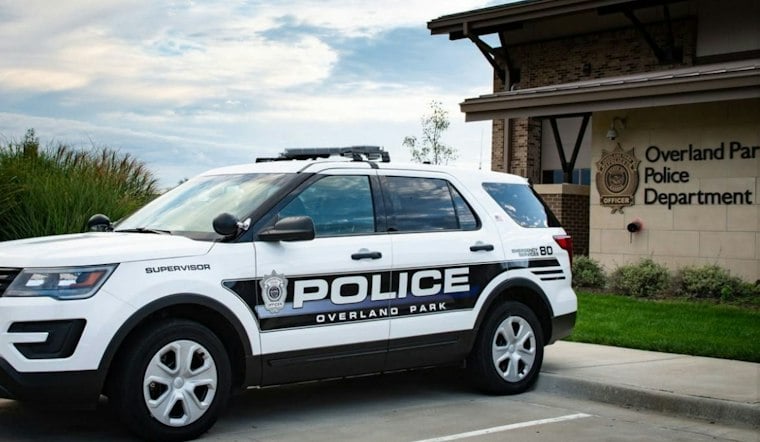
Overland Park police have torn up their old license plate reader rulebook, cutting how long the department can hold onto camera data from a full year down to just 30 days. The revised policy, which also bars officers from using the technology to enforce immigration or tax law, took effect late last week.
The city operates 37 stationary automated license plate readers and 110 vehicle-mounted cameras, according to KCUR. A separate count from the Johnson County Post puts the numbers slightly higher, at 38 fixed Genetec cameras and 113 mobile Axon units — a discrepancy neither outlet explains. Either way, the system has been part of Overland Park's public safety toolkit since 2011.
Overland Park uses Genetec and Axon hardware rather than Flock Safety, the vendor whose cameras have become the center of national controversy. Still, the department can tap into privately owned Flock camera data within city limits, even though it does not own any Flock units itself, the station's report notes.
What the New Rules Actually Change
Beyond the retention cut, the updated policy bans using plate reader data to gather information on free speech or religious activity, and it prohibits placing cameras within 100 feet of a place of worship, polling place, or medical facility. The department also now prohibits integrating artificial-intelligence facial recognition technology into the system altogether.
Officers are barred from running so-called freeform searches — the kind that might look for, say, a blue Honda or a man in a black ski mask — without a specific plate number attached to a case, per the same account. Any data-sharing with another agency now requires a formal agreement in advance; absent one, the requesting agency must submit a written request listing its case number and the stated purpose for wanting the information.
The department also committed to monthly audits of plate reader searches, with any detected misuse referred to the district attorney for review. The Overland Park City Council's Public Safety Committee is set to hear a presentation on the changes Wednesday night.
Why Police Leadership Pushed the Overhaul
Chief Doreen Jokerst, who took over the department in October 2024, sought input from Micah Kubic of the ACLU of Kansas while crafting the updated rules. Kubic, whose organization has opposed widespread ALPR use and launched a campaign against Flock Safety specifically, told KCUR that the department's willingness to meaningfully engage and address concerns is commendable and called the updated policy a significant step forward in limiting ALPR use.
Officer John Lacy, addressing why the rules needed revisiting, said technological capabilities evolve, so the policy must evolve alongside them, according to the same KCUR report. The city's own materials describe its plate reader program as guided by written policy, defined retention limits, restricted access controls, human oversight of automated alerts, vendor accountability safeguards, and routine audits, per Overland Park's city website.
A Pattern of Misuse Driving Reform Nationwide
Overland Park's tightening doesn't exist in a vacuum. The Institute for Justice's national database lists 275 incidents of license plate reader data abuse since 2018, including five cases in Kansas and three in Missouri, according to KCUR's reporting. The nonprofit's own materials describe companies like Flock Safety as having blanketed thousands of communities with the cameras, creating networks that can track drivers' movements across jurisdictions.
In Kansas City, Kansas, Flock data was searched 1.1 million times over a six-month period, with officers from the Houston and Dallas police departments and the California Highway Patrol alone responsible for 198,000 of those searches. Flock's system ties cameras together across a county, letting police search data across locations rather than just their own jurisdiction.
The scale isn't new. The Brennan Center for Justice found that in 2016 and 2017, 173 law enforcement agencies collectively scanned 2.5 billion license plates, and the organization reports that 75 percent of police departments in cities with populations of 100,000 or more now use ALPR systems. At least 56 law enforcement agencies nationwide have since canceled their Flock contracts amid privacy concerns and misuse incidents, according to The Almanac.
How Nearby Departments and Other Cities Compare
Overland Park isn't alone in rewriting its rulebook. Lee's Summit, Missouri, police require a memorandum of understanding before sharing license plate reader data with other agencies. San Francisco recently unveiled its own overhaul, limiting data access to 30 days post-capture — down from 12 months — and requiring that every search be tied to a computer-aided dispatch or incident number, according to CBS News San Francisco.
Menlo Park took an even more drastic step, revoking all existing data-sharing agreements on July 9 after reviewing 214,147 searches conducted since February 2025 and finding roughly 700, or 0.33 percent, did not comply with department policy based on the stated search reason. In New York City, at least two dozen police officers conducted more than 1,700 searches of Flock Safety's nationwide database between March 2023 and December 2025 despite the NYPD having no actual Flock contract, The New York Times reported. Indianapolis, by contrast, says its 301 Flock cameras are used solely to investigate crime, Police Chief Tanya Terry told The Washington Post.
The abuse cases that have fueled this wave of reform are often deeply personal. The Institute for Justice describes a Georgia police chief who tracked his ex-girlfriend and her teenage daughter roughly 600 times using an ALPR system. Similar misuse allegations have surfaced elsewhere, underscoring why privacy advocates like Kubic see retention limits and audit requirements as necessary guardrails rather than bureaucratic box-checking.





