

























































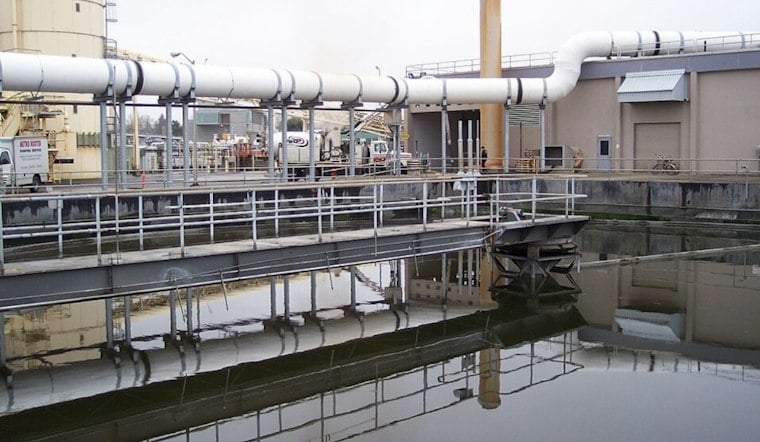
Palm Valley's property owner is asking Seminole County's Development Review Committee on Wednesday at 9 a.m. to approve a site plan for a new wastewater treatment plant on 227 acres near the community's current facility. The request comes from a 55-plus senior living community in Oviedo that has stood since the early 1990s and now includes approximately 790 homes.
The timing has not gone unnoticed by residents. Just weeks before the site plan request, Hometown Palm Valley, L.L.C. — which does business as Palm Valley Utilities — filed an application with the Florida Public Service Commission on September 18 seeking a water and wastewater rate increase under Docket No. 20260039-WS. Under Chapter 367 of the Florida Statutes, privately owned utilities must secure the commission's approval before raising the rates charged to customers, meaning any cost tied to the new plant cannot simply be passed along without a separate state review.
As reported by WKMG, Dale Flanagan, who has lived in Palm Valley for six years, said he welcomes upgrades but worries about what they might cost residents like him. “Progress is a good thing. If we can get better service for what we pay, which is a lot,” Flanagan said.
A Community Built on Land-Lease Living
Palm Valley operates on a land-lease model common to manufactured home retirement communities, where residents buy or rent their homes while paying monthly fees to Hometown America that cover maintenance and shared amenities, according to Hometown America. That structure means utility costs are not an abstract line item for Palm Valley's older residents — they are baked directly into what many already describe as significant monthly expenses. Residents are hoping the Development Review Committee's decision, and any subsequent construction, moves on a quick timetable once approved.
The committee itself is a technical body, not an elected board. Composed of representatives from county planning, engineering, public works, and public safety departments, it evaluates whether site plans meet regulatory requirements, per My Florida Legal. Separately, onsite utility operations in Seminole County answer to the St. Johns River Water Management District and the Florida Department of Environmental Protection, which oversee water resource permits and environmental safety standards.
Winter Springs Offers a Costly Cautionary Tale
Palm Valley's situation echoes a broader reckoning playing out across Seminole County's aging sewer infrastructure. In Winter Springs, officials broke ground in July on the first of two new wastewater treatment facilities, and construction had begun by WFTV's July 22 report. The project is expected to wrap up in 2028. That overhaul followed a 2020 malfunction at the city's existing facility that spilled more than 10,000 gallons of partially treated sewage into nearby waterways.
The Winter Springs project, detailed by WFTV, carries a price tag of roughly $200 million for both new plants — and came despite engineering warnings dating back to 2009 that the original system needed replacement. Nearby Sanford offers a similar warning sign: a 2024 wastewater malfunction there sent millions of gallons of sewage into Lake Monroe. The Florida Department of Environmental Protection issued a consent order in July, and the city proposed a 7.5% municipal rate increase that September, as Hoodline reported in its coverage of Sanford's sewage-driven mayoral race.
Taken together, the pattern across Seminole County shows aging wastewater systems eventually forcing a choice between costly upgrades and the risk of environmental spills — with ratepayers typically covering the bill either way. For Palm Valley residents like Flanagan, Wednesday's Development Review Committee meeting is only the local half of the equation; the Florida Public Service Commission is separately reviewing the utility's rate request.





