

























































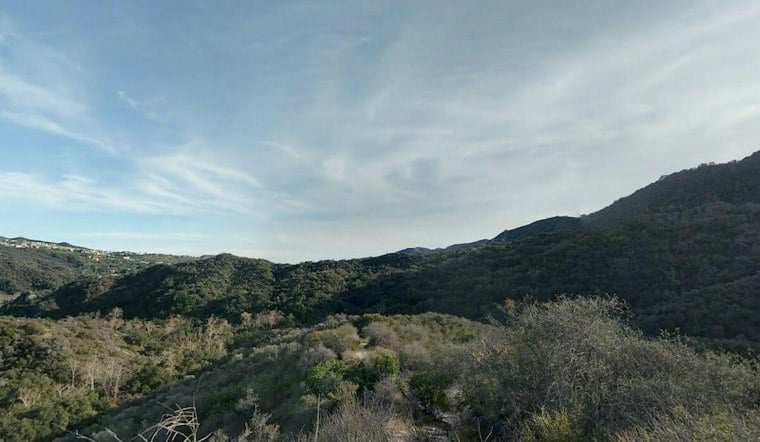
Volunteer opportunities at Temescal Canyon Gateway Park are available on Tuesdays, Thursdays, and weekends, with volunteers pulling invasive castor bean, black mustard, and fennel out of ground still scarred by the January 2025 Palisades Fire. The work is slow and unglamorous, but organizers say it is urgent: left unchecked, these fast-growing weeds will dry into dense fuel that could feed the next fire, and a potentially wet El Niño winter could help them spread even faster.
The effort traces back to Jordan Corral, who lost his apartment in the Palisades Fire and had pulled together volunteers in late 2024, before the fire; after the fire, he launched an invasive plant removal subgroup through Resilient Palisades, the nonprofit coordinating much of the neighborhood's post-fire restoration work, according to LAist. He works under the mentorship of Bill Neill, president of the Santa Monica Mountains chapter of the California Native Plant Society, who brings nearly 40 years of experience controlling invasive species across Southern California watersheds.
Sara Marti, another volunteer who lost her apartment in the fire, said the recovery effort has contributed to her own personal healing, even as she described the work as a kind of fight without a finish line. The team is working on wildfire recovery while trying to mitigate the next wildfire simultaneously, Marti said, per the same account. She added that the invasive plants will keep coming back, that the project is not a one-time effort, and that volunteers have to keep trying even without expecting to win.
A Park Built for Recovery, and a Feedback Loop That Won't Quit
Temescal Canyon Gateway Park covers 141 acres, is owned by the Santa Monica Mountains Conservancy, and is managed by the Mountains Recreation and Conservation Authority, according to the National Park Service. The park is a stretch of chaparral where the kind of invasion ecologists have been tracking across the broader range is occurring. An Arizona State University study reported by KCRW found invasive plant coverage in the Santa Monica Mountains jumped from just 4% of the land area in 2014 to more than a third of the range after repeated wildfire cycles.
Black mustard is one of the main targets of the Temescal Canyon crew, and for good reason: the plant shoots up over six feet tall in late winter and then dries into dense, highly flammable tinder by midsummer, creating a recurring fuel cycle for seasonal blazes, the Los Angeles Times reported in 2019. Settlers brought black mustard and tree tobacco to California centuries ago to feed cattle or for landscaping, KCRW reported. Restoration ecologists with the Santa Monica Mountains National Recreation Area emphasize that pulling weeds alone is not enough; it has to be paired with sowing native seeds to break the cycle of frequent fire and weed dominance, KCRW reported.
Funding, Youth Crews, and the Scale of What Burned
The January 2025 Palisades Fire burned 23,448 acres, destroyed 6,837 structures, and killed 12 people, leaving extensive burn scars where invasive weeds could rapidly take hold, according to a Wikipedia summary of the disaster. That scale of loss is part of why Resilient Palisades was named the 24th Senate District's 2025 California Nonprofit of the Year by state Senator Ben Allen in recognition of its climate initiatives and community-led disaster recovery work.
To keep the Temescal Canyon crews going, Resilient Palisades received a $24,000 grant from UCLA's Philanthropy as Civic Engagement course, which will fund expert field assistants and safety gear for volunteers. The group is also recruiting youth labor, partnering with local high schools and youth groups, including restoration workdays involving Reseda High School and the Reseda Police Academy. Organizers say they are seeking more volunteers for the Tuesday, Thursday, and weekend shifts, which run from 10 a.m. to noon.
The weed-pulling work is just one piece of a broader post-fire recovery effort underway in Pacific Palisades. Separate restoration workshops have used fungal mycelium to trap and filter heavy metals, PFAS, lead, arsenic, and asbestos from burned ash before rain runoff reaches local watersheds, according to the California Community Foundation. For Marti and the small crew still working in Temescal Canyon, though, the task remains stubbornly physical and ongoing: cut, pull, plant, and come back before the next storm or the next fire decides how much of the work survives.





