

























































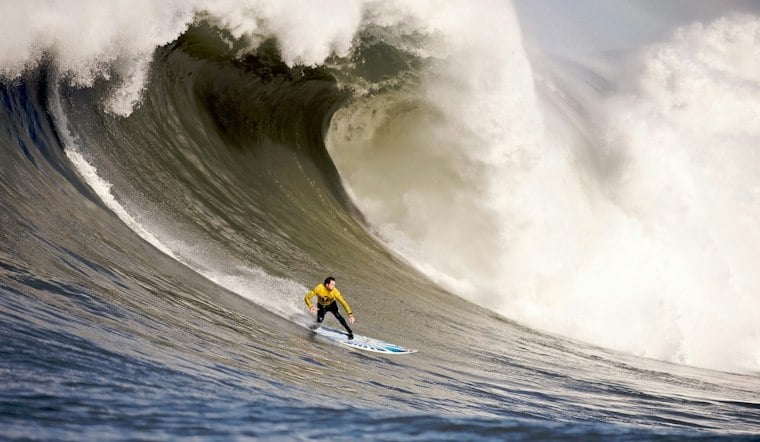
Pacifica is bracing for a rough winter along its coastline, with the city's storm-battered Municipal Pier still closed and officials warning that an intensifying El Niño could bring the kind of pounding surf that first cracked the landmark apart. According to CBS News Bay Area, the city has declared a local emergency as it prepares for potential El Niño impacts this season.
The pier's troubles began earlier this year, when rough surf and swells caused structural damage near the abutment and the former Chit Chat Cafe, according to Local News Matters, which reported that cracking, separation and displacement of the concrete walkway had been declared a local emergency. The outlet reported the pier was closed until further notice. The city's public works department confirmed the closure took effect June 4, 2026, and later noted crews were installing culvert pipe and base rock as groundwork for a crane pad as part of the pier's emergency stabilization project.
Decades of Pounding Surf Finally Caught Up
The Los Angeles Times reported that officials deemed the pier unsafe because of cracking caused by decades of pounding surf and storms, a structural toll that finally came to a head this year. A June 8 assessment described significant cracking in the abutment near the cafe, according to the Mercury News, and by June 9 the city had demolished the cafe at the base of the pier altogether. The same report noted that a 2023 assessment had already pegged needed repairs at $11 million, while the total cost of the pier project, including design and project management, was close to $20 million before the latest damage.
Pacifica isn't the first Bay Area city to face a bill like that. Per the Mercury News report, Santa Cruz completed $1.3 million in wharf repairs after a December 2024 storm, while Capitola spent roughly $10 million repairing and upgrading its wharf following a January 2023 storm. The Los Angeles Times' coverage of Pacifica's pier situation placed those same Santa Cruz and Capitola repairs in the context of a broader statewide reckoning over aging coastal infrastructure.
Federal Funding Caught in Limbo
Rep. Sam Liccardo has pressed the federal government to follow through on $50 million in climate resilience funding for Pacifica that the Los Angeles Times reported was promised under the Biden administration but terminated by the Trump administration in 2025. Liccardo has also requested nearly $1 million in NOAA funds earmarked for a pier handrail project, plus an additional $9 million intended to protect the city's eroding coastal bluffs, according to the same report.
El Niño's Shadow Over the Coast
The timing is precarious. Scripps Institution of Oceanography notes that high surf associated with El Niño typically begins appearing in late autumn and early winter, and the ocean is already stirring: KION reported growing concerns that El Niño-powered waves will cause significant erosion along Pacifica's coastline. During a strong El Niño, wave energy along the shore can run 50% above average, and Scripps scientist Adam Young has said sea levels can rise 15 to 30 centimeters, or roughly 6 to 12 inches, along the California coast during strong El Niño conditions. Scripps also projects very strong king tides around Christmas this year, compounding the elevated sea levels tied to the pattern.
A more recent El Niño offers a sobering preview. During the strong 2015-2016 El Niño, Scripps recorded significant wave heights exceeding 30 feet along the coast from California to the Washington border, with a maximum of 37 feet recorded at Umpqua, Oregon — a benchmark for just how destructive this winter's surf could become if forecasts hold.
Statewide Preparations Underway
Pacifica isn't alone in sounding the alarm. Long Beach issued its own emergency proclamation citing the likelihood of a historic El Niño event, according to KTLA. The Governor's Office said it was coordinating personnel and deploying flood-fighting materials.
Scripps researchers plan to survey the entire California coastline in fall 2026 and spring 2027 specifically to measure the changes the pattern brings, a reminder that Pacifica's cracked pier may be an early data point in a much longer accounting of what this winter does to the California coast.





