

























































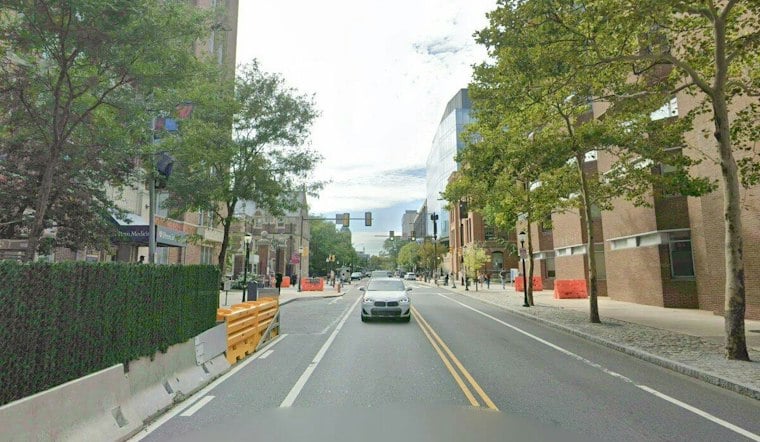
A University of Pennsylvania police officer fired a Taser at 52-year-old Ronald Harmon as he ran from them on Spruce Street in West Philadelphia, according to a wrongful death lawsuit, and the fall that followed left him with a head injury that killed him two months later. Harmon died on January 9, 2025, roughly two months after the November 5, 2024 encounter. Civil rights attorney Ben Crump is leading the case against the university.
According to NBC10 Philadelphia, Crump held a press conference Monday to announce the suit, telling reporters the Taser was wrongfully deployed and that Harmon posed no threat to officers because he was simply running away. Crump said police violated their own policies by tasing Harmon from behind. A press release from Ben Crump Law states that the case has been filed in federal court, with Crump and co-counsel Gregg Zeff of the Zeff Law Firm naming the Trustees of the University of Pennsylvania and individual University of Pennsylvania Police Department personnel as defendants.
The lawsuit's central claim rests on an official finding: Harmon's death certificate classified his manner of death as a homicide resulting from head trauma sustained when he was struck by the Taser, per the same Ben Crump Law statement. The complaint alleges Harmon fell and hit his head after the officer fired the weapon at him during the pursuit.
What Philadelphia Policy Says About Tasing Fleeing Suspects
Directives issued by the Philadelphia Police Department strictly prohibit officers from deploying conducted energy weapons against unarmed fleeing suspects wanted only for non-violent offenses or summary infractions, according to a department policy document. That standard is likely to factor heavily into how the lawsuit's claims are evaluated, since Crump has argued the tasing from behind broke with established use-of-force guidelines.
Technical safety warnings published by Taser manufacturer Axon note that conducted energy weapons cause immediate physical incapacitation, which creates a heightened risk of severe head trauma or death from secondary fall impacts. That dynamic sits at the center of the case: the lawsuit does not allege the Taser itself caused fatal injury, but that the fall triggered by its use did.
A Campus Department With Full Police Powers
The University of Pennsylvania Police Department is not a typical campus security operation. With 121 full-time sworn officers, it is the largest private campus law enforcement agency in Pennsylvania, according to the university's 2026 security report from Penn Public Safety. Under Pennsylvania Title 22, Section 501, private university police officers appointed by a Court of Common Pleas hold full municipal police authority on and around campus property, giving UPPD officers the same power to detain and arrest as city police within their jurisdiction.
That jurisdiction covers a defined stretch of West Philadelphia, from 30th Street west to 43rd Street and from Market Street south to Baltimore Avenue, with UPPD running joint patrols alongside the Philadelphia Police Department, per Penn Public Safety. Hoodline has previously reported on that patrol arrangement, including how UPenn boosted patrols after a bicyclist struck pedestrians near campus. UPPD officers are certified under Pennsylvania Act 120 through the Municipal Police Officers' Education and Training Commission and must complete mandatory annual in-service training, according to Penn Public Safety.
Leadership Change Since the Encounter
Derrick Wood took over as Chief of Police for the University of Pennsylvania Police Department in June 2025, after serving as deputy chief of police operations at the time of the November 2024 encounter with Harmon, according to The Daily Pennsylvanian. The leadership transition came roughly five months after Harmon's death.
The University of Pennsylvania Division of Public Safety has expressed condolences to the Harmon family for their loss, per NBC10 Philadelphia's reporting. The division said it recently became aware of the lawsuit and had no further comment given the pending litigation.





