

























































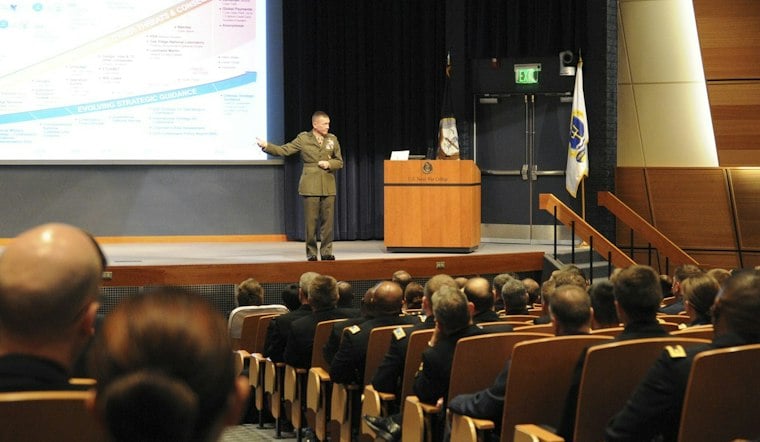
Five workers connected to U.S. Cyber Command died by suicide within a five-week span this summer, and now the Pentagon has ordered the Fort Meade-based command to overhaul how it protects its workforce's mental health. A memo demands a new wellness framework be in place by the end of October, with the Defense Department citing the cumulative psychological toll of nonstop digital warfare operations against adversaries like Iran.
Pentagon Memo Sets Hard Deadlines
According to The Baltimore Banner, reporter Matti Gellman detailed how the Pentagon ordered Cyber Command, headquartered at Fort Meade in Anne Arundel County, to take concrete steps supporting workforce mental health following the deaths. The memo was written by Katherine Sutton, the Pentagon's assistant secretary for cyber policy and principal cyber adviser to Defense Secretary Pete Hegseth, and sent directly to Army Gen. Joshua Rudd, who leads Cyber Command. The directive, which Recorded Future News was first to report, establishes what Sutton calls the Cyber Occupational Resiliency and Engagement Framework, formally issued August 31, and requires Cyber Command to create the new mental-health structure by the end of October 2026. A senior Defense Department official confirmed the memo's existence, though the Pentagon declined to share the document itself with the Banner.
The memo addresses psychological factors the Pentagon says are harming both personnel mental health and job performance across the Cyber Mission Force, the command's operational arm. Per the memo, as reported by the Banner, cyber teams currently lack standardized operational restitution and reconstitution periods between deployments. That absence of structured recovery time has become a flashpoint since the summer cluster of deaths, which occurred specifically between June and July 2026.
Deploying in Place, Day After Day
Cyber Mission Force personnel work long hours inside windowless secure facilities known as SCIFs, and that workload intensified in 2026 amid the war with Iran and the integration of artificial intelligence into operations, according to the Banner's reporting. Operational analysis published by Breaking Defense in August explained that military cyber operators suffer a unique form of psychological fatigue because they effectively deploy in place daily, moving directly from high-stakes intelligence operations into ordinary home life without any post-deployment recovery window that traditional combat units receive.
The Pentagon memo acknowledges that ongoing active cyber operations impose a cumulative cognitive and psychological toll on the workforce, the Banner reported. While cited research indicates work-related stress is a significant contributing factor to suicidal ideation generally, the Banner's reporting does not assert that work-related stress played a specific role in the five Cyber Command deaths.
Thirty and Sixty Day Deadlines For Data and Policy
Under the memo's terms, Cyber Command must provide four years of exit interviews and surveys to the Defense Department within 30 days. Within 60 days, the command must also modify its policies on consecutive cyber-operator tours, building in new career or educational opportunities between missions specifically designed to reduce stress. The command is additionally required to review and reprioritize its digital warfighting campaigns and to finalize a memorandum of understanding with the National Security Agency, also headquartered at Fort Meade, to share behavioral health practitioners between the two organizations.
That clearance-sharing arrangement matters because behavioral health practitioners working inside Cyber Command facilities must hold high-level security clearances, which can take extended periods to obtain — a bureaucratic bottleneck that has left mental health staffing thin even as leadership tries to expand it. U.S. Cyber Command had already partnered with Fort Meade's Kimbrough Ambulatory Care Center in May to embed licensed mental health professionals directly inside classified command facilities, according to the Defense Visual Information Distribution Service. Two full-time providers were placed on-site with plans to expand to five, a program that had been in the works for more than a year before the Pentagon memo arrived.
A Deeper Policy Review Already Flagged the Gaps
The push for reform did not begin with this summer's deaths. The 2024 National Defense Authorization Act had already directed the Pentagon and Cyber Command to study mission-force risks and access to mental-health resources, aiming to improve personnel's ability to mitigate the psychological factors degrading mental health and job performance. A resulting Defense Department report found that mental-health resources available to the mission force were inadequate and that additional planning and investment were needed.
In response, Cyber Command has promised to create a governance and cyber wellness working group, and Sutton's memo asks Rudd to appoint someone to co-lead that group as the primary liaison between Fort Meade and Sutton's office on wellness efforts going forward. The memo is also designed to accelerate initiatives already underway in the Cyber Command 2.0 plan, launched in 2025 to improve recruitment and retention of the cyber force while ensuring the mission force remains resilient. Sutton told the Senate Armed Services Committee in April that Cyber Command 2.0 represents the most comprehensive force-structure overhaul in the command's 15-year history.
Congress and Family Members Push For Change
The deaths have drawn sustained attention on Capitol Hill. U.S. Cyber Command officials gave a classified briefing to the House Armed Services Committee on September 3, prompting bipartisan lawmakers to pledge additional mental health support for cyber personnel, according to SC Media. Rep. Sarah Elfreth, whose Maryland district borders Fort Meade, has separately urged the Defense Department to update its suicide cluster definition so civilian defense workers are counted alongside active-duty military personnel, as Times Now reported — a distinction that matters given Fort Meade hosts roughly 18,000 service members and 41,000 civilian employees working side-by-side in classified environments. Gen. Rudd had already requested $11 million in congressional funding in April specifically for psychological support programs meant to prevent force degradation, a request Maryland Sen. Chris Van Hollen backed following the summer deaths.
Among those who died was Technical Sgt. Kevin Stallings, a 36-year-old digital network intelligence analyst with nearly two decades of Air Force service, whose family publicly identified him to draw national attention to the mental health strains facing cyber units, according to The Japan Times. Stallings, who was stationed at Cyber Command headquarters, died one month before his 37th birthday. Department of Defense data reported earlier this year showed 471 total service member suicide deaths across the U.S. military in 2024, an 11% decline from 2023, though active-duty suicide rates have trended upward overall since 2011, as Hoodline has reported. Fort Meade remains Maryland's largest employer, supporting more than 64,000 military and civilian personnel across over 120 partner agencies, making the stakes of getting this framework right significant well beyond Cyber Command's own ranks.



