

























































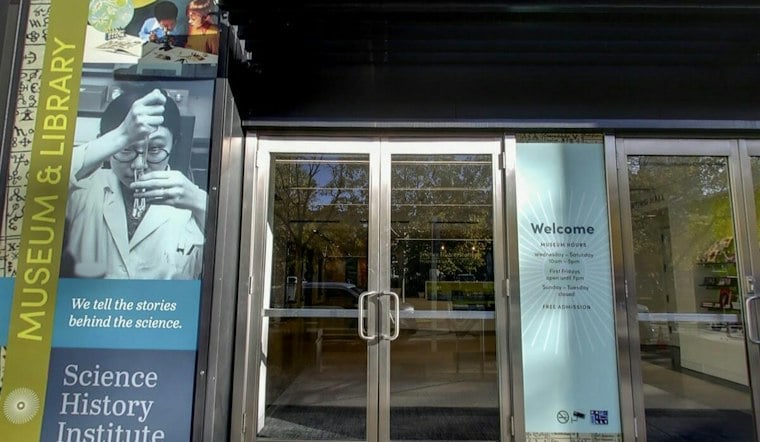
A new permanent exhibition inside Philadelphia's Science History Institute is making the case that the gold-obsessed, secretive world of alchemy was really the messy, fascinating birthplace of modern chemistry. Fire and Gold: The Art of Alchemy (1450–1850) features paintings and rare books that trace centuries of experimentation with metals, minerals, heat and distillation, and it now has a permanent home in the institute's newly reopened Fisher Gallery.
The exhibit marks the first permanent display the Fisher Gallery has ever hosted, according to WHYY. The Science History Institute describes its collection as one of the largest collections of alchemical art in the world, according to the Science History Institute. The show brings together oil paintings from both the Fisher Collection and the Eddleman Collection, the institute notes, spanning a 400-year stretch from 1450 to 1850 when practitioners extracted gold, silver, copper and other materials from the earth while experimenting with minerals and medicines in search of ways to manipulate matter.
A Curator's Case For Alchemy As Science
Elisabeth Berry Drago, a University of Hong Kong art history lecturer, organized the exhibition and frames it as something far more scientific than mystical. Berry Drago presents alchemy as a place where art and science intersect. The exhibit's own framing notes that alchemists experimented with metals and minerals, controlled heat, and developed processes such as distillation, per the Science History Institute.
The exhibition explores transformation and features artists from several countries.
From Rare Books To Modern Material Science
Among the rare books on view is John French's The Art of Distillation, a 17th-century text the Library of Congress catalogs as a treatise on spagyrical preparations, distillation equipment and the anatomy of gold and silver. The Science History Institute says alchemists developed distillation. Alchemists also produced pigments such as vermilion.
WHYY's coverage captures Berry Drago drawing a direct line from historical gold-making ambitions to a very modern achievement: laboratory-grown diamonds. “By gosh, we did it. We made a diamond in the laboratory,” she said, framing synthetic gemstones as a contemporary echo of alchemists' centuries-old dreams of transforming matter. WHYY also quotes her describing the field's core pursuit plainly: “Alchemy is, essentially, early modern chemistry. It's searching for an understanding of matter.” The same report notes that alchemists manipulated substances to create new materials, tinctures, medicines and colors, including the red pigment vermilion.
Planning A Visit
The exhibition combines paintings and rare books.
Self-guided visits to Fire and Gold begin Saturday, October 10, 2026, with the Science History Institute offering an Art of Alchemy Self-Guided Visit on alternating Thursdays from 1 to 2 p.m. and alternating Saturdays from 2 to 3 p.m., according to the institute. The museum itself is open Wednesday through Saturday from 10 a.m. to 5 p.m., per the Science History Institute's listing.



