

























































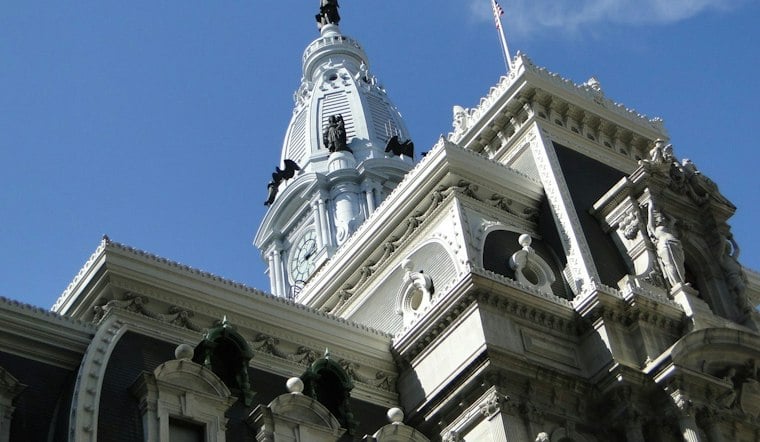
Philadelphia voters head to the polls on Nov. 3 to decide whether the city's arts and culture office should finally become a permanent fixture of government rather than something a mayor can erase with the stroke of a pen. The ballot question asks whether the Home Rule Charter should be amended to establish and define Creative Philadelphia, an office that would be headed by a required Chief Cultural Officer and would absorb other arts-related city programs under one roof reporting to the mayor.
What a Yes Vote Actually Changes
As explained by the Committee of Seventy, the ballot language asks whether the charter should be amended to establish and define the functions of Creative Philadelphia, an office headed by the Chief Cultural Officer. A yes vote would make Creative Philadelphia a formal part of city government under the charter rather than the product of an executive order that, as the Committee of Seventy notes, means a mayor could eliminate the office if they chose to do so. The measure would make the Chief Cultural Officer role a required part of city government and consolidate arts-related programs into one central office reporting to the mayor, and under the initiative, Mural Arts would report to that new office.
The practical staffing stakes are modest but notable: the Committee of Seventy's voter guide notes Creative Philadelphia currently has a staff of ten people, while the proposed legislation would allow the office to grow to as many as 15 employees, including the Chief Cultural Officer.
A Four-Decade History of Here Today, Gone Tomorrow
Philadelphia's relationship with a dedicated arts office has been anything but stable. According to Creative Philadelphia, the city first established an Office of Arts and Culture under Mayor Wilson W. Goode in 1986 as part of the Office of the City Representative. That office operated under the city representative from 1986 until Mayor John F. Street closed it in 2004, the agency's own history states. Mayor Michael Nutter later reinstated it as a separate, independent Office of Arts, Culture and the Creative Economy in 2008. Under Mayor Cherelle L. Parker, the directorship became a cabinet-level position; Valerie Gay renamed the office Creative Philadelphia.
As reported by WHYY, Mayor Jim Kenney proposed eliminating the office in 2020 and instead reduced its capacity, moving it under the managing director's office, before Parker later elevated the directorship to a cabinet-level position — though WHYY notes Parker did not promise to make the office permanent. Valerie Gay, who serves as Creative Philadelphia's director, is credited by WHYY with renaming the office to its current title. Philadelphia City Councilmember Isaiah Thomas proposed the ballot measure now before voters, per the station's reporting.
Arts Funding Has Been Sliding for Years
The ballot question arrives against a backdrop of steep declines in municipal arts support. Philadelphia reduced its annual support for the Philadelphia Cultural Fund to $3.5 million from $5 million, according to the Committee of Seventy's voter guide. A July report from SMU DataArts, drawing on data from more than 4,400 nonprofit cultural organizations across 10 U.S. cities including Atlanta, Cleveland, Des Moines, Houston, Los Angeles, New York City, Philadelphia, Phoenix, Sacramento and Seattle, found that sector health metrics that were once similar across cities have diverged sharply since the pandemic.
Philadelphia came out worst in several of those measures. The Art Newspaper reports that Philadelphia saw the steepest decline in local arts funding per capita of any city in the study, with grants falling from 10 cents per capita in 2019 to just 1 cent in 2024. The same report found that municipal cultural-agency coverage of arts organizations' expenses in Philadelphia dropped from 7% in 2019 to 1% in 2024, while full-time staffing at local arts organizations fell 47% and revenues fell 26% over the same period.
Backers Say Permanency Means Stability
Supporters of the ballot measure argue that locking Creative Philadelphia into the charter would insulate arts funding from the whims of whoever occupies the mayor's office next. Sarah Christy said sustained investment could help arts organizations plan and strengthen neighborhoods, the economy, young people and civic life, according to WHYY's reporting. Philadelphia City Councilmember Rue Landau held a rally at Philadelphia City Hall supporting the ballot measure, and WHYY reports Landau said the measure would move arts and culture into the legal foundation of city operations. Separately, according to Citizenportal.ai, witnesses testified that permanency would stabilize funding and expand arts access across neighborhoods.
WHYY's reporting also notes that other major cities, including Seattle, Dallas and San Francisco, already maintain permanent arts and culture offices, and that New York City made its Department of Cultural Affairs an independent agency back in 1976. WHYY further reports that the Greater Philadelphia arts sector had an estimated $3.3 billion economic impact as of a 2024 report, down from $4.1 billion before the pandemic in 2017.
The Budget Squeeze Continues Into Next Year
Even as the ballot question moves forward, the city's cultural funding picture for the coming fiscal year remains tight. The city is providing nearly $32.5 million to arts and culture in FY27, according to The Philadelphia Inquirer, but the Philadelphia Cultural Fund expects to reduce the number of grants it distributes from 332 to 232 in that same period. The Inquirer's reporting underscores the gap between the ballot measure's promise of structural permanence and the budget realities arts groups are navigating right now.
Philadelphia voters will decide the charter question alongside other items in the Nov. 3 general election, according to The Temple News. Whether a charter amendment can reverse years of declining per capita support remains an open question that only the vote count, and the budgets that follow, will answer.


