

























































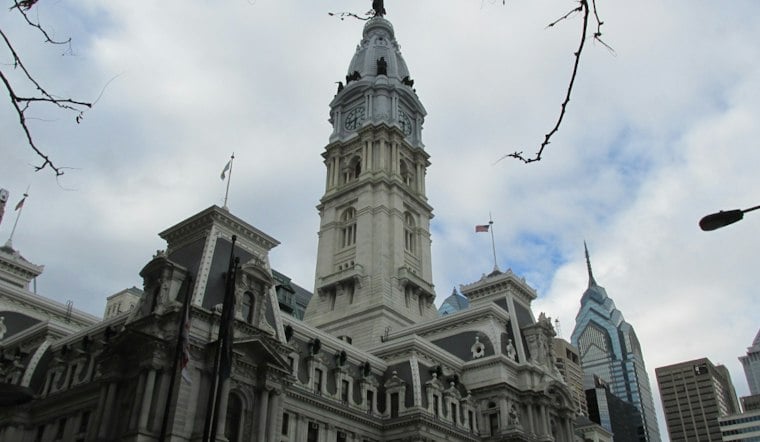
Philadelphia City Council President Kenyatta Johnson wants the city to seriously consider a municipal grocery store. Johnson has introduced a package of bills called the Philly Food Affordability Act, which would create a new municipal Office of Food and Nutrition Safety and launch council hearings on whether the city should open or support its own grocery store to fight hunger.
The push comes as food insecurity in Philadelphia has reached a troubling scale. Nearly 275,000 city residents experience food insecurity, including 27% of Philadelphia's children, according to 2024 Feeding America data reported by Metro Philadelphia. Johnson said thousands of Philadelphia families will become food-insecure as thousands more residents lose Supplemental Nutrition Assistance Program benefits, according to The Philadelphia Inquirer, which reported that President Donald Trump cut SNAP benefits as of October 1.
An earlier enrollment decline followed new work requirements. SNAP enrollment among Philadelphia residents dropped by 59,000 people after federal work requirements under the One Big Beautiful Bill Act took effect in September 2025, Metro Philadelphia reported. The strain was evident even before the cutbacks: hunger relief leaders said in May that overall food insecurity in the city was approaching 20%, putting severe operational pressure on regional distribution networks like the Share Food Program, according to the report from Billy Penn.
What the New Office Would Actually Do
The centerpiece of Johnson's package is the proposed Office of Food and Nutrition Safety, which would be led by a director appointed by the mayor and tasked with developing citywide food security policies and collecting and reporting food insecurity data, per the dossier of bills described by the Inquirer. A companion Food and Nutrition Security Advisory Commission would include five mayoral appointees. Council Member Katherine Gilmore Richardson introduced the proposed charter amendment on Johnson's behalf, since creating the office requires amending Philadelphia's Home Rule Charter.
That amendment path is not simple. Amending the charter requires approval by City Council, followed by approval from city voters in a subsequent election. If council approves the enabling legislation, Philadelphia voters could decide the question in the May 2027 primary election.
Johnson's proposal builds directly on a 17-month study and a June 2026 report from City Council's Food and Nutrition Security Task Force, co-chaired by Food Trust CEO Mark Edwards and Share Food Program Executive Director George Matysik. Per Metro Philadelphia's reporting, the task force recommended creating a centralized municipal entity to act as an administrative air traffic controller for citywide food initiatives, giving the new office substantial local backing before it ever reaches a formal vote.
A Hearing on a City-Backed Grocery Store
Separately, Council Member Nicolas O'Rourke, who chairs council's Cost of Living Task Force, introduced a resolution for a hearing specifically on the possibility of a city of Philadelphia-supported grocery store. That hearing will consider various models for structuring such a store, as well as similar initiatives already underway in other cities, according to the Inquirer's reporting. The Philly Food Affordability Act itself does not include immediate action addressing food insecurity; instead, it would lay the groundwork for future legislation or action by a mayoral administration, with Johnson proposing an informational public hearing and consideration of a public-private partnership model.
Council is looking well beyond Philadelphia's borders for examples. New York City Mayor Zohran Mamdani has pushed to open five municipally backed grocery stores that would offer prices 30% below market rate, a plan that has already drawn a lawsuit from the Multicultural Business Coalition challenging the proposal — a fight Hoodline detailed in September. Newark Mayor Ras Baraka has taken a different approach, opening five community-partnered grocery stores that offer discounts of 25% to 30%.
Chicago offers an example of a shift in approach. Mayor Brandon Johnson launched a feasibility study in September 2023 to evaluate a municipally owned grocery store, but his administration pivoted in early 2025 toward supporting a year-round public market model instead, as reported by So Yummy.
Separate Push to Rein In Algorithmic Pricing
Alongside the grocery store question, Council Member Rue Landau introduced a resolution for a hearing on emerging grocery industry technologies, including surveillance pricing, algorithmic pricing, and dynamic pricing systems. That hearing will examine opportunities to support transparency, affordability, and consumer confidence in how groceries are priced, according to the Inquirer's account of the resolution. City Council approved resolutions authorizing both the grocery store hearing and the pricing technology hearing.
Philadelphia's inquiry mirrors a wave of scrutiny elsewhere. The Seattle City Council passed an ordinance banning grocery retailers from using personal data and AI to set individualized prices, according to KING 5.
The scale of the pricing concern is backed by independent research. A December 2025 investigation by Consumer Reports found that algorithmic pricing experiments produced price disparities of up to 23% on identical items ordered simultaneously, according to a report from Consumers Union, which noted researchers estimated such pricing algorithms could add as much as $1,200 annually to grocery costs for affected households.
For now, City Council will refer legislation related to Johnson's proposed charter amendment to committee, the first procedural step toward a potential 2027 ballot question. How a Philadelphia-backed grocery store would actually be structured or funded remains an open question, one the forthcoming hearings are meant to help answer.



