

























































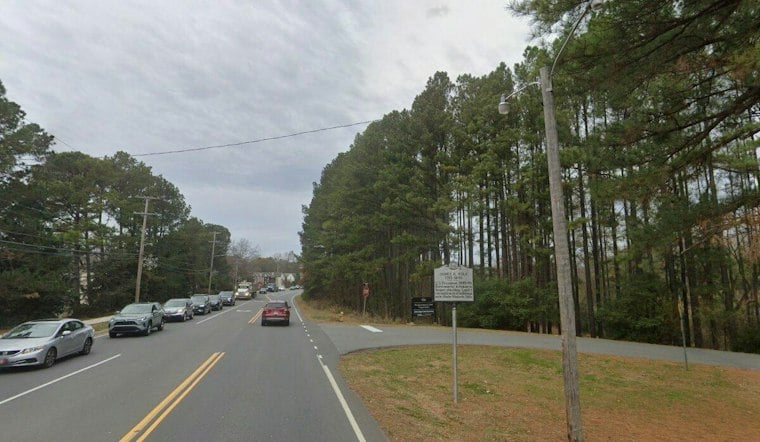
Pineville spent the weekend celebrating the only U.S. president ever born in Mecklenburg County, as Polk Fest filled the grounds of the James K. Polk State Historic Site with games, crafts, living history demonstrations and a silent auction. The festival marked the birthplace of the nation's 11th president, James K. Polk, and doubled as a fundraiser for future programming at the site.
According to Queen City News, the Town of Pineville held the weekend celebration at the historic site, which sits on 21 acres of what was once a 150-acre farm belonging to Polk's parents, Samuel and Jane Knox Polk. The State of North Carolina purchased the land in 1964 to establish the landmark, according to Charlotte on the Cheap, after decades of suburban growth around Pineville had pushed up local land values.
A Birthplace Marked Long Before It Became a State Site
Community members were commemorating Polk's birthplace long before the state got involved. A 10-foot granite monument was erected on the property on September 26, 1904, by the Mecklenburg Chapter of the Daughters of the American Revolution, built with original stones donated by county commissioners, per the Daughters of the American Revolution. That marker predates the official state historic site by 60 years.
The log homestead visitors tour today isn't the original structure. The Polk family's original log home was relocated around 1851 to serve as an animal barn before disappearing altogether, so the state reconstructed the current homestead in the 1960s using two donated log cabins dating to the 1800s, NC Historic Sites notes.
From Mecklenburg Farm Boy to the White House
Born on November 2, 1795, Polk spent the first 11 years of his life in Pineville before his family relocated to Tennessee in 1806. He later returned to North Carolina in 1816 to attend the University of North Carolina at Chapel Hill, graduating with honors in classics and mathematics in 1818, according to the Charlotte Museum of History.
Polk went on to a political career with few parallels. He served as Speaker of the U.S. House of Representatives from 1835 to 1839 before becoming governor of Tennessee, and he remains the only House Speaker in American history to later be elected president. During his single term from 1845 to 1849, the United States expanded its territory to the Pacific Ocean, settling the Oregon boundary dispute and fighting the Mexican-American War, acquisitions that added more than 500,000 square miles of territory, per the U.S. National Park Service. He died of cholera on June 15, 1849, just 103 days after leaving office at age 53 — the shortest retirement of any U.S. president, according to Civics for Life.
Site Manager Points Past the Presidency
Historic site manager Scott Warren said the festival offers visitors context beyond the presidency itself, pointing to Polk's Mecklenburg County origins, his upbringing and the influences that shaped him, per the original report from Queen City News. That framing fits with how the site has broadened its interpretation in recent years.
Through its #TrueInclusion initiative, the North Carolina Division of State Historic Sites has researched and published records identifying individuals enslaved by the Polk family on the Pineville farm, including people named Violet, Lucy and Elias, according to NC Historic Sites. The site has also hosted programming tied to the nation's semiquincentennial, including a February lecture featuring UNC Charlotte professor Dr. Jurgen Buchenau on Polk's role in U.S.-Mexican relations, which Hoodline covered in January.
Planning a Visit Beyond the Festival
For families who missed the festival, the site remains open year-round. The President James K. Polk State Historic Site, operated by the North Carolina Department of Natural and Cultural Resources, offers free general grounds access, with guided homestead tours running Thursday through Saturday priced at $4 for adults, $3 for seniors and $1 for youth, according to NC Historic Sites.





