

























































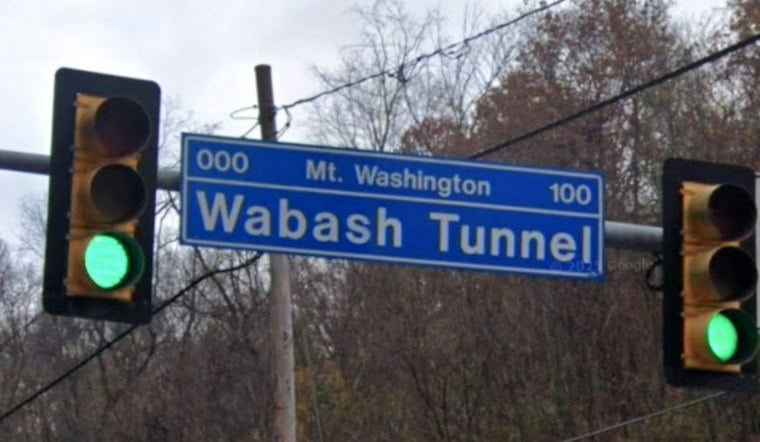
Pittsburgh Regional Transit plans to permanently close the Wabash Tunnel on Dec. 1, ending the 123-year-old passage's run as a car route between Mount Washington and Station Square. The agency says the tunnel's lighting, ventilation and electrical systems have fallen into poor to critical condition, and that fixing them for long-term use would cost $43 million for a facility that carries only about 1,500 vehicles a day.
PRT spokesman Adam Brandolph said the tunnel's lighting, ventilation and electrical systems have exceeded their useful life, according to TribLIVE. PRT CEO Katharine Kelleman said renovating the tunnel for long-term use was impractical given the agency's financial struggles and the tunnel's light traffic, and added that PRT must focus its limited resources on infrastructure critical to safe, reliable transit service, per the same report. The PRT board is set to consider the closure at its monthly meeting on Oct. 23.
A Tunnel That Never Lived Up to the Traffic Projections
The numbers behind the closure tell a story of chronic underuse. When the Port Authority reopened the Wabash Tunnel to automobile traffic in December 2004 after a renovation that included a ramp connection, transit officials projected it would carry 4,500 daily vehicles by 2014, according to TribLIVE.com. Actual traffic averaged fewer than 500 cars a day in 2007 before eventually plateauing around 1,500 vehicles daily, the outlet reported — roughly the same volume PRT cites today as justification for shutting it down.
By comparison, the Fort Pitt and Squirrel Hill tunnels each serve more than 100,000 customers a day, and the nearby Liberty Tunnel in Mount Washington draws around 66,000 customers daily, per a PennDOT analysis cited by TribLIVE. The tunnel's roadway was striped for two lanes, but engineers restricted it to a single reversible lane because the passage was deemed too narrow for safe two-way car traffic. The alternating single-lane system used automated gates, overhead lane signals and carbon monoxide detection and monitoring, according to Pittsburgh Highways. Bruce & Merrilees operated and maintained the tunnel for $780,000 annually, according to Wikipedia's entry on the tunnel.
A Failed 2007 Bid to Hand the Tunnel to the State
This isn't the first time the transit agency has tried to shed the tunnel's costs. Facing operating budget deficits in January 2007, the Port Authority formally petitioned PennDOT to take over ownership and operation of the facility in hopes of eliminating $575,000 in annual expenses, but PennDOT was not eager to accept it, TribLIVE.com reported at the time.
The tunnel's access rules also shifted over the years. It originally reopened as a High Occupancy Vehicle facility requiring carpools during peak hours, but the Federal Transit Administration granted temporary waivers starting in 2013 before permanently lifting all vehicle occupancy restrictions in February 2017, according to Gribblenation. Even with the restrictions lifted, traffic never approached the volumes PRT once envisioned.
What Happens to the Tunnel and the Money
PRT has said the tunnel will remain as-is once it permanently closes, with no plans to demolish it, and the adjacent Wabash Park and Ride will stay open, Brandolph told TribLIVE. Pittsburgh Regional Transit avoided sweeping service cuts in 2025 by tapping its capital reserve fund to cover a $100 million funding gap, and the Pennsylvania state budget includes no additional funds for PRT in fiscal year 2026-27 — a backdrop that has pushed the agency to prioritize spending elsewhere.
Closing the tunnel also lets PRT hold onto nearly $850,000 in remaining Federal Transit Administration grant funds tied to the facility, which will be reallocated toward a future federally funded capital project rather than lost, according to the Pittsburgh Post-Gazette.
More Than a Century of Reinvention
The Wabash Tunnel's history stretches back to railroad tycoon George J. Gould, who completed the 3,342-foot bore through Mount Washington in February 1903 for his Wabash Pittsburgh Terminal Railway after battling rival rail barons, according to the Brookline Connection. That railroad went bankrupt just five years later, in 1908, and the Pittsburgh and West Virginia Railroad acquired the tunnel in 1917. The passage was damaged in a landslide in 1925 and carried passenger rail into Downtown Pittsburgh until October 31, 1931, continuing to serve freight trains until fires destroyed the adjacent Wabash Bridge and terminal building in March 1946, per Pittsburgh Highways.
After sitting largely dormant, the tunnel found new uses: it stored city buses, and the Port Authority spent $6 million in the early 1970s rebuilding the passage before using it in 1978 as a covered garage to park 87 retired buses, according to Wikipedia. The tunnel was also once the centerpiece of a failed autonomous people-mover proposal in the 1960s before finally reopening to car traffic in 2004. Its entrance off Woodruff Street in Mount Washington will now mark the end of a long and often improvised second life, nearly 22 years after it first welcomed drivers instead of trains.




