

























































A Plant City police sergeant grabbed the defibrillator from his patrol car, raced upstairs to an unresponsive man, and did not stop working on him until the man started breathing on his own. That response, on Sept. 19, has now earned Sgt. Billy Harvester Florida's Finest Award, presented by Sen. Ashley Moody for extraordinary lifesaving action.
Harvester was dispatched to a home regarding an unresponsive man, according to Tampa Free Press, which reported that he already knew the resident's medical background, including a history of heart complications dating back to childhood, before he ever stepped inside. He found the man lying upstairs and confirmed he was in cardiac arrest.
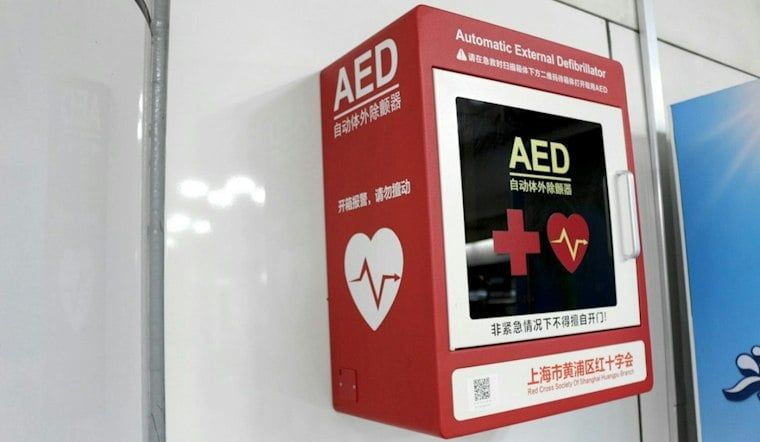
Rather than wait, Harvester retrieved an automated external defibrillator from his patrol vehicle. Once he attached the AED's pads to the man, the device advised a shock. He administered it, then immediately began chest compressions and kept up CPR until the man began breathing on his own, per the same account.
Paramedics Arrive to a Patient Already Stabilizing
By the time paramedics arrived to take over emergency medical care and transport the patient, the man had already improved significantly, the outlet reported. Officials credited Harvester's early AED use and immediate chest compressions with restoring the man's vital signs before ambulance crews got there.
Moody, who presented Harvester with the award, said law enforcement officers must be ready to face anything when a call comes in, and said she was grateful for Harvester and other officers' daily work protecting Floridians, according to the report. The Florida's Finest Award recognizes law enforcement officers and community members who perform extraordinary lifesaving acts, and Moody has handed it out for a range of rescues this year, including to a cardiac nurse who performed CPR on a man who collapsed near a community garden and to a Pensacola customer-service worker who helped a caller during a routine work call, according to Sen. Ashley Moody's office. She has also recognized two Tampa police officers for saving a senior from a fall and a deputy who rescued three young girls from a rip current.
Why Seconds With an AED Matter
Harvester's response fits into a broader pattern researchers have documented across Florida: when police carry and use defibrillators, survival odds climb. A study of Miami-Dade County police deployment of AEDs, published in Circulation, examined police-car defibrillators as a strategy for faster response to out-of-hospital cardiac arrests, while earlier research cited by PubMed found that in seven suburban communities, police use of AEDs cut the time to defibrillation and independently predicted whether a patient survived to hospital discharge.
Elsewhere in Florida, that kind of rapid, coordinated response has produced dramatic results. Escambia County's cardiac-arrest resuscitation rate climbed from below 10% to above 40% in less than a year, reaching 43.4% even as fewer than 10% of people nationally survive to hospital discharge after an out-of-hospital cardiac arrest, according to WUSF. Dr. Ben Abo, who oversaw the change, attributed it mainly to training, high-quality CPR and coordinated teamwork rather than new equipment, telling the station it's mostly about people and process, not gadgets. Escambia expanded that training beyond paramedics to firefighters, police officers, dispatchers and the public, in a county that averages between four and six cardiac events a day, per the same report.
No single fix explains Harvester's outcome in Plant City, but the pattern lines up with what researchers have found statewide: familiarity with a patient's history, fast access to an AED and sustained CPR can change what happens in the first critical minutes of a cardiac emergency.





