

























































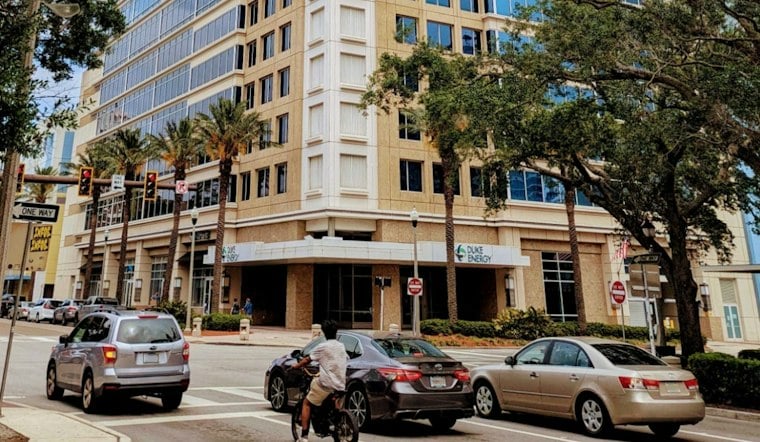
Florida's utility regulators unanimously rejected Duke Energy Florida's plan for charging the biggest new electricity customers, including hyperscale data centers. The 5-0 vote leaves the company to try again, and it does not by itself freeze anyone's bill.
The Florida Public Service Commission voted down Duke's proposal to create a large-load tariff designation. Commissioners found two problems: the tariffs left out some customers who would qualify under state law, and Duke had not shown that existing rate schedules plus its proposed protections would make each large-load customer pay the full cost of electric service.
A Unanimous No, With a Rewrite Invited
Florida Phoenix reported the rejection as a 5-0 vote on Duke's proposal for paying data center costs. Chair Gabriella Passidomo Smith said large-load customers must bear their full service costs without shifting them to other ratepayers, and that the decision reinforces the commission's commitment to those protections as Florida's energy needs grow.
She also left the door open, saying Duke could "develop a tariff that meets the Legislature's requirements while supporting Florida's continued growth." That is permission to come back, not approval of the filing that just failed.
Commission staff had already pointed that way. In an October 22 recommendation, staff urged the commission to deny Duke Energy Florida's proposed tariff as filed, with leave to refile, on two grounds. As of October 20, the docket had drawn more than 4,400 consumer comments. The vote followed that recommendation. It did not come with a date for the next filing.
The Rate That Wasn't a New Rate
Duke was the first investor-owned utility to submit a proposal under the new law, WGCU reported in August. The paperwork started earlier than the statute. On April 22, Duke Energy Florida asked the commission to approve a Large Load Customer Policy, a Large Load Customer Agreement, and revised contribution-in-aid-of-construction tariffs, according to a commission order.
The proposed tariff did not immediately put those customers on a purpose-built large-load rate. Duke's filing said a covered customer "shall take service under the Company's existing GSD-1 or GSDT-1 rate" until a new large-load schedule could be approved in a later rate case. The growth plan, in other words, began life as a promise to use the commercial schedules already on the books.
Mark McNees, director of social and sustainable enterprises at Florida State University, who studies how businesses shift costs to consumers while keeping the profits, told WTSP the proposal appeared to lean on an earlier filing that did not meet the new law. He called the ruling a signal that regulators intend to enforce that law, said the commission had passed its first test, and said the panel had not been steered by utilities with electrical and political power. Those are his readings of a vote the commission explained on narrower grounds: coverage and proof of cost recovery.
What Senate Bill 484 Actually Demands
Gov. Ron DeSantis signed Senate Bill 484 on May 7, and it took effect July 1. The commission describes the law as requiring tariffs and service rules meant to keep large-load customers paying their full cost of service, rather than moving those costs onto other ratepayers. A filing in a related docket describes the threshold as generally an anticipated monthly peak of at least 50 megawatts at a single location. Public utilities had to file a compliant tariff for commission approval no later than October 1.
That is a paperwork deadline, not a construction ban. As of an August report, Florida already had more than 100 operating data centers, while proposed hyperscale AI facilities had not opened, Central Florida Public Media reported. Data centers have also become a major issue in national and Florida campaigns this year. The statute is aimed at who pays for the next wave of very large load. Nothing in the rejection establishes that residential or small-business bills will stay flat.
Three Utilities, Three Kinds of Paper
Tampa Electric took a different route. It filed a proposed large-load tariff on September 30, with a separate schedule whose combined demand would not exceed 1 gigawatt. The schedule would close to new or incremental load once that cap is fully subscribed or on January 1, 2031, whichever comes first. The minimum initial term is 20 years from the in-service date. McNees, writing in Florida Politics, also described a contract termination fee covering remaining generation, transmission, fuel-transportation, and purchased-power charges. That filing is awaiting review. It is not an approved tariff.
Florida Power & Light did not file a new large-load tariff. It asked the commission to find that tariffs approved in January already comply with SB 484. That request is also awaiting review. Asking regulators to bless last winter's rates is not the same thing as writing a schedule that names a 50-megawatt customer, a term, and an exit fee.
Duke's Next Filing Has No Date
Duke Energy Florida said it appreciates the commission's review and remains committed to protecting customers while supporting economic growth. In a statement reported by Florida Phoenix, the company said, "We remain focused on getting this right for Florida by supporting economic growth and new jobs while protecting costs for customers." A spokesperson said the company wants data centers to pay full service costs while it supports jobs and growth.
The commission has given Duke another chance to file. It has not given the public a calendar. Until a new proposal lands, the large-load designation Duke wanted is not in effect, and the question the law was written to answer — who pays for a 50-megawatt customer — is still sitting in the docket.





