

























































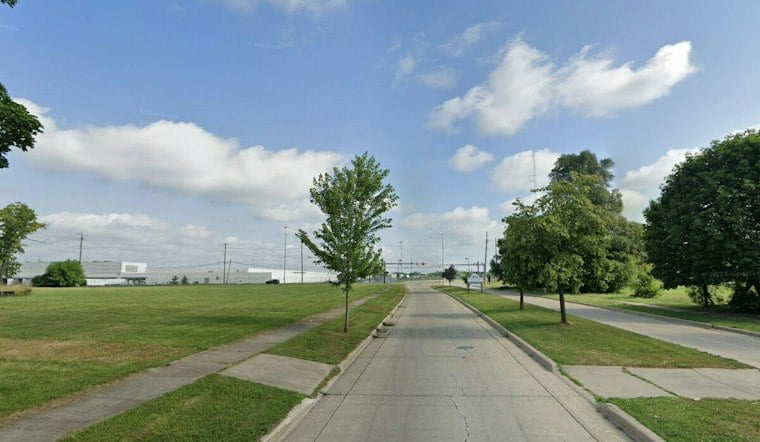
Jean Matthews has learned to drive slowly down Glenwood Avenue, weaving around the cracked and crumbling sections of pavement outside her home. She says the road is badly in need of replacement, and this November, Pontiac voters will decide whether to finally do something about streets like hers that have gone more than 40 years without repaving, according to city officials.
The ballot proposal asks Pontiac voters to authorize the city to borrow up to $75 million in general obligation bonds over a term of up to 30 years, with an estimated initial tax levy of 3.360 mills in 2027 and an average annual levy of 2.400 mills to retire the debt, according to the City of Pontiac. One mill equals $1 in tax for every $1,000 of taxable property value, meaning property owners could face tax bill increases of up to $2.40 per $1,000 of taxable value if the measure passes, as reported by ClickOnDetroit.
Matthews, who lives on Glenwood Avenue, supports the proposal and told the outlet it is time to address the city's deteriorating neighborhood streets. Pontiac City Council President Adrian Austin has said the city possesses strong financial assets, a diverse investment portfolio, and a healthy general fund, and that the council is reviewing those resources before asking residents to shoulder new taxes.
Why Pontiac's Side Streets Never Got Fixed
Pontiac's neighborhood roads have exceeded their intended lifespan, with some streets more than 50 years old, per the station's report. These residential routes typically do not qualify for state or federal road funding, a structural gap rooted in Michigan's Public Act 51 of 1951, which directs state transportation formula distributions and federal aid primarily toward designated major municipal streets rather than residential subdivisions. The law also bars cities from shifting more than half of their major-street funding to local streets without an approved asset management plan.
Meanwhile, major arterial routes including State Street, Montcalm Street, Giddings Road, and Pike Street have already secured state and federal grant funding for full repaving in 2026–2027, leaving the residential backlog as the primary unfunded gap, officials confirmed in August.
A Conservative Approach to a $75 Million Ask
Mayor Mike McGuinness said in an August 2026 address that the city structured the proposal as general obligation bonds rather than a direct, full road millage to maintain what he called a financially conservative approach, allowing Pontiac to absorb debt service costs using general fund investment returns during strong fiscal years. Pontiac does not intend to levy the full millage every year and plans to absorb some of the bond costs itself, city leaders say, as part of an effort to reduce the measure's impact on homeowners.
Pontiac's lower tax base has limited its ability to reconstruct roads citywide all at once, so the city could instead finance projects over several years through the bonds, with the city council authorizing which streets are addressed each year under the proposal. That strategy follows a pattern Pontiac has used before: the city reported in May 2026 that its general fund balance exceeded $55 million, its strongest financial position in 30 years following its recovery from state emergency financial management, which it operated under in 2013, as Hoodline previously reported.
Recent Precedent for Blended Financing
That same financial strength underpinned Pontiac's $37 million municipal recreation center, set to open in 2027 and funded through a $15 million municipal bond, $15 million in general fund cash reserves, federal ARPA funds, and local youth millage revenue, the same account noted. Pontiac voters have also recently shown willingness to approve dedicated property tax measures, passing 10-year renewals in August 2026 for a 0.4826-mill senior citizen programs levy and a 1.4483-mill youth delinquency prevention levy, which together generate more than $2.7 million annually for city programs, according to the Oakland County Times.
Statewide, Michigan voters have historically backed similar measures at high rates. A statewide analysis from the County Road Association of Michigan found that local voters approved 98 percent of road millage renewals and 81 percent of new road millages proposed across Michigan primary ballots, according to Associated Construction Publications. Michigan also enacted a $1 billion state transportation funding reform package in 2025 that created a dedicated Neighborhood Roads Fund, directing new state revenues to municipal and county road agencies for local street maintenance without requiring local matching funds, per the Southeast Michigan Council of Governments, a package that scales up through 2030.
Still, a $75 million, multi-decade debt authorization represents a far larger commitment than the smaller millage renewals Pontiac voters have approved in the past. For residents like Matthews, the decision comes down to streets that have waited generations for repair. Pontiac voters will settle the question on the November ballot.





