

























































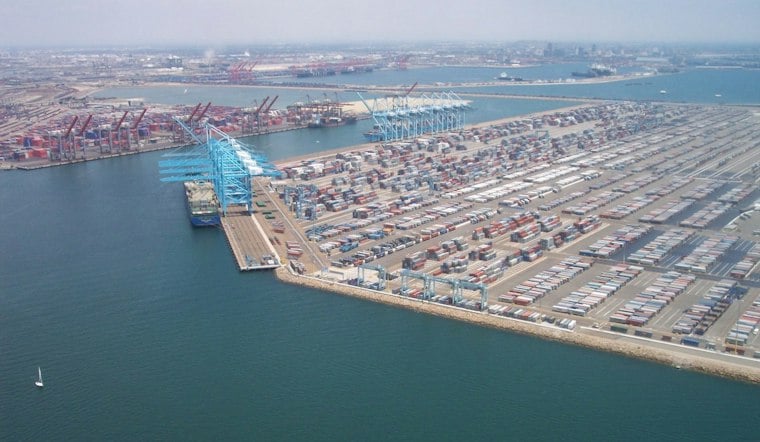
The Port of Los Angeles processed 1,042,652 twenty-foot equivalent units of cargo in September, an all-time monthly record that capped the busiest three-month stretch in the port's 118-year history. The surge pushed the harbor past its own previous mark set in July 2025 by more than 20,000 units, and it came without the kind of ship backups that once stacked up offshore during the pandemic years.
According to MyNewsLA, the port handled nearly 3 million TEUs from July through September, its busiest quarter on record, and nearly 4 million TEUs from June through September, its strongest four-month stretch ever. Port Executive Director Gene Seroka called September “a month for the record books” and part of an extraordinary run for the facility, crediting resilient consumer demand, importers replenishing inventories, and cargo being allocated to Los Angeles as shippers navigate challenges along global trade routes.
A Record Verified Across the Industry
The scale of the milestone checks out beyond the port's own numbers. The September total marks the highest single-month cargo tally ever recorded by any seaport in the Western Hemisphere, as reported by gCaptain. That same outlet notes the port logged its 10th single month with more than 500,000 loaded import TEUs in September, making it the only container port in the country to reach that benchmark, with loaded inbound containers reaching nearly 547,000 TEUs for a new inbound record.
Seroka attributed part of the cargo surge to lower tariffs than those in effect earlier in 2026, which gave importers more certainty about costs, alongside continued consumer spending, per MyNewsLA's reporting. Shipping challenges along the Suez and Panama Canal routes also played a role, pushing more trans-Pacific trade toward Southern California docks. Shipping lines increasingly diverted Asia-originating cargo to West Coast ports in late 2026 to bypass low-water transit restrictions at the Panama Canal, choosing the faster China–West Coast route to cut fuel costs, according to WTVB.
Imports Soar While Exports Lag Behind
The port handled 545,696 TEUs of loaded imports in September, a 19% year-over-year increase, while loaded exports reached 125,751 TEUs, up 10% year over year, per MyNewsLA. Empty container volume also hit approximately 371,206 TEUs in September, the highest monthly total in port history. gCaptain frames this as an ongoing tension between import strength and export weakness, with American agricultural and manufacturing exporters still facing trade headwinds even as inbound freight hits historic highs.
Nationally, the picture lines up with what's happening in San Pedro Bay. Total U.S. container imports reached a monthly record of 2.55 million TEUs in September, according to supply-chain technology provider Descartes Systems, driven by nationwide retail inventory frontloading and strong consumer spending, WTVB reports. The National Retail Federation projected total 2026 U.S. retail sales to climb 4.4% year over year to $5.6 trillion, with retail goods making up roughly half of the containerized cargo flowing through the Port of Los Angeles, per the same outlet's reporting.
No Repeat of Pandemic-Era Gridlock
What stands out operationally is what didn't happen. Despite moving more container volume in September than during the peak COVID-19 pandemic shipping boom, the port avoided the severe landside and offshore congestion that once left over 100 vessels waiting in San Pedro Bay, according to GV Wire. The port kept cargo moving without the backlogs that defined 2021 and 2022, the outlet notes.
Seroka said the waterfront workforce and supply chain partners handled record volumes while keeping cargo moving, and that the port will focus on finishing the year strong and delivering for customers, per MyNewsLA. Looking ahead, Seroka projected during his October briefing that the port will process approximately 900,000 TEUs in October, with the majority of holiday retail inventory expected to land in the U.S. before November, according to Traders Union. The outlet also reported accelerated inventory replenishment.
City Hall and Academia Weigh In
Los Angeles Mayor Karen Bass credited waterfront workers and port leadership for the record-setting performance, calling the port an economic engine locally and nationally that creates good-paying union jobs for Angelenos and maintains the city's status as a global competitor for trade and commerce, per MyNewsLA. Harvard Business School professor Willy Shih discussed how companies are adjusting sourcing and manufacturing strategies in response to tariffs, trade policies and supply chain disruptions, noting that businesses are moving from optimizing purely for cost to optimizing for options, seeking greater flexibility in where they source, manufacture and move goods, according to the same report.
Emerging cargo categories are also reshaping what moves through the harbor. Late 2026 has seen a surge in artificial intelligence infrastructure shipments, particularly specialized cooling units and electronic components needed for data center construction across the country, WTVB reports, as rapid expansion of domestic computing infrastructure drives demand for high-tech industrial imports from East Asia.
A Legacy of Dominance in San Pedro Bay
The Port of Los Angeles has now handled nearly 8.1 million TEUs through the first nine months of 2026, exceeding the same-period 2025 volume by more than 3%, per MyNewsLA. The port handled 10.2 million container units in 2025 and generated $301 billion in trade that year, ranking as the nation's busiest container port for 26 consecutive years.
The facility's scale underpins that dominance: the port spans 7,500 acres of land and water along 43 miles of waterfront in San Pedro Bay, with 25 cargo terminals including seven container terminals equipped with 85 ship-to-shore cranes, and generated $301 billion in trade in 2025, according to the Port of Los Angeles. September's numbers follow the second-busiest July ever earlier this year.





